While your friends are posting beach photos and heading out on road trips, you’re staring down a syllabus that looks less like a class schedule and more like a marathon. Summer courses are a different beast. They take an entire semester’s worth of brain-melting information and cram it into a few short, intense weeks. If you’re already feeling the pressure, coffee won't be enough. You need a strategy.
To survive and excel in these classes, you must change how you learn. By refining your summer school study tips and using the right technology, you can manage the workload and understand complex material efficiently.
The Reality of the Accelerated Summer Timeline
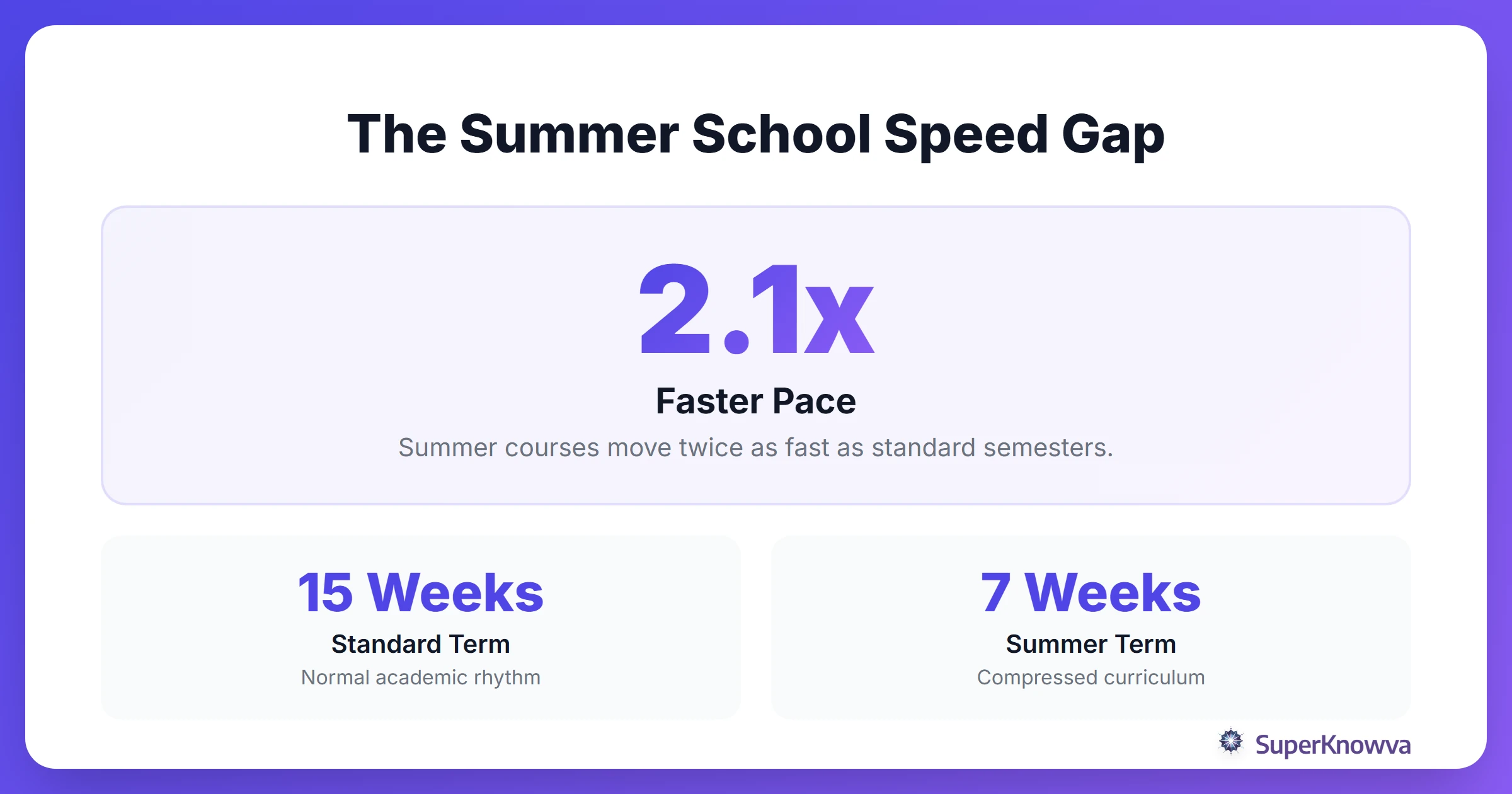
The biggest shock? The sheer speed. In a standard fall or spring semester, you have 15 weeks to breathe, digest, and maybe even procrastinate a little. In the summer, that timeline is slashed to 6 or 8 weeks.
The pace doesn't just increase; it doubles. A "week" of content now happens in forty-eight hours. If you miss one lecture, you have essentially missed a week of a normal class. This pace means traditional study habits, such as casually highlighting a textbook or waiting until Sunday to catch up, will not work. There is no buffer. To succeed in accelerated summer courses, you must be ready from the very first minute.
Mastering Time Management in a Sprint
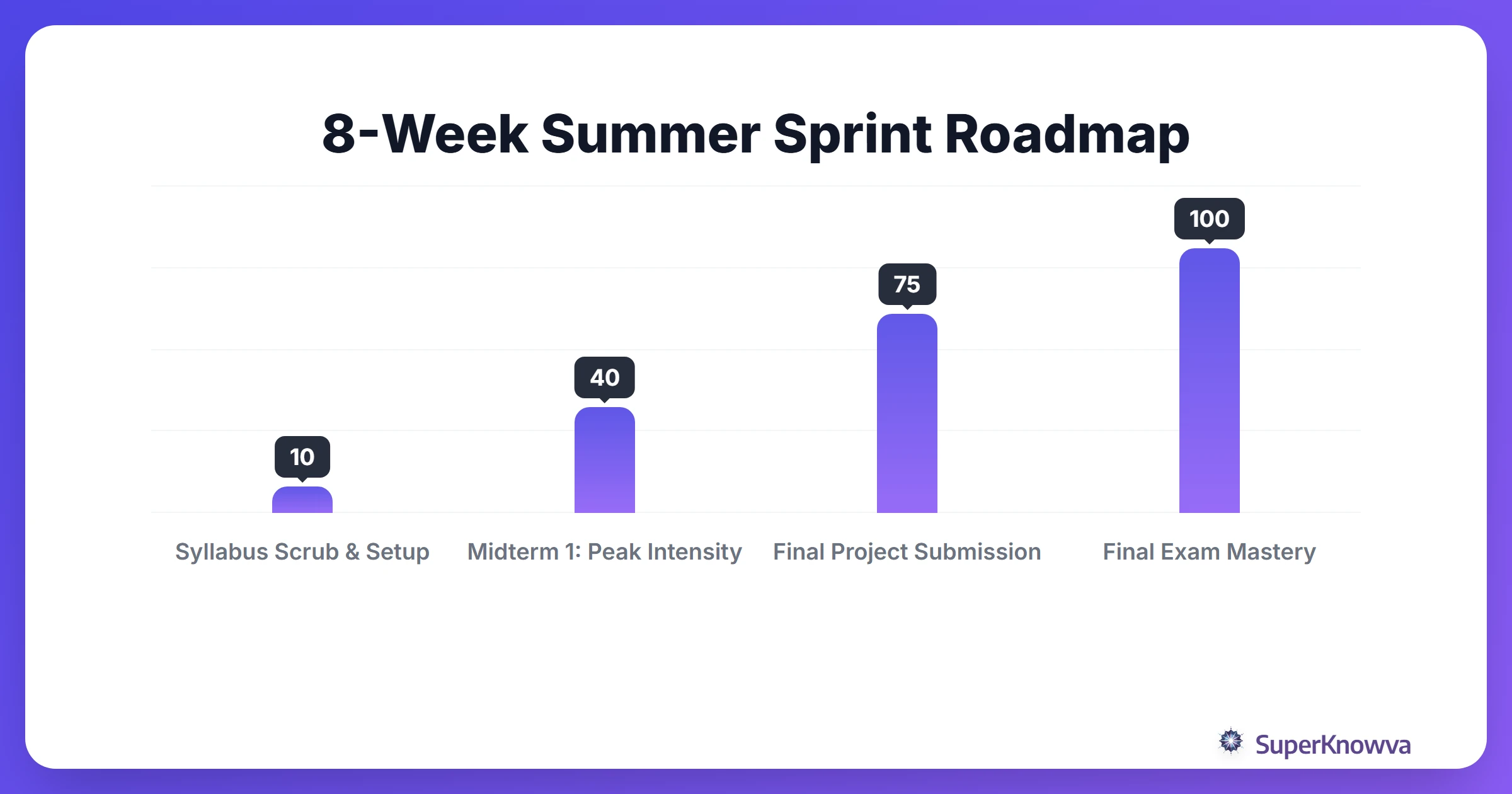
When time is limited, time management for students is a critical skill. Your first move? Perform a "syllabus scrub." Go through the outline and find the "bottleneck weeks": those brutal stretches where a midterm, a paper, and a presentation all land at once.
- Build a Master Calendar: Don't just track when things are due. Track when they need to start.
- Micro-tasks: A 10-page research paper is terrifying. A "Monday: Outline" and "Tuesday: Find three sources" list is manageable.
- Consistency Wins: In the summer, three hours of study every single day is much better for your brain than a 15-hour "cram-a-thon" on Sunday night.
As the experts at Harvard Summer School Time Management Tips point out, staying ahead of the curve is the only way to stop the "snowball effect" of missed assignments from crushing your GPA.
Active Recall: Your Secret Weapon for Speed
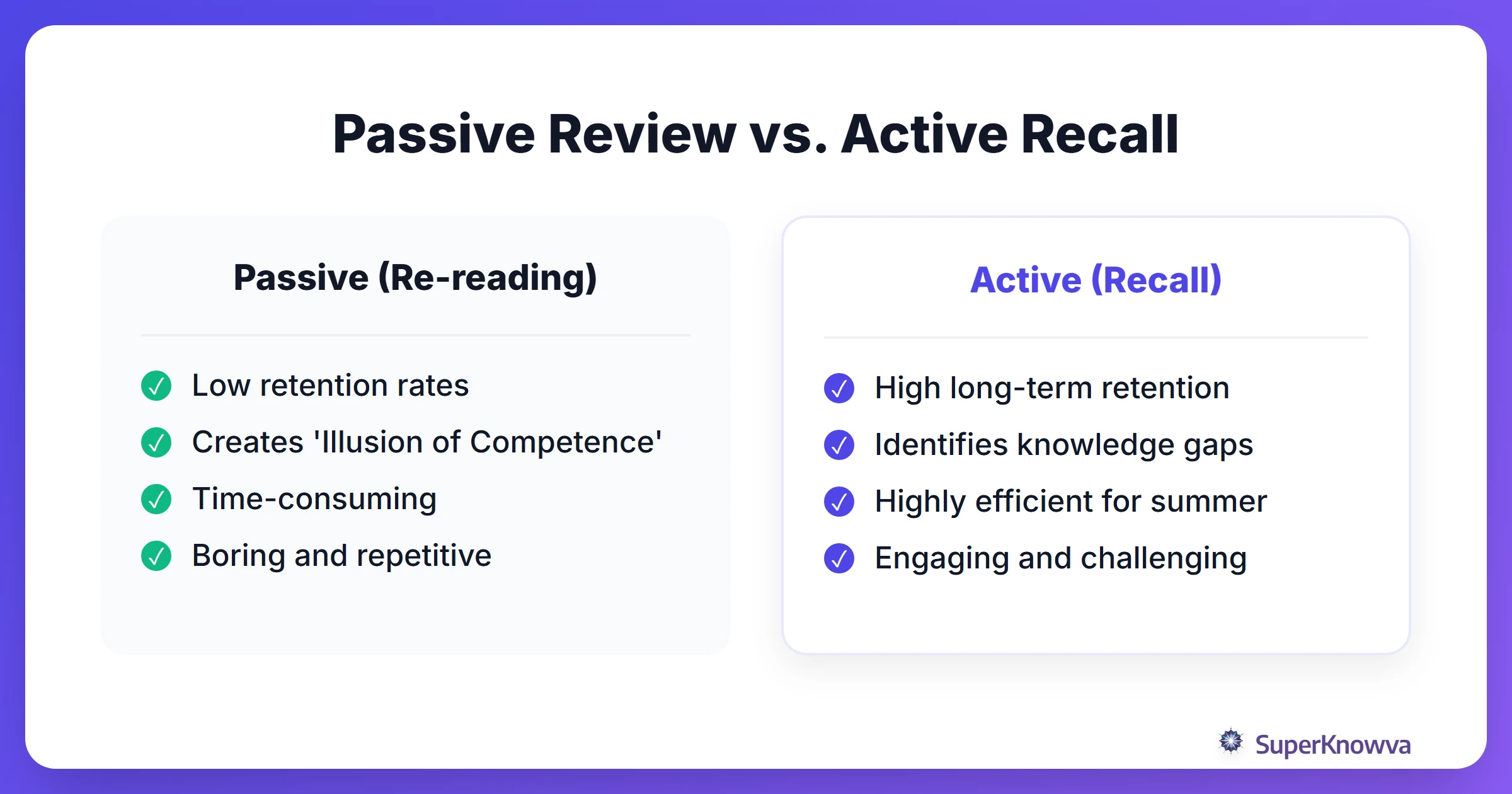
Want to learn faster? Stop "reviewing" and start "recalling." Passive methods, like re-reading your notes until your eyes glaze over, create an "illusion of competence." You feel like you know the material because it looks familiar, but when the exam clock starts ticking, your mind goes blank.
Active learning techniques, specifically active recall, force your brain to actually do the work. By testing yourself before you feel "ready," you figure out exactly where the gaps are. It’s the most efficient way to handle the massive volume of info in summer sessions. For a deeper look at why this works, check out our guide on Active Recall vs. Re-reading.
Leveraging AI to Automate Your Study Prep
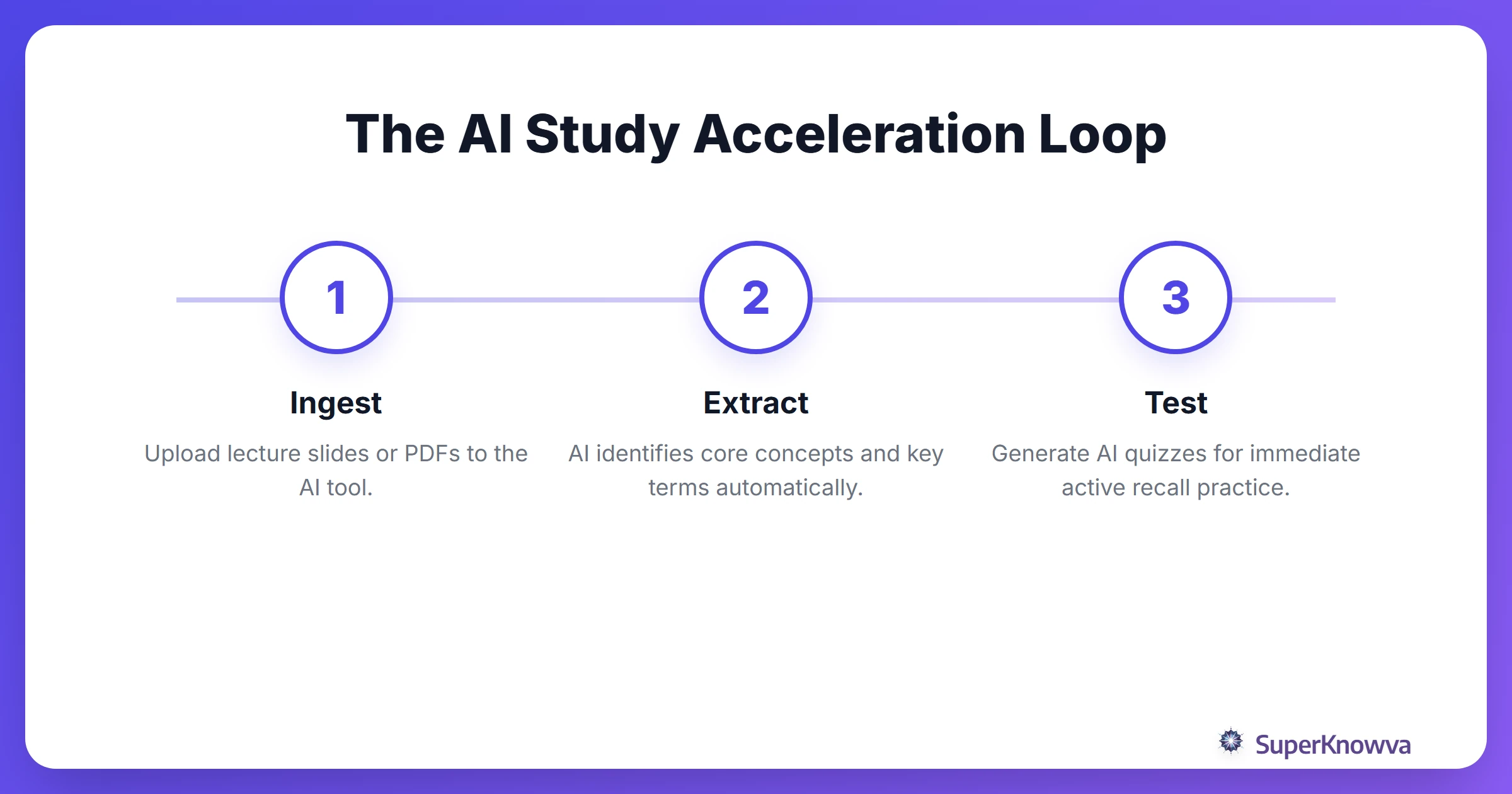
The most tedious part of being a student isn't the learning; it is the prep work. Creating flashcards, summarizing 50-page chapters, and organizing messy notes can take hours. AI study tools simplify this process.
Using a platform like SuperKnowva, you can automate the "grunt work" and get straight to the mastery:
- Instant Summaries: Let AI condense dense summer readings into key takeaways in seconds.
- Automatic Question Generation: Upload your lecture slides to SuperKnowva, and it will generate practice questions that actually mimic your exams.
- Smart Flashcards: Stop typing cards manually. AI can extract key terms and definitions for you while you grab a snack.
- Identify Weak Spots: AI tracks your performance, showing you exactly what you don't know so you don’t waste time studying what you’ve already mastered.
Curious about what else is out there? Browse our list of The Best Study Apps for 2026.
Beating Summer Procrastination with the 5-Minute Rule
It’s hard to stay focused when it’s 80 degrees outside and your friends are at the lake. The "start-up friction" for summer studying is incredibly high.
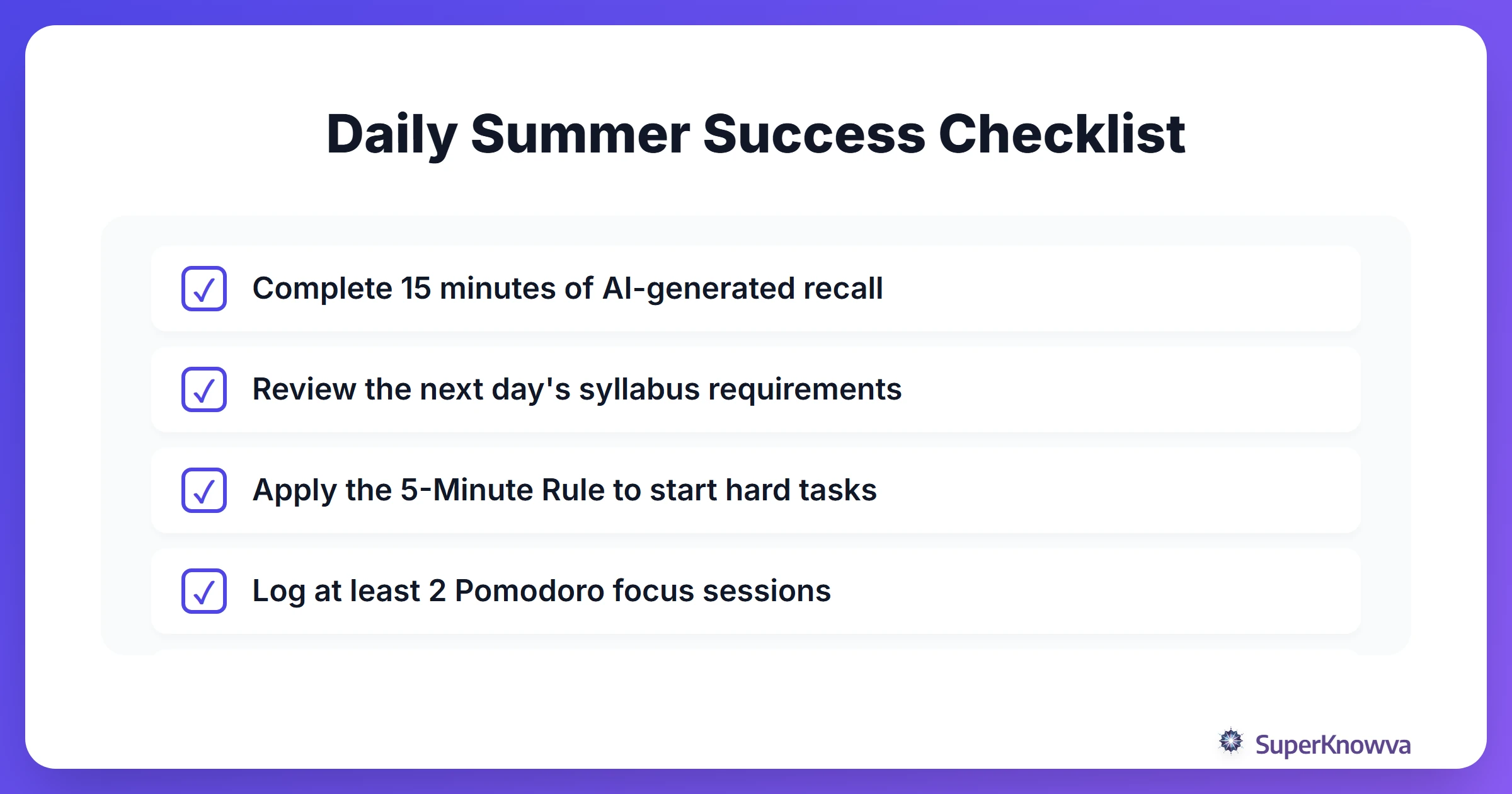
To beat the urge to quit, use the 5-Minute Rule: Tell yourself you only have to work for five minutes. That’s it. Once you break the seal and start, the psychological hurdle usually vanishes. Pair this with Pomodoro sessions (25 minutes of focus, 5 minutes of rest) to keep your brain from frying.
Setting up a dedicated, distraction-free study zone away from your bed is also vital for retaining information fast. Learn more about stopping the cycle of delay in our post about The 5-Minute Rule for Students.
Balancing High GPAs with Summer Fun
You don't have to choose between an "A" and a social life. In fact, the most successful students are the ones who schedule "guilt-free" relaxation.
If you use high-efficiency tools to buy back your time, you can actually enjoy your summer. Don't underestimate physical activity, either; even a 20-minute walk can boost your memory retention and clear the mental fog. By being disciplined during your "on" hours, you earn the right to be completely "off" in the evenings. For more on this, read How to Balance a High GPA with a Social Life.
As the team at The Princeton Review suggests, the trick to "slaying" your summer classes is finding a sustainable rhythm between the grind and the play.
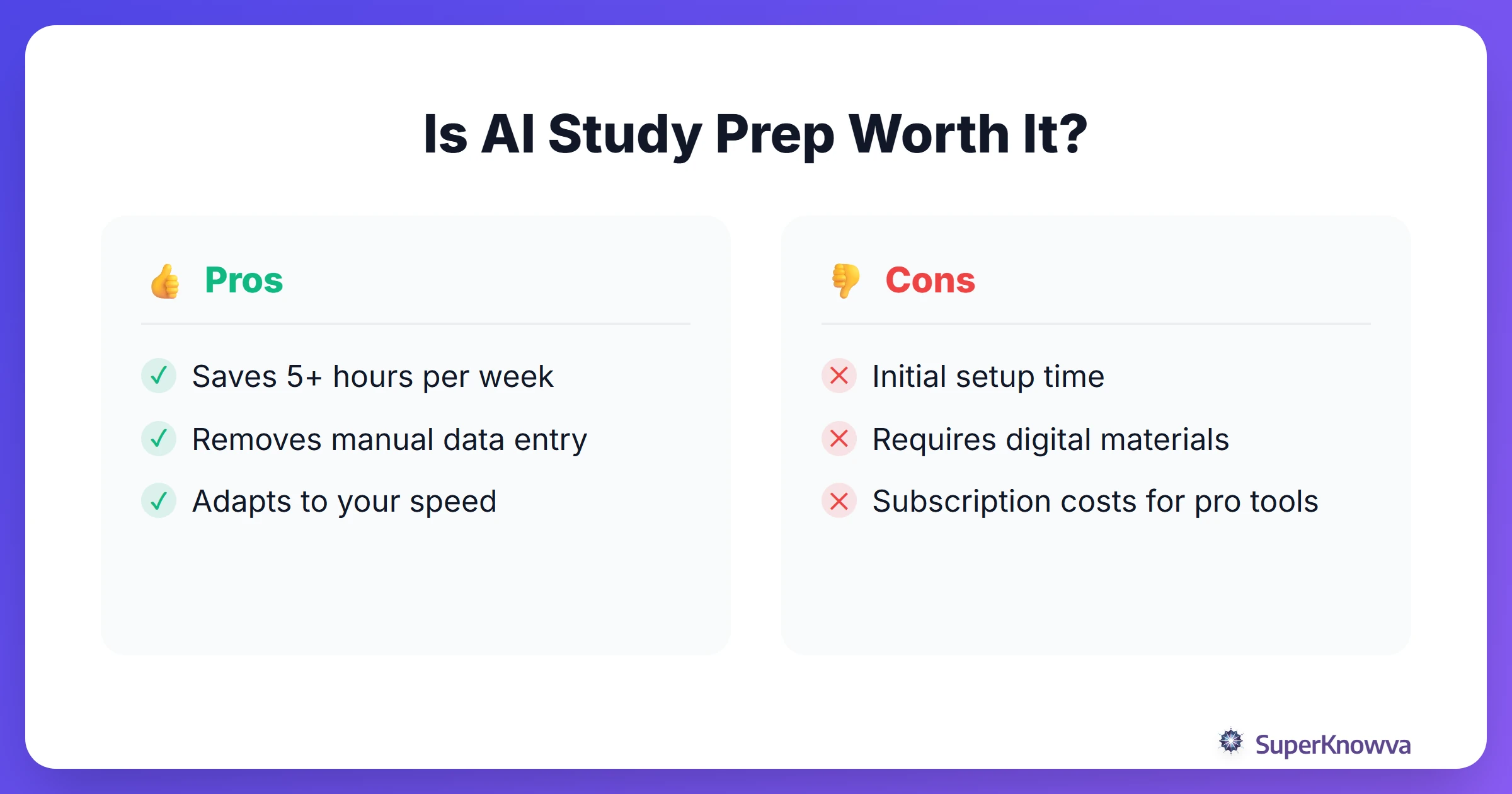
Summer school is a sprint. With a solid plan and AI tools, you can manage the workload and excel in your classes.