Staring at the same page of notes for three hours? We’ve all been there. Your eyes glaze over, the library lighting starts to feel aggressive, and you’ve read the same paragraph four times without absorbing a single word.
As finals week approaches, the instinct is to stay seated until the exam is over. However, movement is often more effective for focus than extra coffee. Physical activity for brain health is a valuable strategy. It is the difference between a sluggish study session and a productive one.
At SuperKnowva, we’re all about studying smarter. Let's look at how strategic movement can sharpen your focus and help you actually remember what you're reading.
The Science of Movement and Cognition
Your brain is connected to your nervous system. When you move, your heart pumps blood to your legs and delivers oxygen and nutrients to your prefrontal cortex. This executive part of your brain handles the complex thinking and decision-making required for a difficult exam.
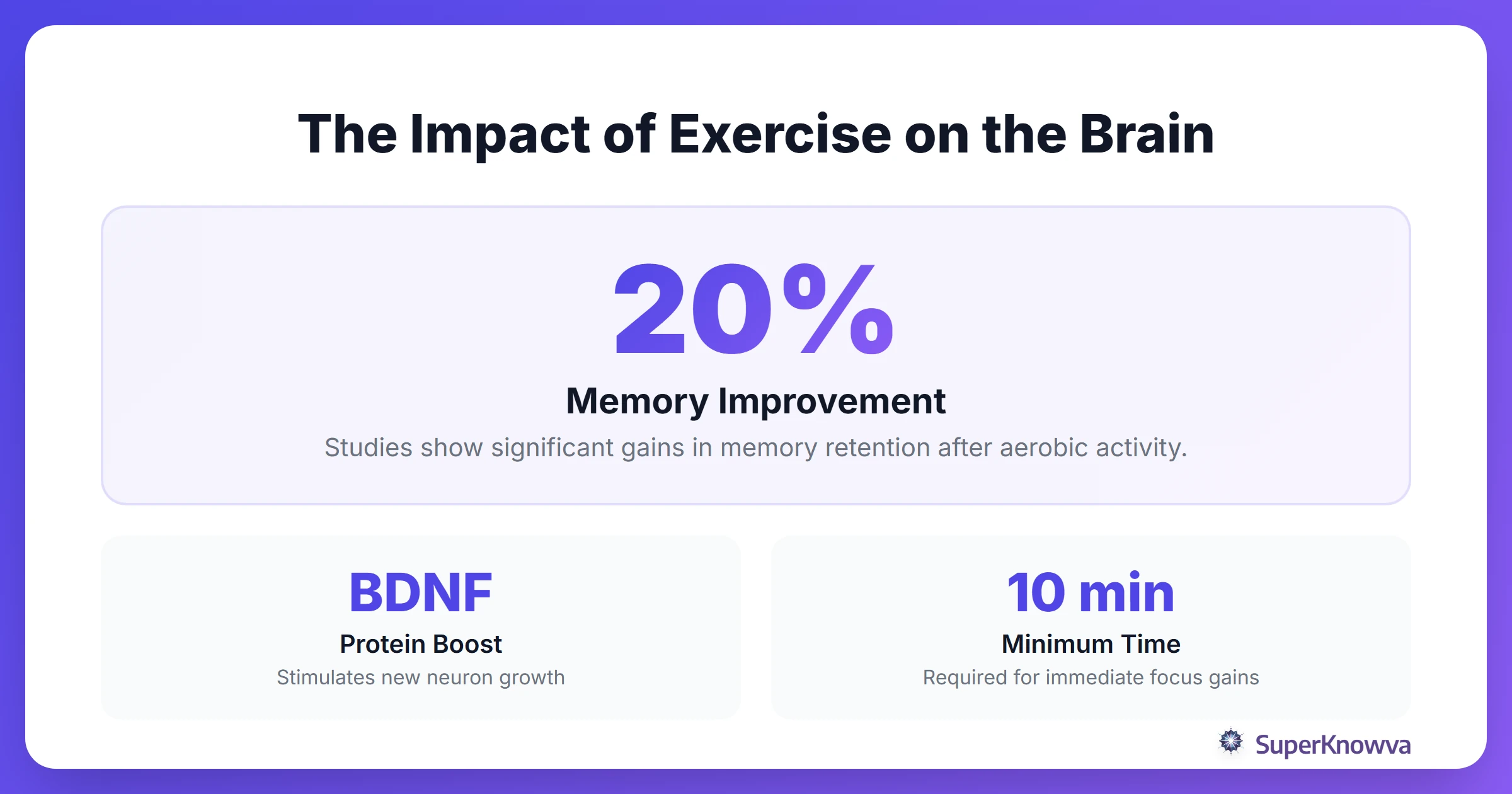
One of the coolest discoveries in neuroscience is Brain-Derived Neurotrophic Factor (BDNF). Think of BDNF as "Miracle-Gro" for your mind. This protein, released during exercise, helps your existing neurons survive and encourages new ones to grow. Using physical activity for brain health isn't just a "feel-good" tip; it directly boosts cognitive function and grades. By spiking your BDNF levels, you are essentially "priming" your brain to soak up new information like a sponge.
Short Bursts: The Power of 'Exercise Snacks'
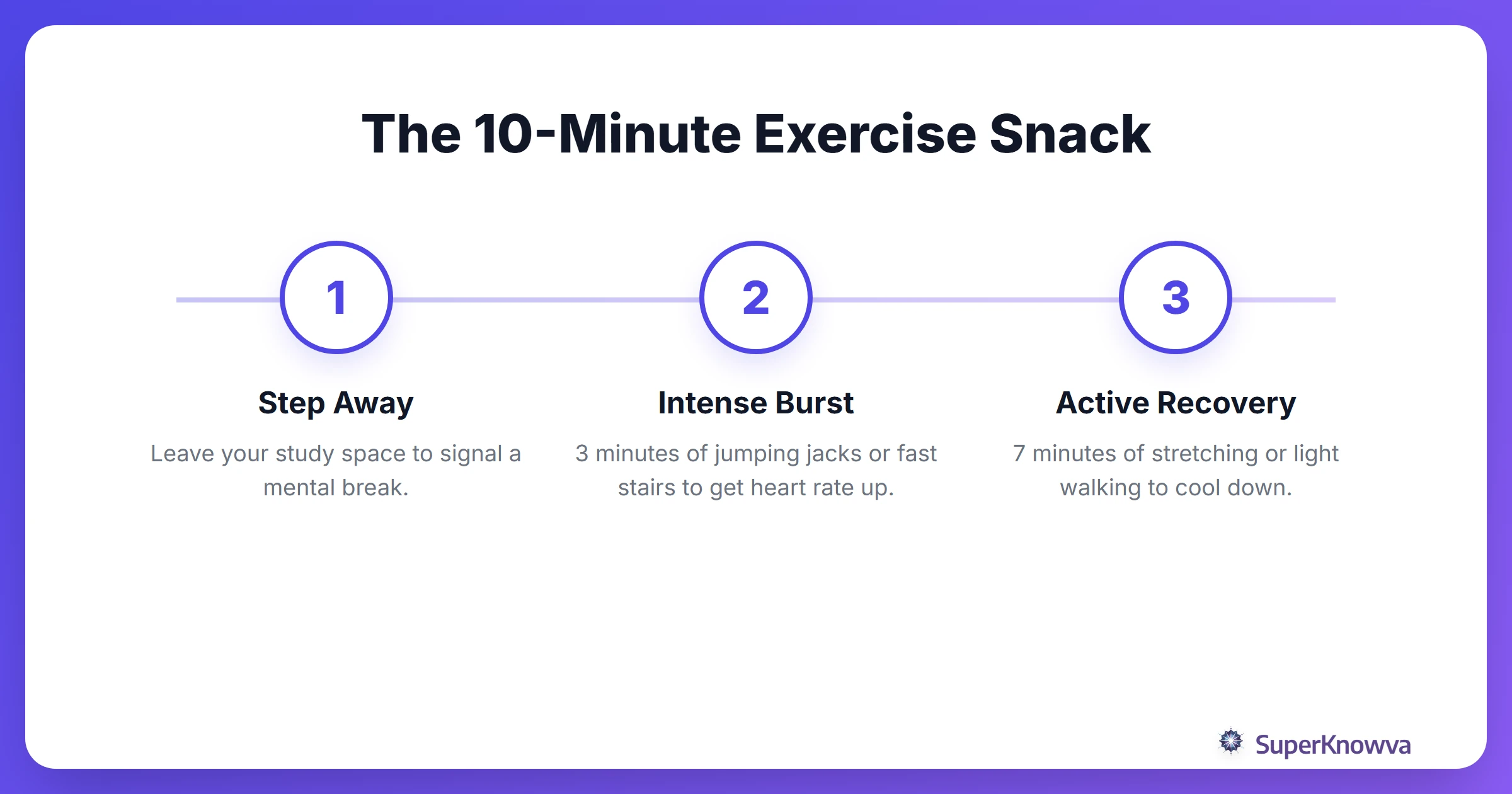
You don’t need to spend two hours at the gym to see a difference. During a finals crunch, exercise snacks (short 5 to 10 minute bursts of movement) are often more effective. These quick intervals help you refocus when you lose concentration.
According to the CDC, even small amounts of movement can help you think, learn, and problem-solve. A quick set of jumping jacks or a sprint up a flight of stairs provides an immediate memory boost exercise effect. It’s the perfect way to bridge the gap between difficult chapters and ensure your brain stays receptive to new data.
Reducing Exam Anxiety Through Physical Activity
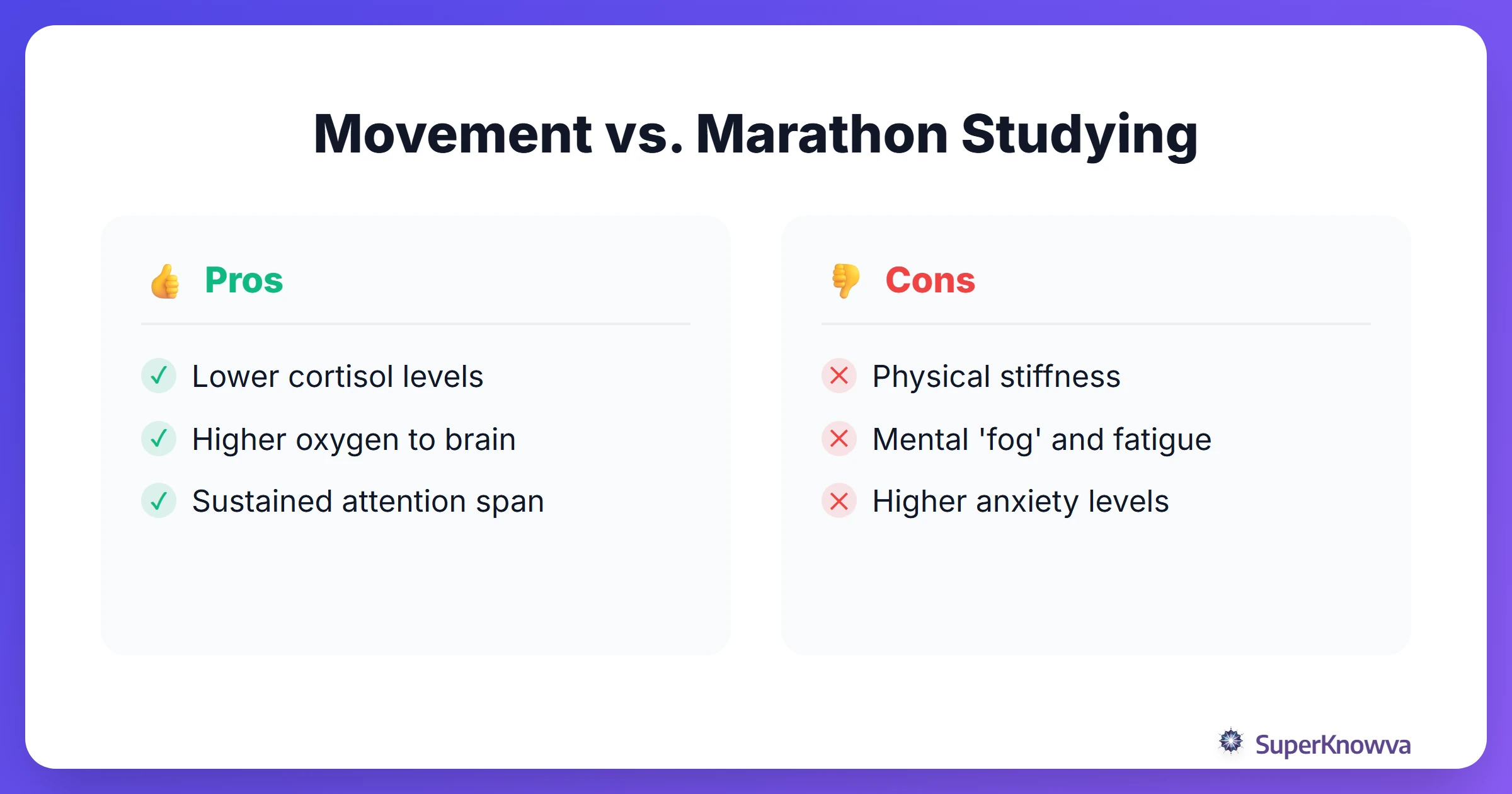
Exam season is basically synonymous with high cortisol (the body’s stress hormone). While a little stress can keep you alert, staying in "fight or flight" mode for a week straight leads to that dreaded "blanking out" moment during a test. Movement acts as a natural buffer, helping your nervous system burn off that excess stress and restore balance.
Reducing exam anxiety with movement gives you a chance to break the cycle of ruminating thoughts. When you combine physical activity with mindfulness and meditation, you create a powerful shield against stress. You’ll walk into the testing center feeling calm and capable rather than frazzled and fried.
Best Types of Exercise for Peak Focus
Not all movement is created equal. Depending on whether you need a shot of energy or a way to calm your racing mind, different activities offer different rewards:
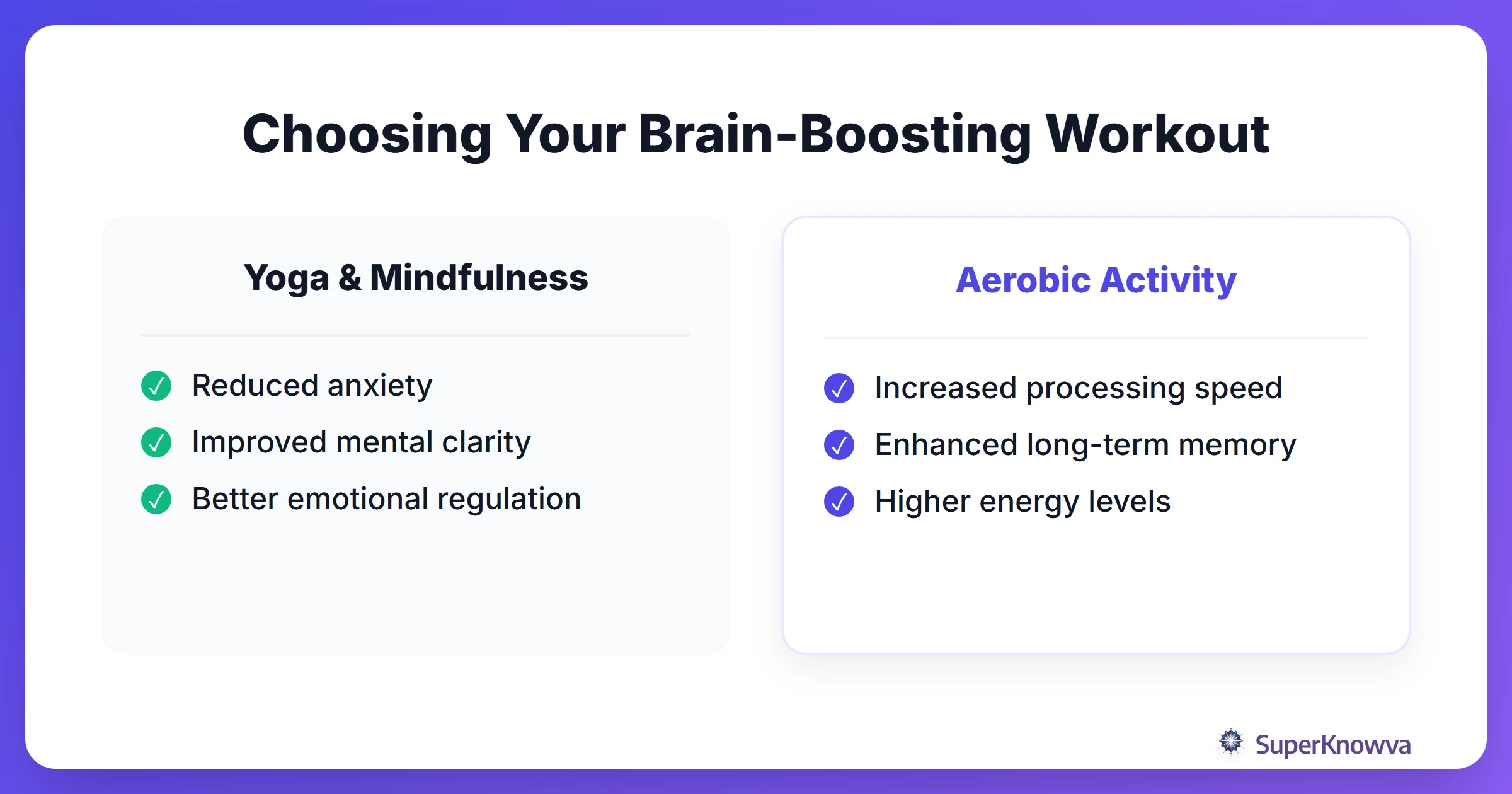
- Aerobic Activity: Running, swimming, or cycling. These are the heavy hitters for increasing processing speed and long-term memory.
- Yoga & Stretching: Perfect for when your neck and shoulders are tight from hunching over a laptop. It clears the physical tension so you can focus on the mental work.
- Exergaming: If you need a break that doesn't feel like "work," active video games can actually improve concentration and spatial awareness.
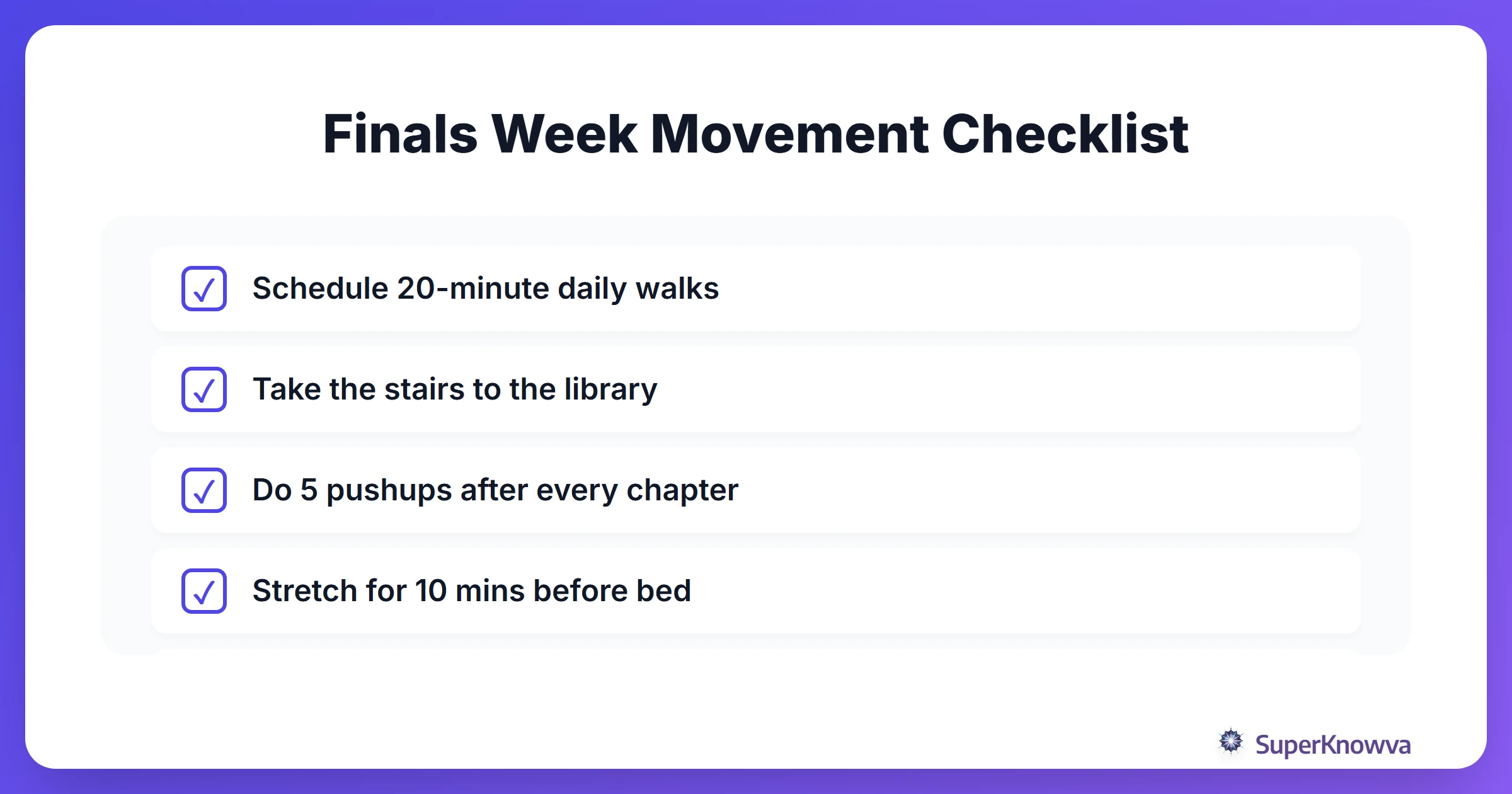
- Walking: The ultimate "low-friction" move. A 20-minute walk is often all it takes to trigger an "aha!" moment when you're stuck on a complex problem.
Tailor the move to the mood. If you're feeling overwhelmed by a massive reading list, a high-energy "exercise snack" can provide the adrenaline you need to power through.
How to Build a Movement-Inclusive Study Schedule
The biggest lie we tell ourselves during finals is: "I don't have time to exercise." In reality, movement is a high-ROI study activity. Integrating short workouts into your winter study routine ensures you stay sharp even when the weather makes you want to hibernate.
Try the Movement-Pomodoro Technique. Instead of scrolling through TikTok during your 5-minute break, use that time for a quick study break workout. Use movement as a reward: "Once I finish this practice quiz on SuperKnowva, I’m going for a 15-minute walk." This builds a positive loop where your brain associates moving with winning.
Avoiding Burnout: When Movement Is the Best Medicine
Are you feeling irritable? Lacking motivation? Just plain exhausted? These are classic signs of student burnout. Pushing through mental fatigue usually leads to "diminishing returns," where you spend four hours at a desk but accomplish about twenty minutes of actual work.
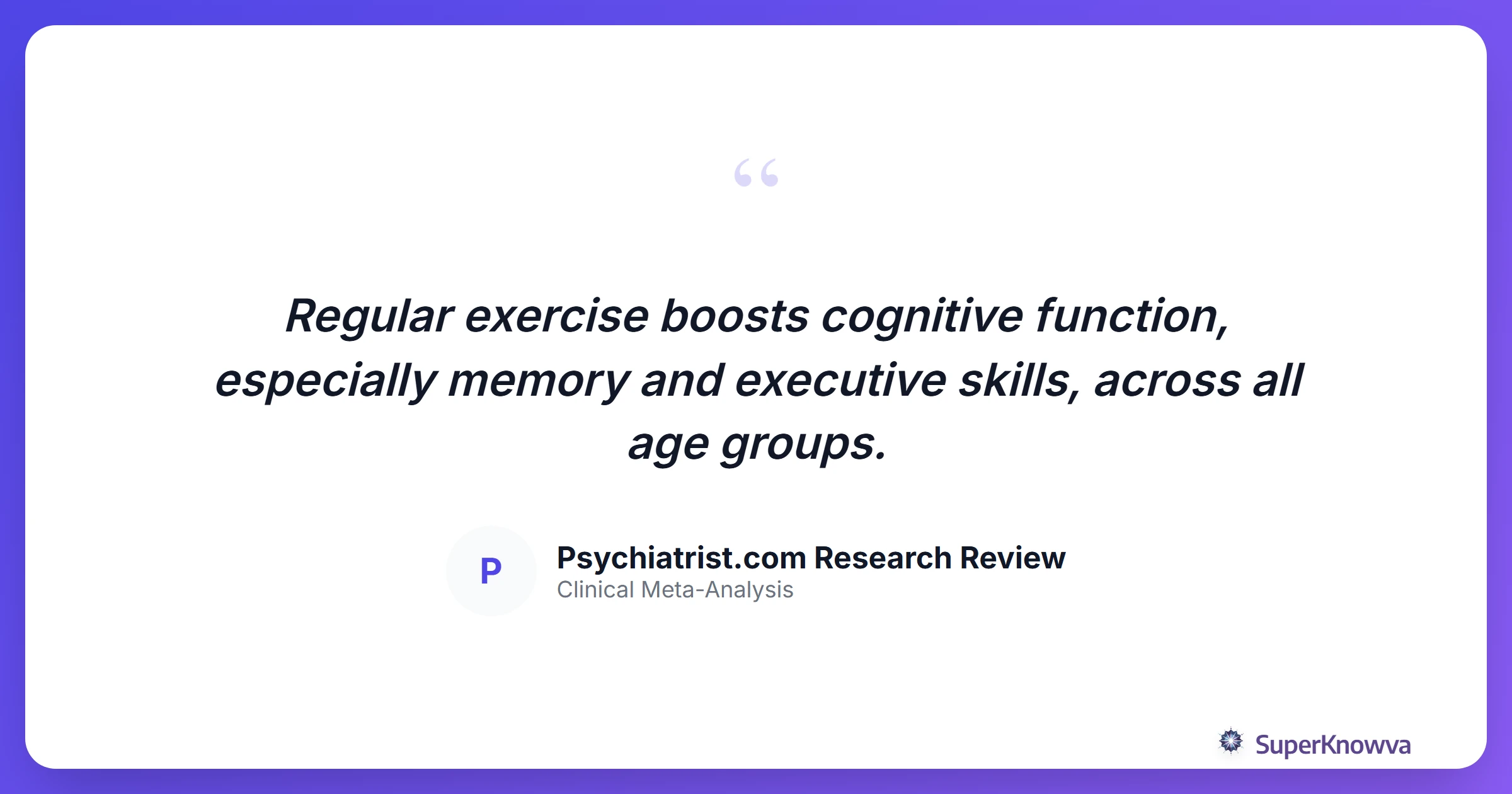
A review of over 2,700 trials confirmed that regular exercise is critical for executive skills and memory. Plus, light activity in the evening helps you transition from "study mode" to "sleep mode," which is when your brain actually consolidates everything you learned that day.
Conclusion
Your brain is a biological organ, not a machine. Like any other part of your body, it functions best when you are healthy and active. This finals season, prioritize effective study habits instead of just working longer hours. Make physical activity for brain health a consistent part of your routine. A 10-minute movement break or a brisk walk between classes helps improve your concentration and grades.