Is your library desk starting to feel like a prison cell? We’ve all been there. It’s finals week, the pressure is mounting, and you’re convinced that every second not spent staring at a textbook is a second wasted. You chain yourself to a chair, down a third coffee, and hope for the best.
But here’s the irony: the longer you sit still, the slower your brain works.
Research shows that a higher GPA requires more than just library hours; it requires regular movement. Using exercise for better exam grades is an effective way to sharpen focus and improve memory retention.
The Science of Sweat: Why Your Brain Craves Movement
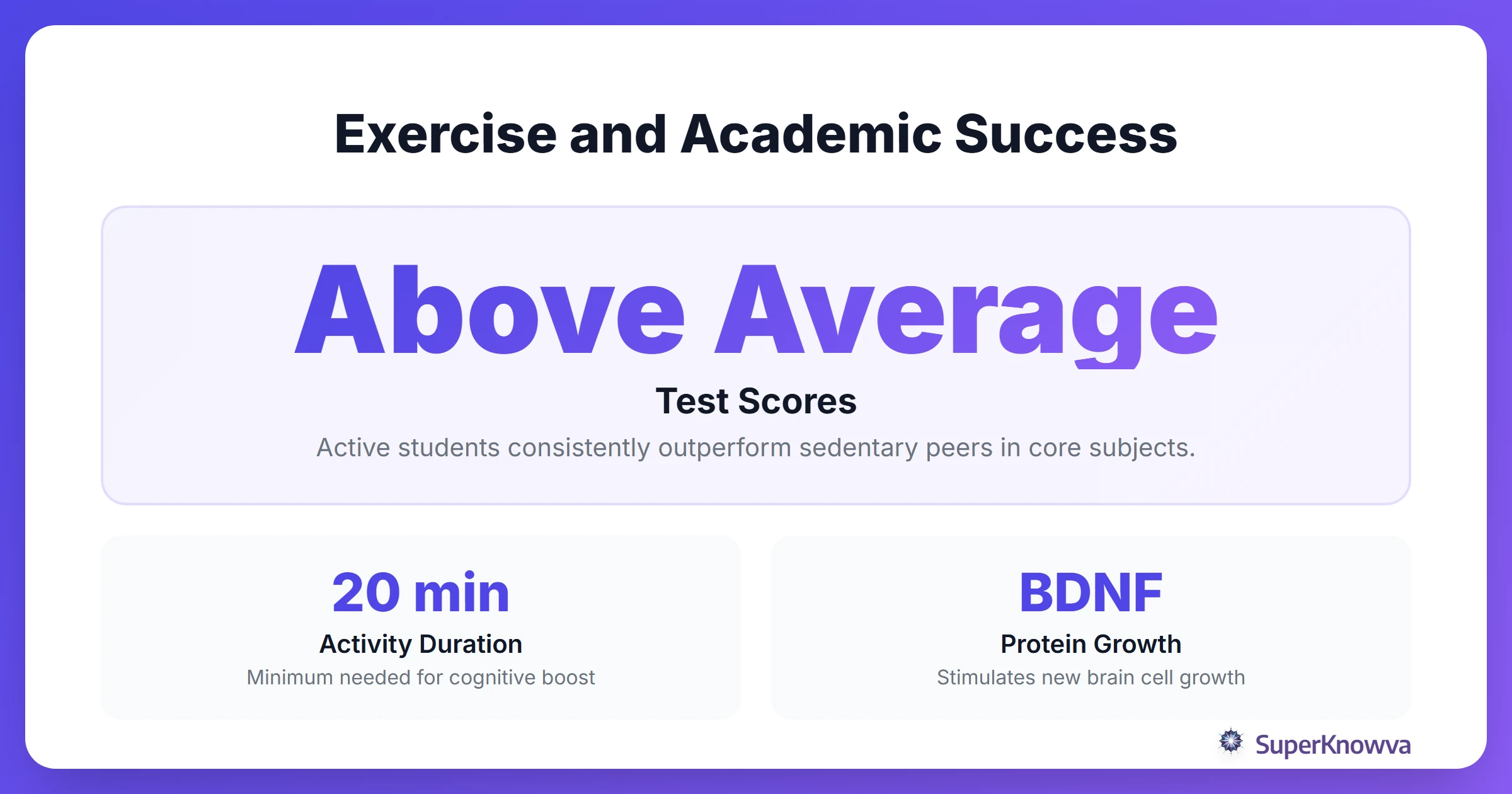
The link between exercise and cognitive function is deeply biological. When you get your heart rate up, your body releases a protein called Brain-Derived Neurotrophic Factor (BDNF). Scientists call it "Miracle-Gro" for the brain. BDNF keeps your existing neurons healthy and encourages the growth of new ones.
Beyond the chemistry, exercise sends a surge of blood directly to the hippocampus. That’s the part of your brain responsible for verbal memory and learning. It’s the engine room of your academic performance.
Does it actually work? Absolutely. Research on daily exercise and exam grades shows that active students consistently outscore their sedentary peers in core subjects like math and reading. You don’t need to train like an Olympian to see the benefits, either. Just 20 minutes of moderate movement can trigger the neurochemical changes needed to prime your brain for a heavy study session.
Timing Your Movement: The "Cognitive Window"
Exercise is usually associated with long-term fitness goals. For a student in a "study emergency," immediate benefits matter most. This is the difference between "chronic" exercise (your regular gym habit) and "acute" exercise: the short, vigorous bursts that provide an instant cognitive exam boost.
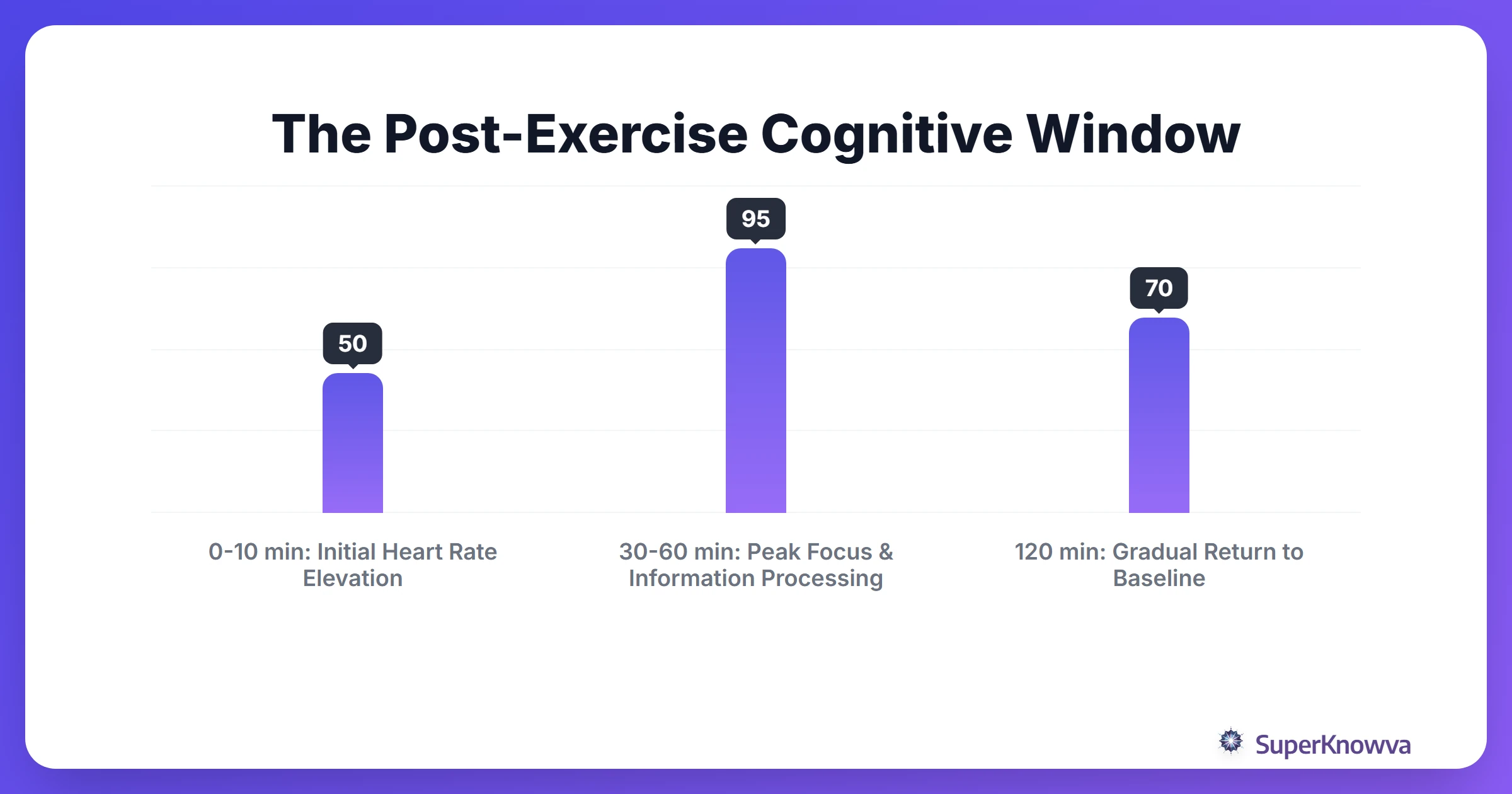
A Virginia Tech study on acute exercise for STEM students found something fascinating: there is a prime "cognitive window" that opens right after you work out. For about two hours after physical exertion, your brain's executive function is enhanced. You can solve complex problems faster and process new information more efficiently.
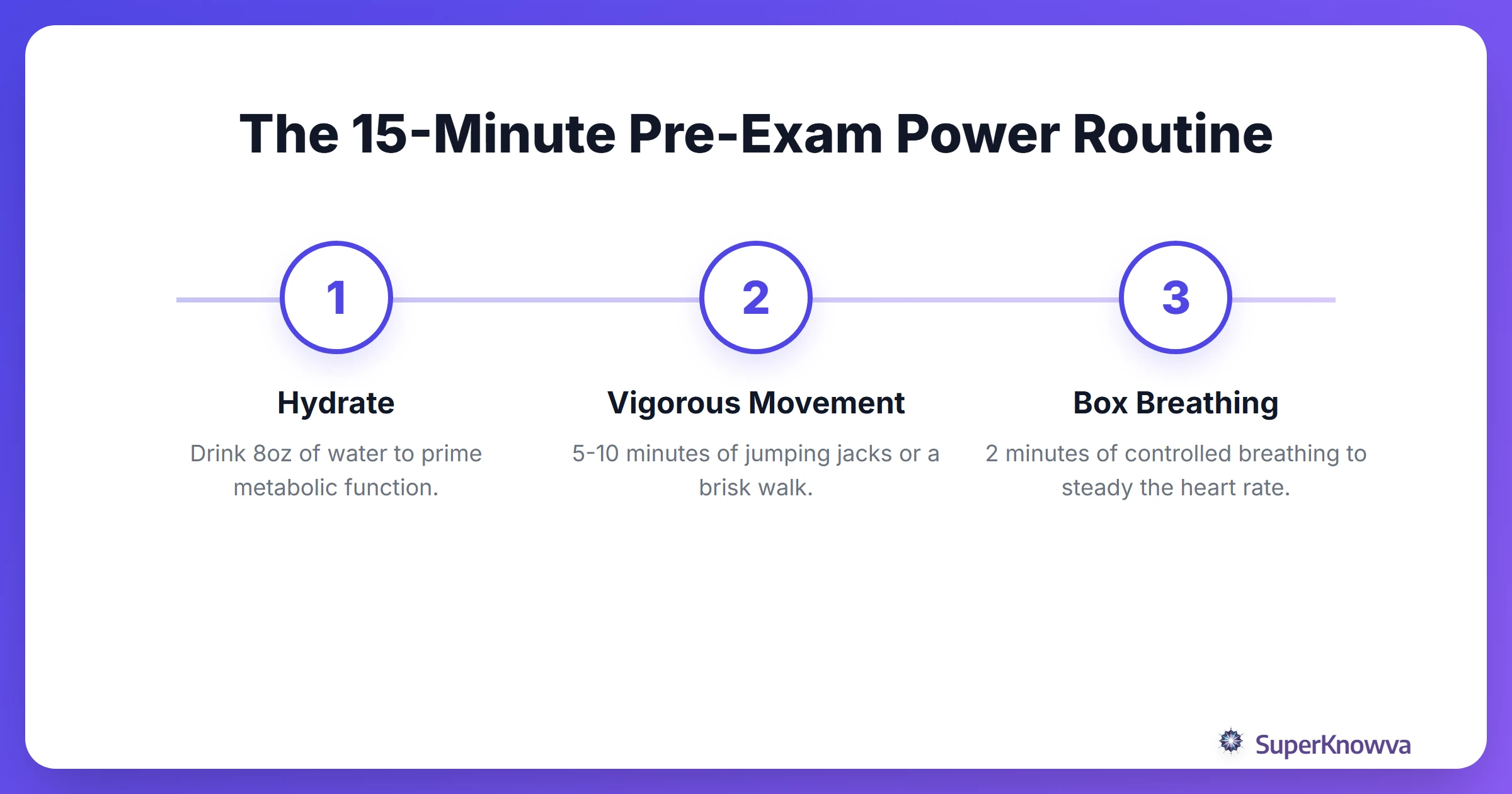
Stop viewing your workout as a distraction. It’s a strategic warm-up. A 15-minute brisk walk right before an exam could be the thing that prevents a mid-test mental block.
Match Your Movement to Your Mood
Not every workout is right for every study session. Depending on how your brain feels, you should pick your "medicine" accordingly:
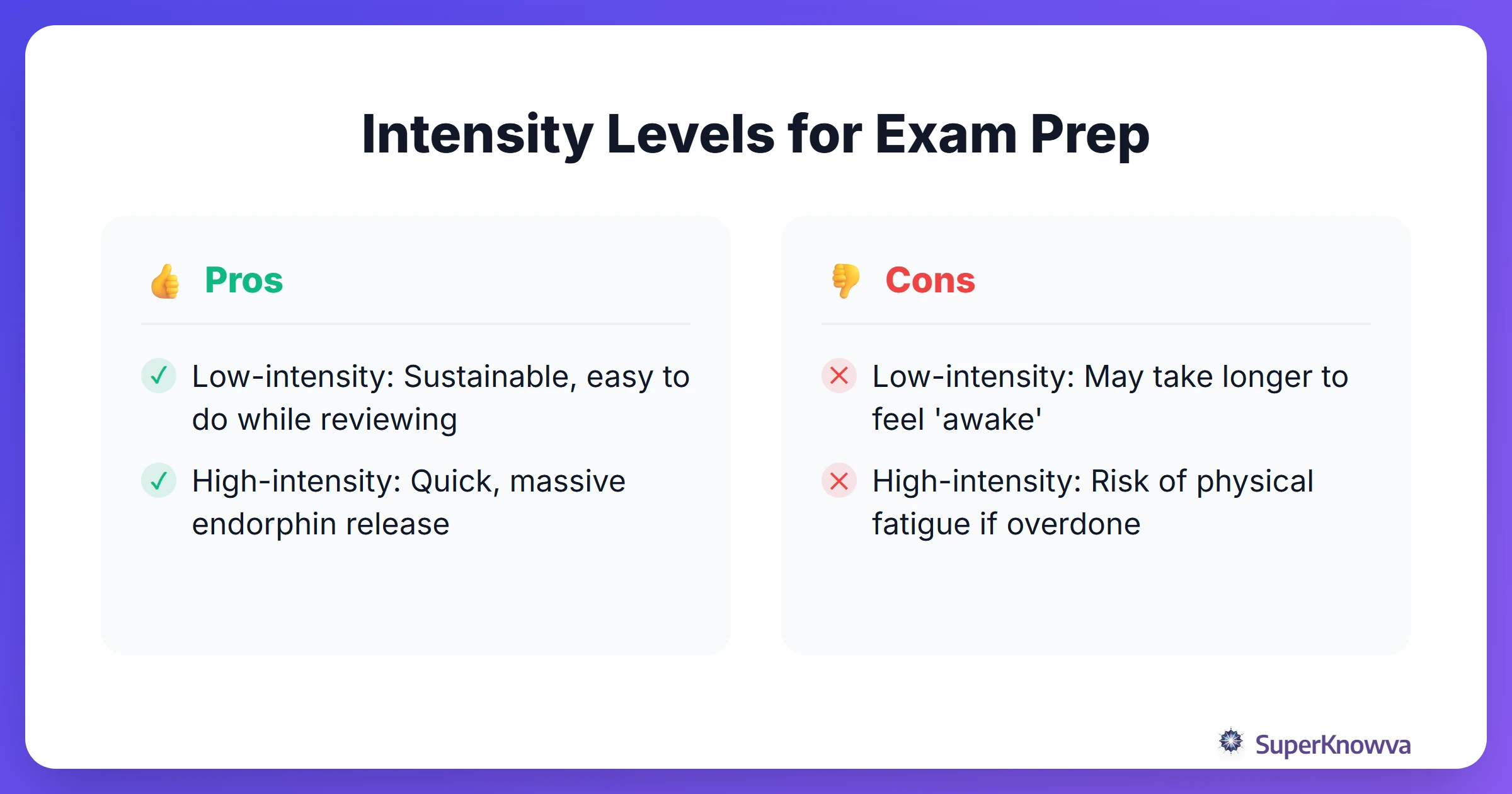
- Feeling Overstimulated? Try Low-Intensity Movement. If your brain is buzzing with too many facts, a slow walk or light stretching can help you ground yourself and transition into a state of deep focus.
- Feeling "Foggy"? Go for HIIT. If you’re sluggish and the words are blurring together, try High-Intensity Interval Training. A few minutes of jumping jacks or a quick sprint sends a massive hit of oxygen, endorphins, and dopamine to your brain. You’ll feel instantly more alert.
- Feeling Anxious? Try Aerobic Exercise. Running, cycling, or swimming are the ultimate stress-killers. The rhythmic nature of these exercises helps flush cortisol (the stress hormone) out of your system.
- Feeling Burned Out? Try Green Exercise. Take it outside. Moving in nature has a unique ability to restore your attention and heal the mental fatigue that comes from staring at a screen all day.
If the pre-exam jitters are still hitting hard after your workout, consider adding meditation for focus to your cool-down routine. It’s a powerful 1-2 punch for mental clarity.
Beating the Slump: The Nervous System Reset
We’ve all hit the "study slump." It’s that point where you’ve been reading the same paragraph for twenty minutes and nothing is sinking in. This isn't just laziness; it's a sign you are recovering from student burnout or heading straight for it.
Think of physical activity as a reset for your nervous system. By shifting your focus from mental strain to physical movement, you give your prefrontal cortex, the part of the brain doing the hard work, a chance to rest.
Practical Ways to Move (Without Losing Study Time)
You don’t need a gym membership or a two-hour block of time to make study break exercise work for you. Try these:
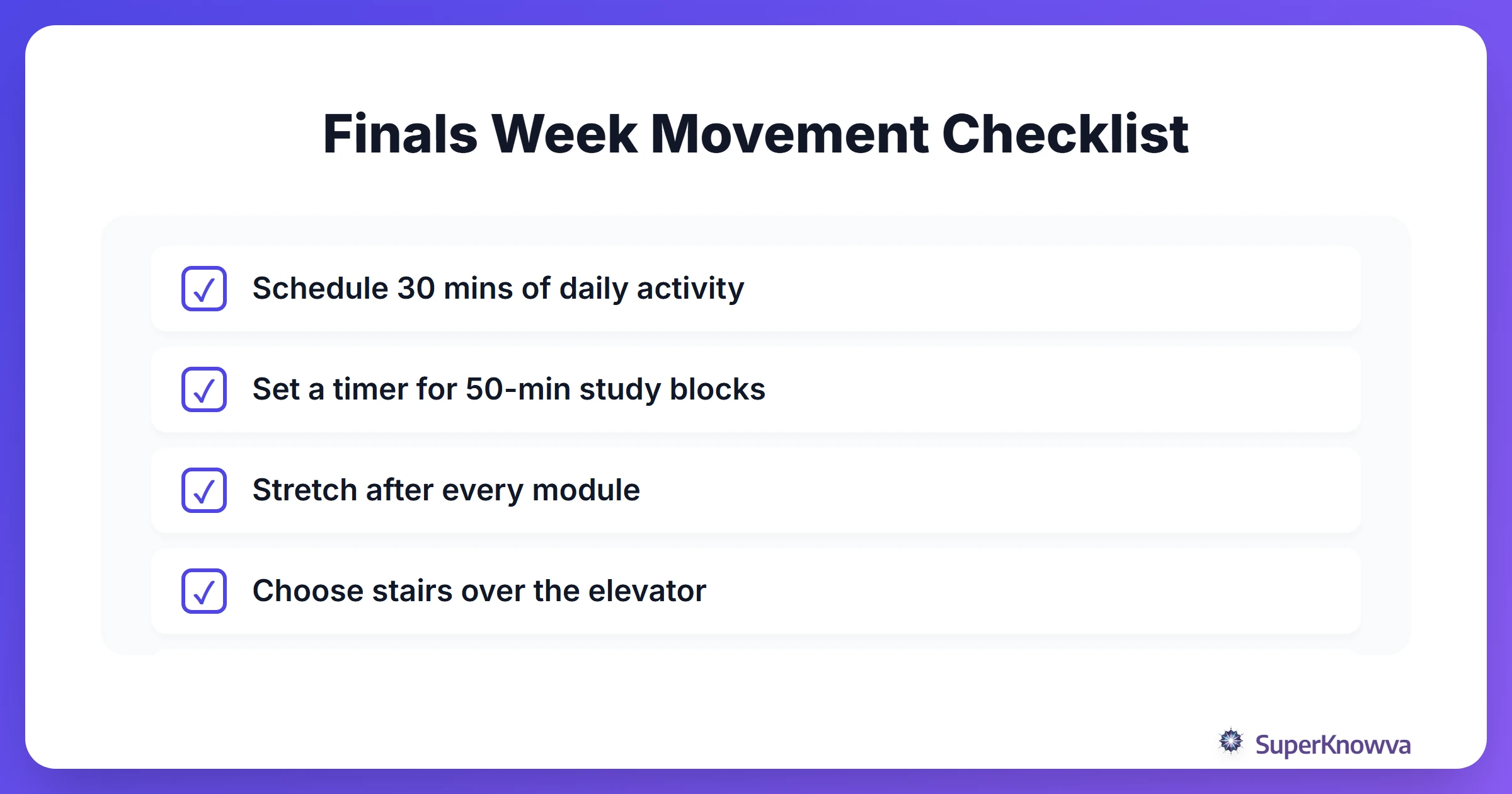
- The 10-Minute Power Walk: Between study modules, step outside. It’s enough to refresh your perspective without derailing your schedule.
- Desk-Friendly Stretches: Every 50 minutes, do some shoulder rolls or seated spinal twists. Your neck and back will thank you.
- The Non-Negotiable Slot: Treat your movement time like an exam. Put it in your calendar. If it’s scheduled, you’re less likely to "guilt" yourself into skipping it.
- Fuel the Machine: Movement is only half the battle. Make sure you’re checking out the best diet for exam performance to keep your energy levels stable.
Conclusion: Your Competitive Advantage
In academia, students often seek ways to improve their performance. While AI tools like SuperKnowva help organize your notes, your brain needs movement to function effectively.
Don't see exercise as time taken away from your books. See it as the tool that makes every minute of study twice as effective.
Final Tip: Next time you feel that mid-afternoon crash coming on, don't reach for a fourth cup of coffee. Reach for your running shoes. Your GPA will thank you.