Is it just me, or does the sun make your brain feel like it’s slowly melting?
The weather is perfect, the days are endless, and the temptation to ditch your laptop for a beach towel is at an all-time high. If you’re currently staring blankly at a blinking cursor while your friends post vacation stories, don't beat yourself up. You aren't lazy. You’re just dealing with the "Summer Slump."
Learning how to overcome summer productivity slump is a survival skill for students and lifelong learners. It’s about finding that sweet spot: maintaining your momentum without burning out before the fall semester even begins.
Let’s break down the science of why your brain wants to quit and look at some AI-powered ways to keep you sharp while the sun is out.
The Science of the "Brain Melt"
The Summer Slump is a documented physiological hurdle, not an excuse to slack off. When temperatures climb, cognitive function declines. The human brain functions best in cooler environments. When the body works to prevent overheating, less metabolic energy remains for complex problem-solving.
Then there’s the psychological side: the FOMO (Fear Of Missing Out) is real. Seeing everyone else on vacation makes work feel like a punishment, making overcoming procrastination feel ten times harder than it does in the middle of January.
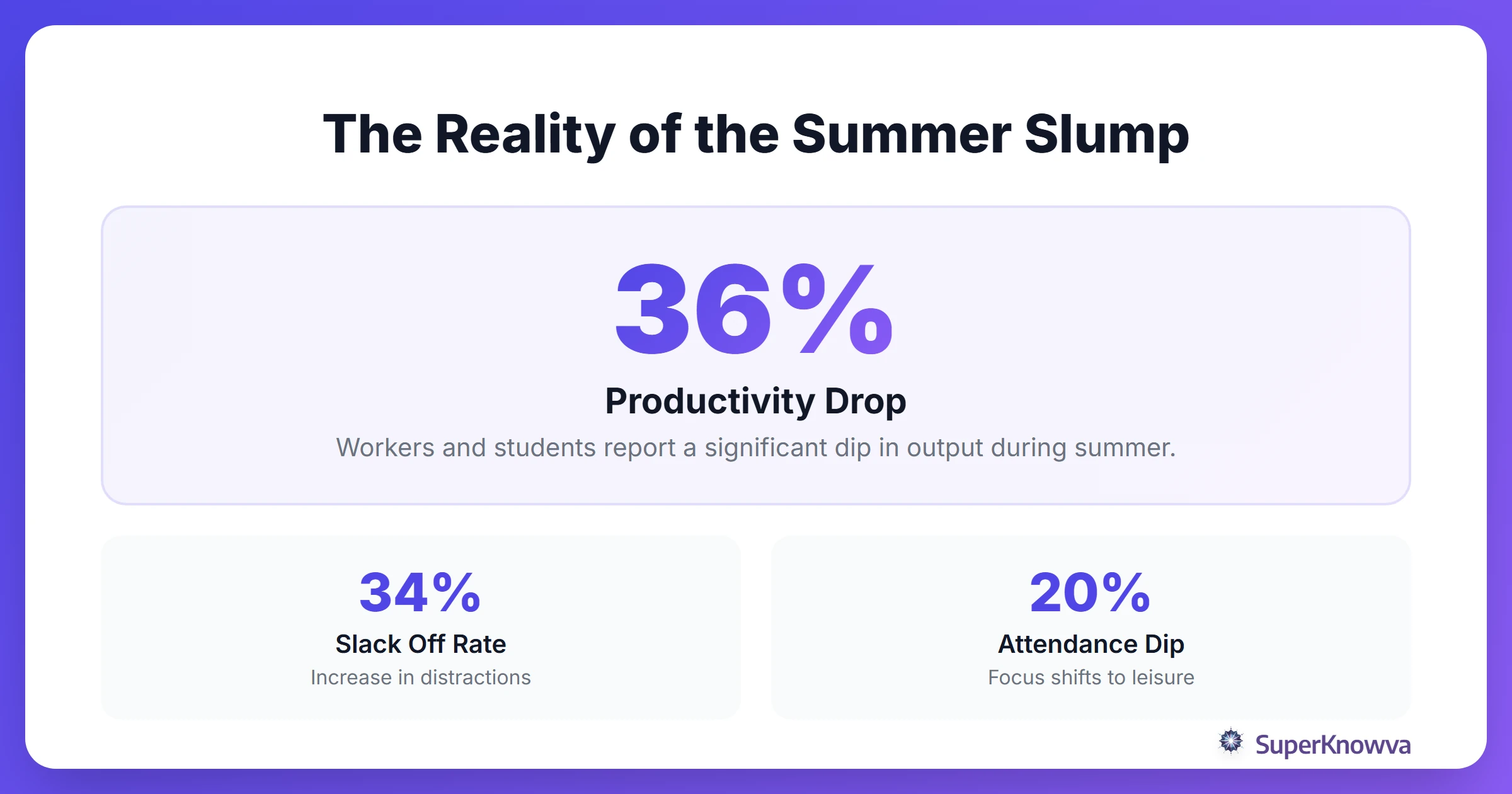
The numbers back this up. Productivity can dip by as much as 36% during the summer months. Once you realize this is a statistical reality, you can stop feeling guilty and start being strategic.
The 'Summer Friday' Strategy for Students
In the corporate world, many offices use "Summer Fridays" to let employees head out early if their tasks are done. Why not steal that for your studies?
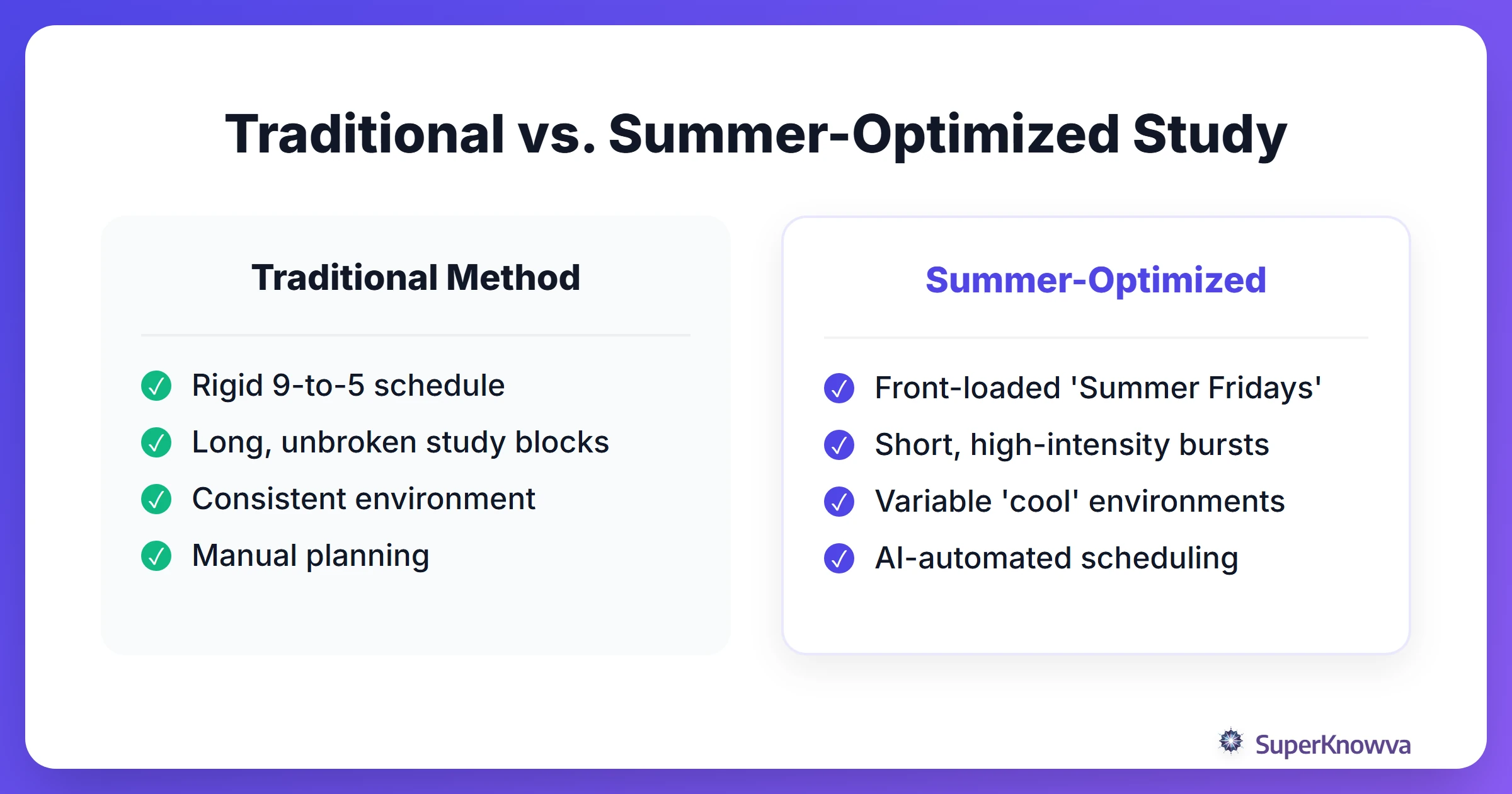
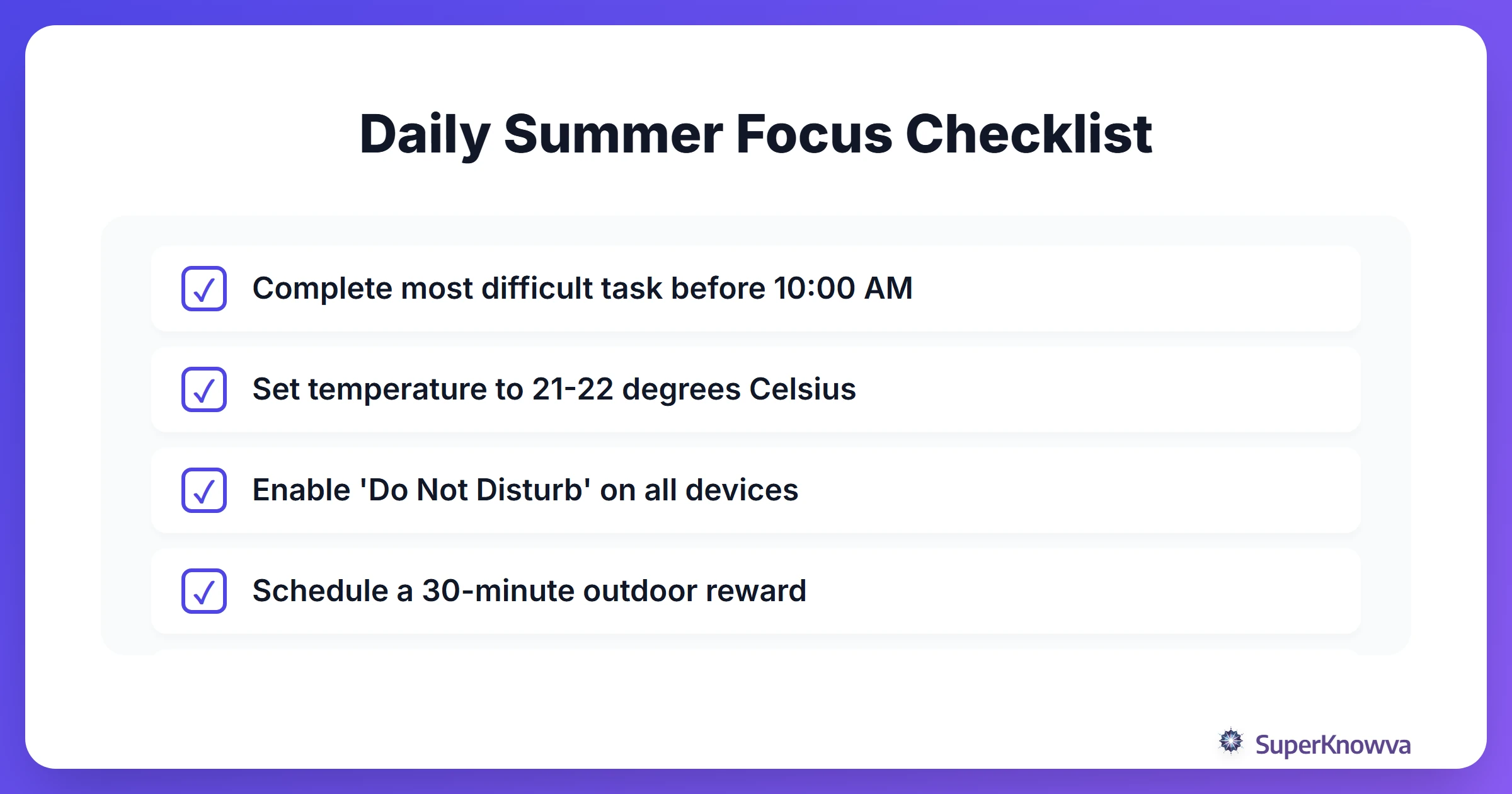
Instead of dragging a light study load across seven miserable days, try front-loading your week. Aim to crush your high-intensity work between Monday and Thursday. By treating those four days as "deep work" zones, you earn a guilt-free three-day weekend.
This isn’t just about being nice to yourself. It’s a scheduled reward system. It prevents "bore-out," the draining feeling of working all the time without making progress.
Digital Minimalism: Reclaiming Your Focus
Let’s be honest: Instagram is a minefield in July. To stay on track, you need to practice digital minimalism for students.
Start with a "digital declutter." Move those time-sink apps off your home screen and get aggressive with "Do Not Disturb" mode. The goal is to move from passive consumption (scrolling through someone else's trip to Italy) to active learning. When you’re at your desk, be all in. When you’re outside, leave the phone behind.
Use AI to Work Smarter, Not Harder
If you want to beat the heat, you have to stop wasting time on "busy work." This is where AI-powered platforms like SuperKnowva become your secret weapon. Why spend three hours manually summarizing a textbook chapter when you could be at the pool?
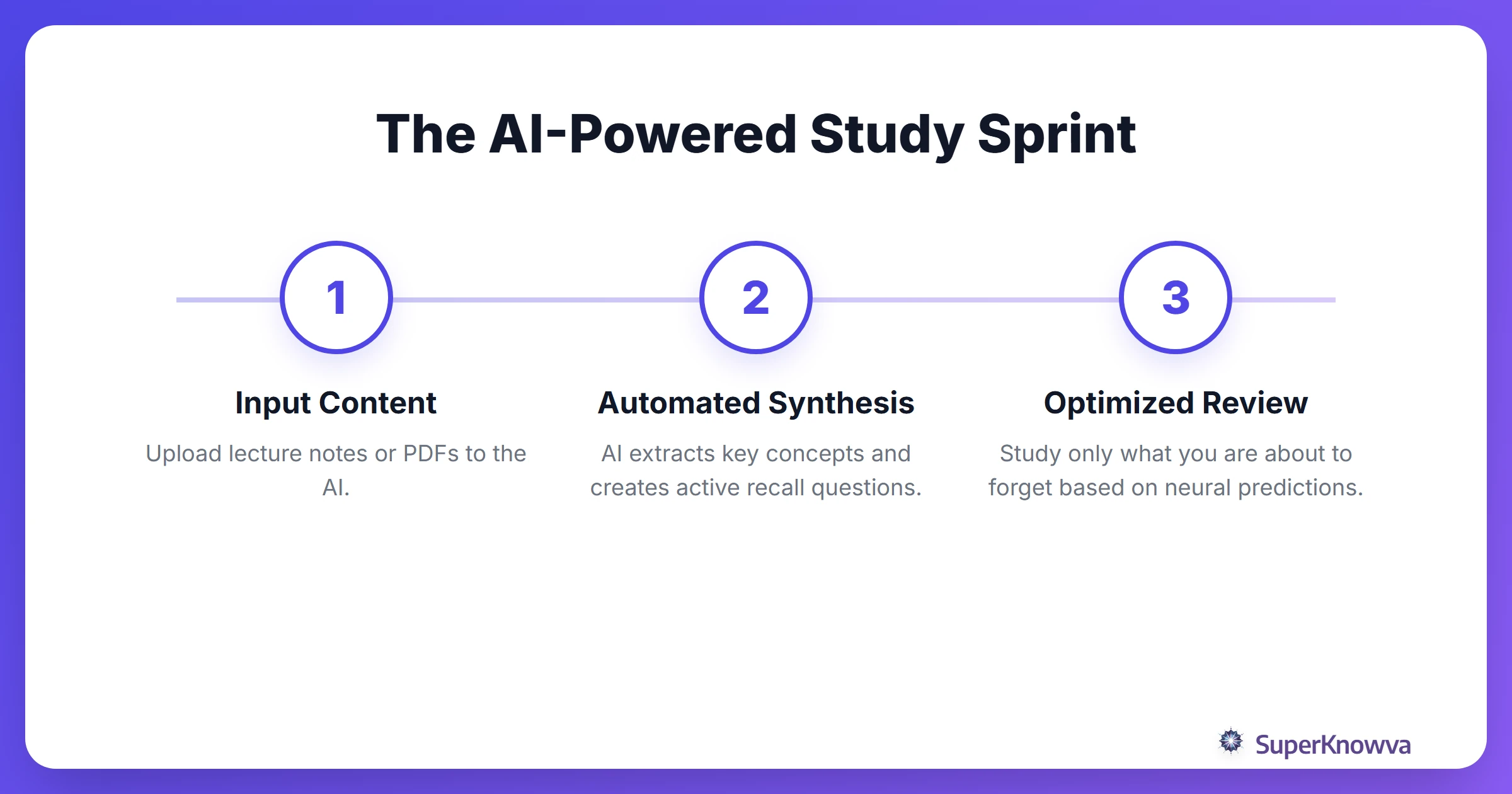
- Beat the Forgetting Curve: SuperKnowva’s algorithms predict exactly when you’re about to forget a concept, so you only study what you need to.
- Kill Decision Fatigue: Stop wasting mental energy deciding what to study. Let the AI plan your daily review sessions.
- Fast-Track Retention: Use spaced repetition to get better results in shorter windows of time.
By letting AI handle the heavy lifting, you can finish your sessions faster and get back to your summer plans without the "I should be studying" guilt hanging over your head.
Optimizing Your "Study Climate"
Environment is everything. If you’re sweating, you aren't focusing. Science suggests the optimal "study climate" is right around 21–22 degrees Celsius (70–72°F).
If you can’t control the thermostat, try these quick fixes:
- Clear the Visual Cues: Hide the beach towels and travel brochures. If you can see them, your brain is already halfway out the door.
- The Coffee Shop Effect: Hit a wall? Change your scenery. A library or a cool café provides the novelty your brain needs to wake up.
- Hydrate (Properly): Dehydration is the #1 cause of summer brain fog. Pair your water with light snacks like berries or nuts rather than heavy meals that lead to a 2:00 PM food coma.
For more on environmental optimization, check out these Forbes Productivity Tips for 2024.
Timing is Everything: Pomodoro vs. Flowtime
In the summer, your energy levels aren't a flat line; they fluctuate. Choose a rhythm that matches your mood:
- The Pomodoro Technique: Perfect for the days when you have zero motivation. Telling yourself "I only have to work for 25 minutes" makes the mountain look like a molehill.
- Flowtime: Use this when you actually find a "cool" pocket of focus (usually early morning). Work for as long as you’re in the zone, and only stop when your focus naturally dips.
Mastering Deep Work for students means knowing which tool to pull out of the shed. Not sure which one fits you? Read our full breakdown of Pomodoro vs. Flowtime.
Conclusion
Surviving the summer slide doesn't mean locking yourself in a dark room until September. It’s about being intentional. By leveraging AI, optimizing your space, and adopting a "Summer Friday" mindset, you can stay ahead of the curve while still enjoying the season.
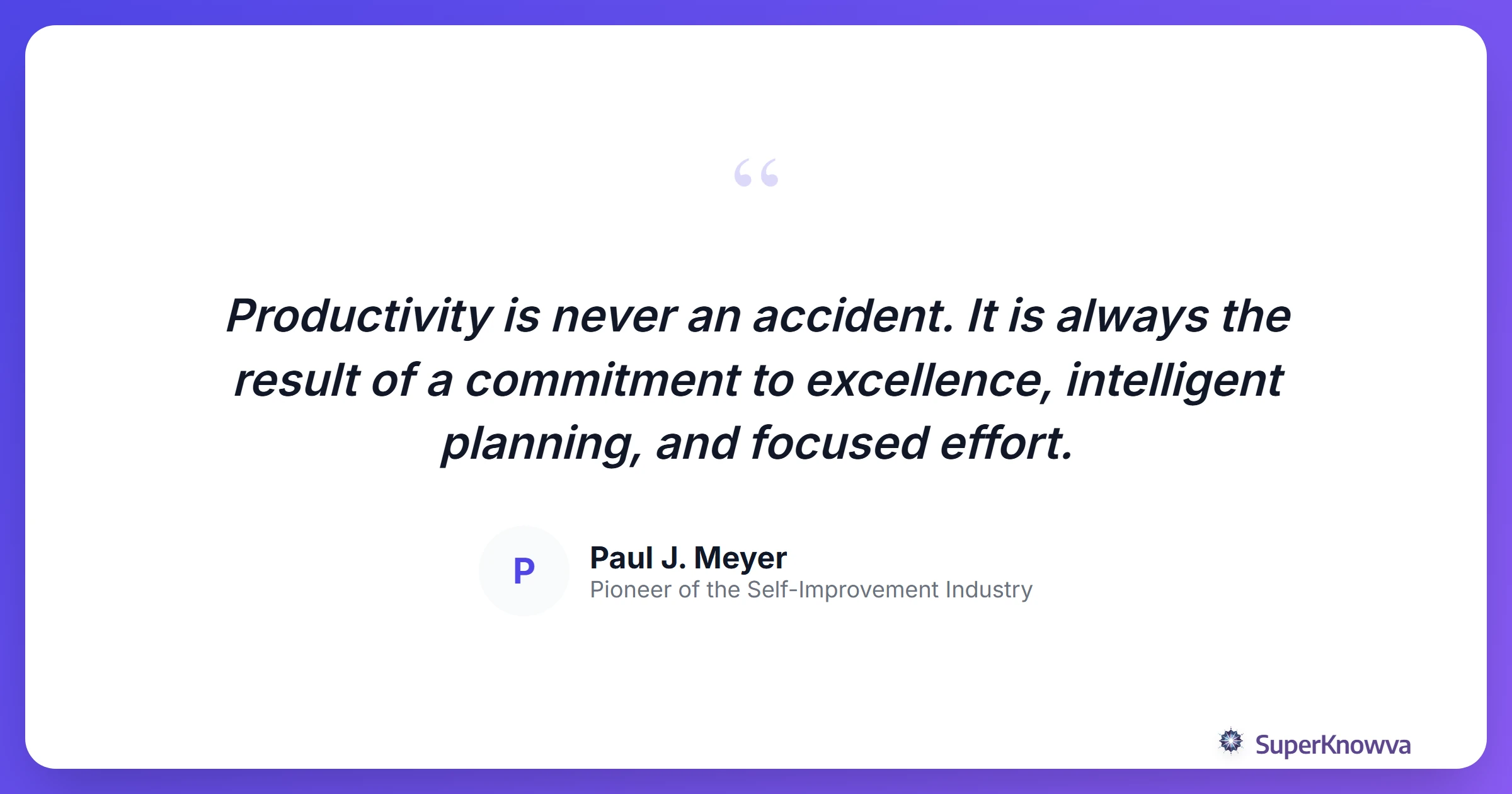
Don’t let the heat stall your progress. Take these strategies, pick one to start with today, and make this your most productive summer yet. For more tips on managing your workload during the holidays, explore HR Vision: Managing the Summer Slump.