Ever sat down for a "quick" study session only to realize, two hours later, that you’ve spent the entire time organizing your Spotify playlists? You aren't alone. Between the ping of a group chat and the lure of an infinite scroll, the battle for our attention is harder than it’s ever been. While most students rely on old-school kitchen timers or basic phone apps, the traditional pomodoro technique with ai timers is quietly undergoing a high-tech makeover. By pairing the psychology of interval work with machine learning, you can finally stop fighting your brain and start working with it.
The Foundation: What is the Traditional Pomodoro Technique?
Before we look at the future, let's talk about the tomato. The Pomodoro Technique was cooked up in the late 1980s by Francesco Cirillo. He was a university student struggling to focus, so he grabbed a tomato-shaped kitchen timer (pomodoro is Italian for tomato) and set a simple rule: work for 25 minutes, then take a 5-minute break.
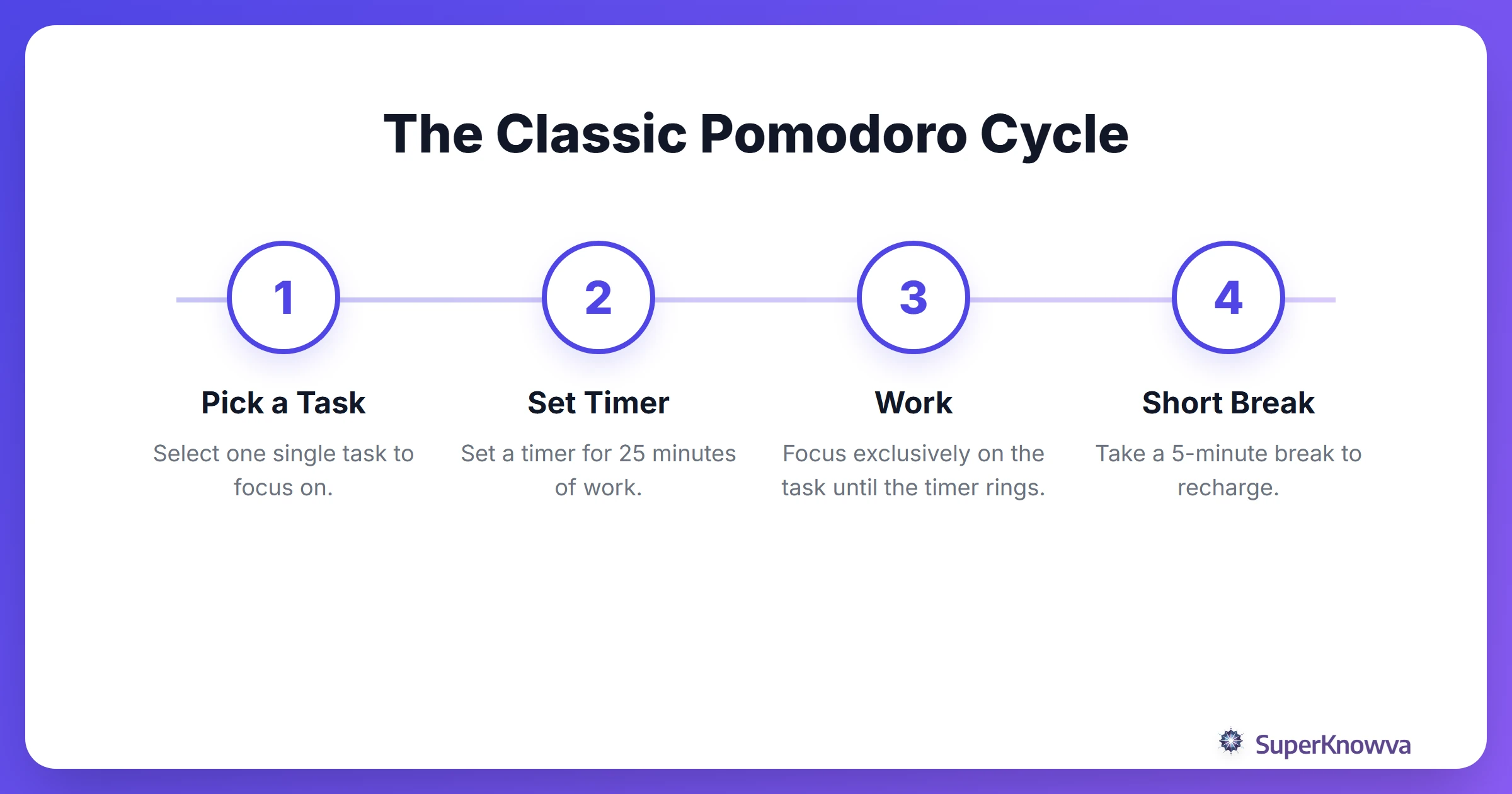
The psychology here is brilliant. By breaking massive tasks into bite-sized chunks, you kill the "ticking clock" anxiety that comes with big deadlines. It also forces you to get honest about your time. As discussed in the SuperDataScience podcast, the core of the method is about learning to estimate your focus periods so you can actually stay on schedule. Over time, your brain gets trained: it knows that intense focus is temporary and a reward (that 5-minute break) is always right around the corner.
Why the Standard 25-Minute Rule Fails Some Brains
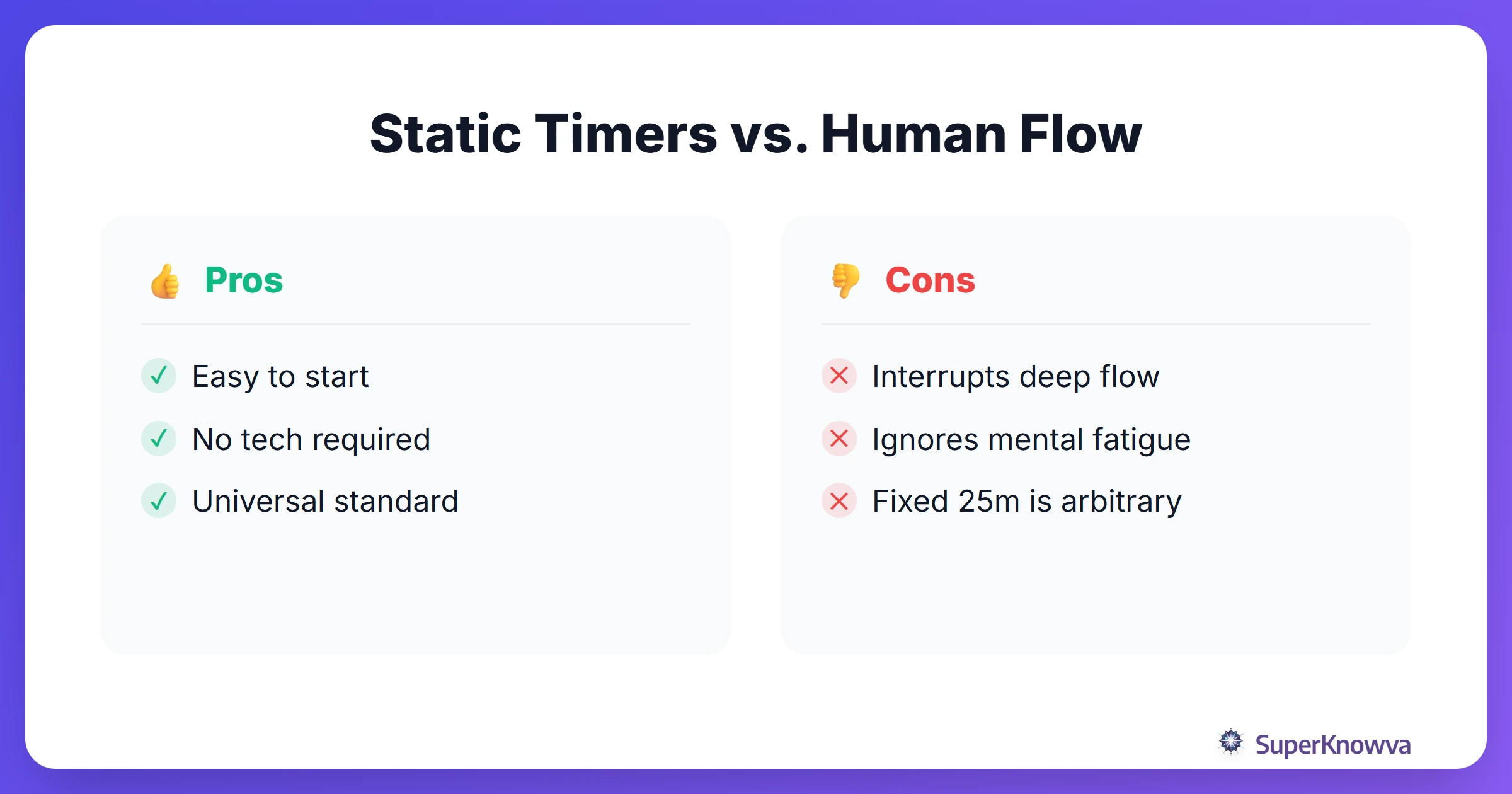
The classic 25/5 split assumes every brain and every subject works exactly the same way. This is not true. Different tasks require different approaches to focus.
If you’re deep into a complex task like coding, writing an essay, or tackling advanced calculus, a 25-minute timer can be a nuisance. Just as you hit your "flow state," the phase where work feels effortless, the timer dings. You’re forced to stop, breaking your momentum and creating a "restart cost" when you try to get back into the zone. Manual tracking often leads to "productivity theater," where you spend more time fiddling with timer settings than studying.
If you’ve ever felt like the 25-minute block was holding you back, you might want to explore the debate between Pomodoro vs. Flowtime: Which Productivity Method is Best for Your Brain?.
Enter AI: The Evolution of the Smart Timer
This is where the pomodoro technique with ai timers flips the script. Unlike a dumb kitchen timer, an AI-driven timer uses machine learning to get to know your specific habits. These tools don't just count down; they observe.
AI timers can identify "focus decay" by looking at how you’re actually interacting with your work. If the AI notices your typing speed is dropping or you’re starting to hop between browser tabs aimlessly, it realizes your brain is hitting a wall. Instead of making you wait for the 25-minute mark, it might suggest an early break to recharge. But if it detects you’re in a deep flow state? It’ll stay quiet and extend your session so you can maximize your output while the gears are turning.
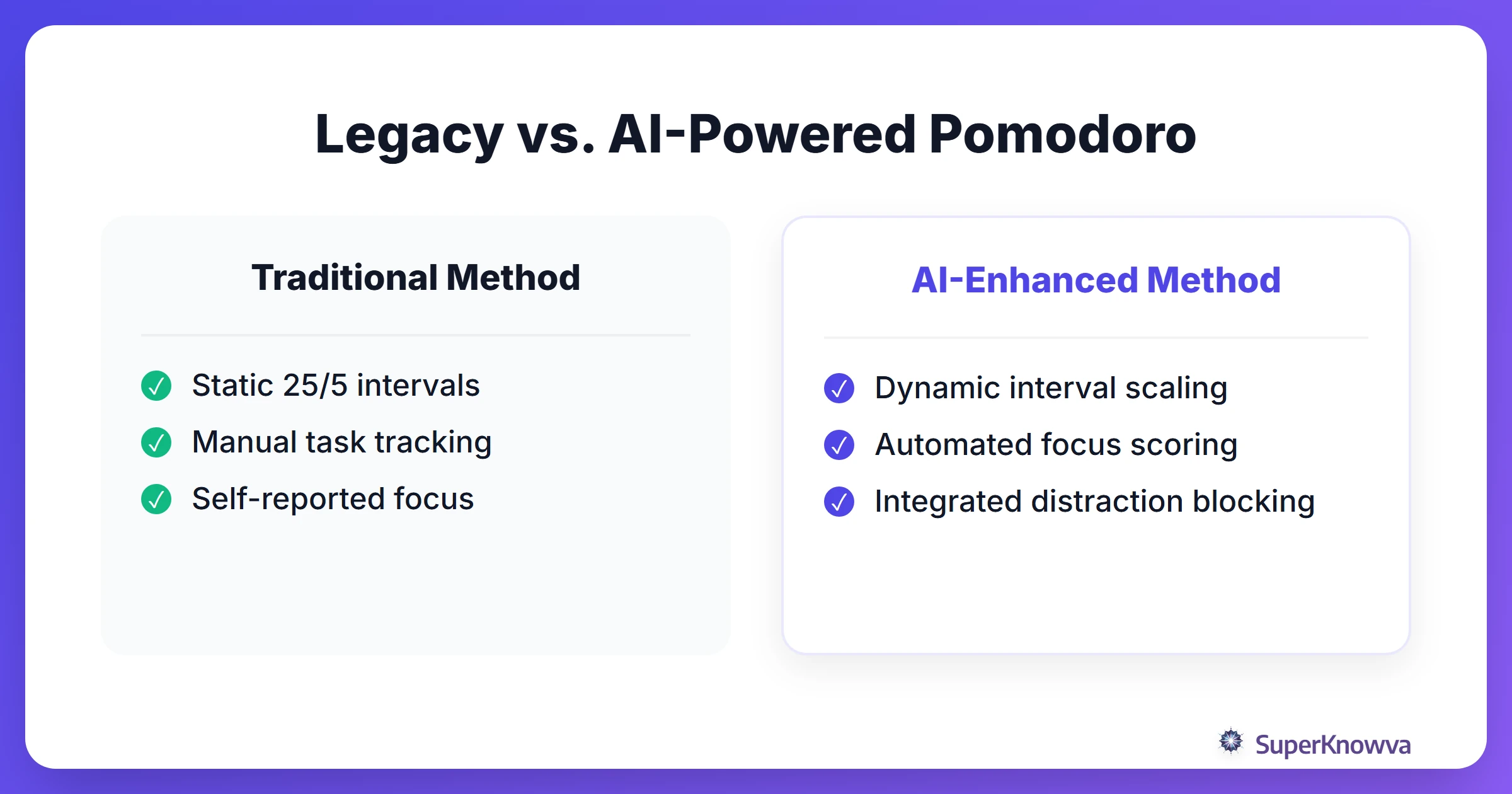
While tools like Pomofocus Online Timer are great for basic sessions, moving to AI-based models allows for a schedule that breathes and shifts based on what you’re doing in the moment.
Adaptive Intervals: Matching Your Biological Clock
We all have a "prime time." Some of us are morning larks who are sharpest at 8:00 AM, while others don’t really find their groove until the sun goes down. AI timers learn these peaks by tracking when your focus scores are at their highest.
By adjusting your "Pomodoros" based on real-time mental fatigue, these adaptive timers help prevent the burnout that comes from trying to power through a fog. If you’re grinding through a particularly brutal session, the AI might bump your break from 5 minutes to 10 minutes to make sure you actually recover.
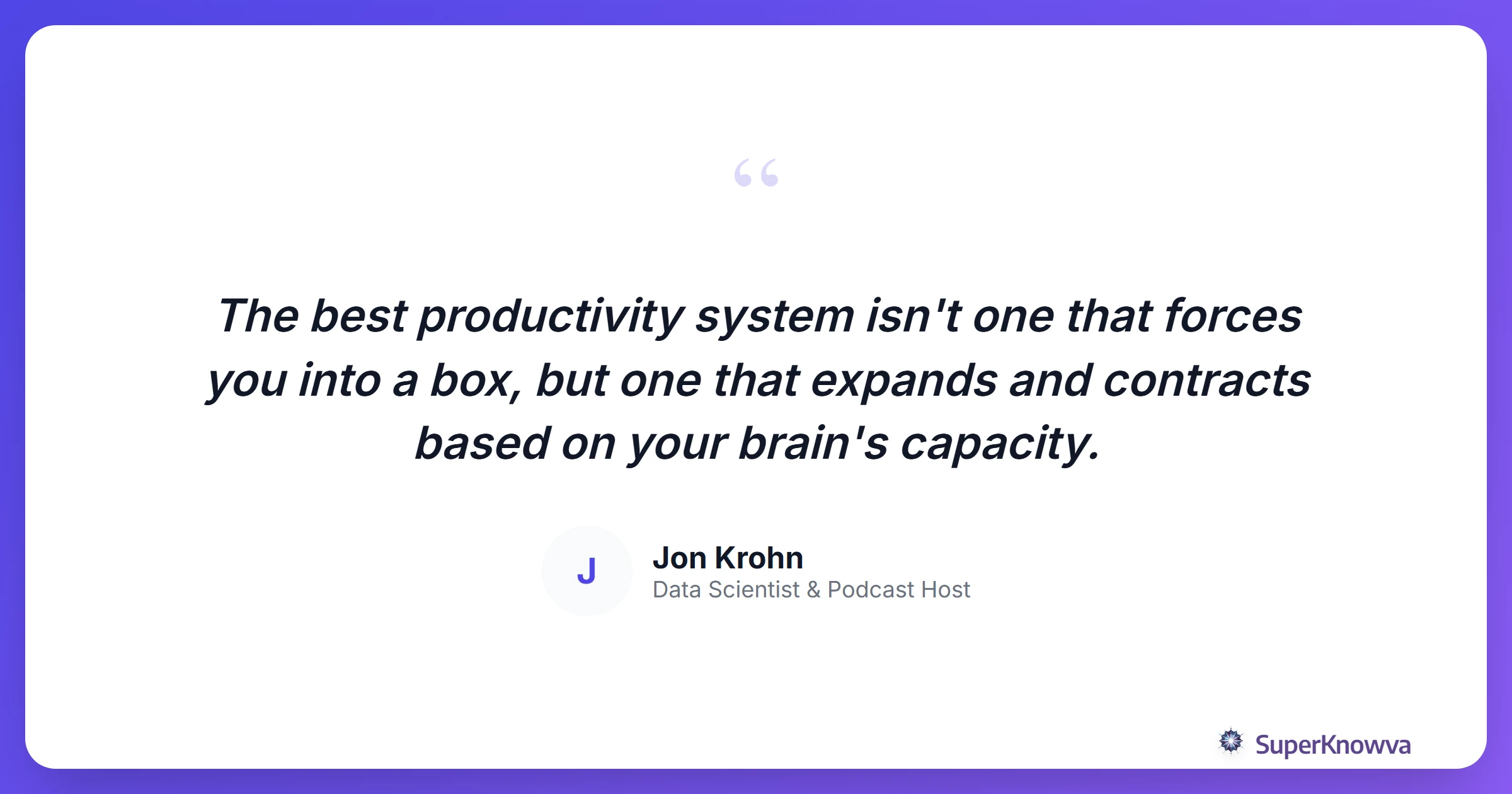
By using AI to lower the friction of getting started, you can apply the science-of-overcoming-procrastination more effectively. It’s a lot easier to start when you know the timer is going to adapt to your energy levels.
Focus Scoring: Turning Productivity into Data
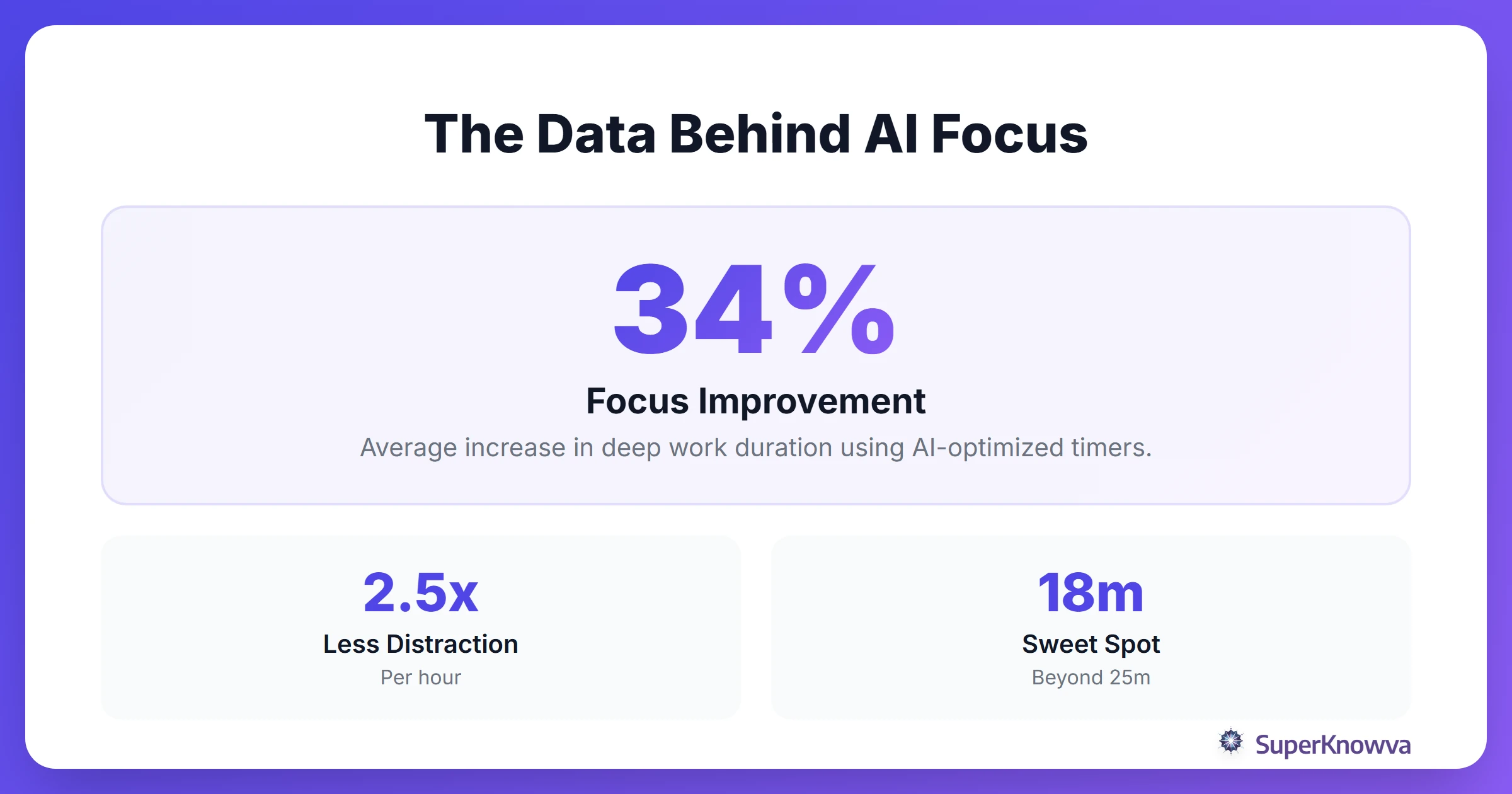
One of the coolest parts of using the pomodoro technique with ai timers is focus scoring. It gives you the receipts on your actual attention span. Instead of ending the day saying, "I think I studied for four hours," you get a data-driven look at the quality of those hours.
AI tools track distractions in real-time, such as how many times you checked social media or opened a non-study tab. It is a "humbling" reality check that builds the self-awareness needed to improve. Integrating AI timers is one of the most effective deep-work-strategies-students can use today because it turns vague effort into measurable progress.
How to Build Your AI-Enhanced Study Routine
Ready to give your study sessions an upgrade? Transitioning to an AI workflow takes a little bit of setup, but the payoff in better grades and less stress is worth the effort.
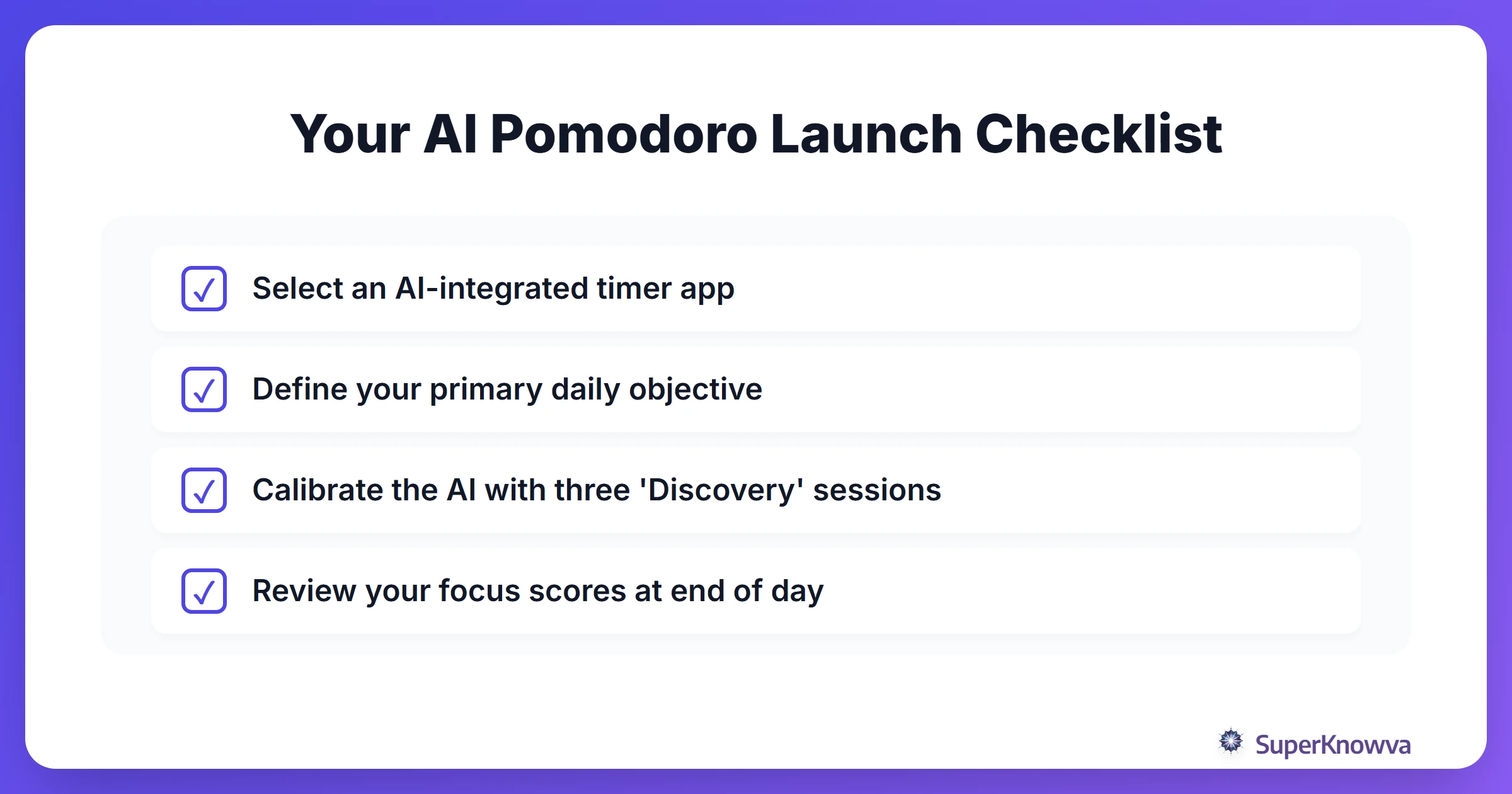
- Pick Your Tool: Find an AI-integrated timer app that works with your laptop or phone.
- The Calibration Phase: Treat your first few sessions as data gathering. Don't worry about being a productivity god right away; let the AI learn your natural distraction triggers and your flow peaks.
- Clean Up Your Space: Smart timers work best when you also practice digital-minimalism-study-focus. Turn off those phone notifications so the AI can track your real focus.
- Check the Stats: At the end of the week, look at your focus scores. Are you a beast in the afternoon? Do you struggle with history but breeze through math? Use that data to move your hardest tasks into your "peak focus" windows.
Effective studying isn't about grinding out more hours: it's about making the hours you do spend actually count. By using the pomodoro technique with ai timers, you work with your natural rhythm instead of against it. Try an adaptive timer today to see how your focus improves when your schedule fits your brain.