While the rest of the world is busy posting beach photos and out-of-office replies, many graduate students are hitting a wall. Between condensed summer seminars, looming thesis deadlines, and the relentless hum of lab equipment, the "summer break" often feels like anything but. If you’ve spent the last hour staring at a blinking cursor with a growing sense of dread, you aren't alone.
Preventing student burnout is more than a "nice-to-have" soft skill; it is your academic survival kit. Identify warning signs early and use a mix of traditional wellness and AI tools to keep your sanity intact.
Recognizing the Signs of Summer Academic Burnout
Burnout is more than just needing a long nap. It’s a deep-seated psychological state born from long-term, unmediated stress. According to Times Higher Education, burnout happens when you work beyond your means for too long without a chance to actually recover.
For those in the grad school trenches, it usually shows up in three ways:
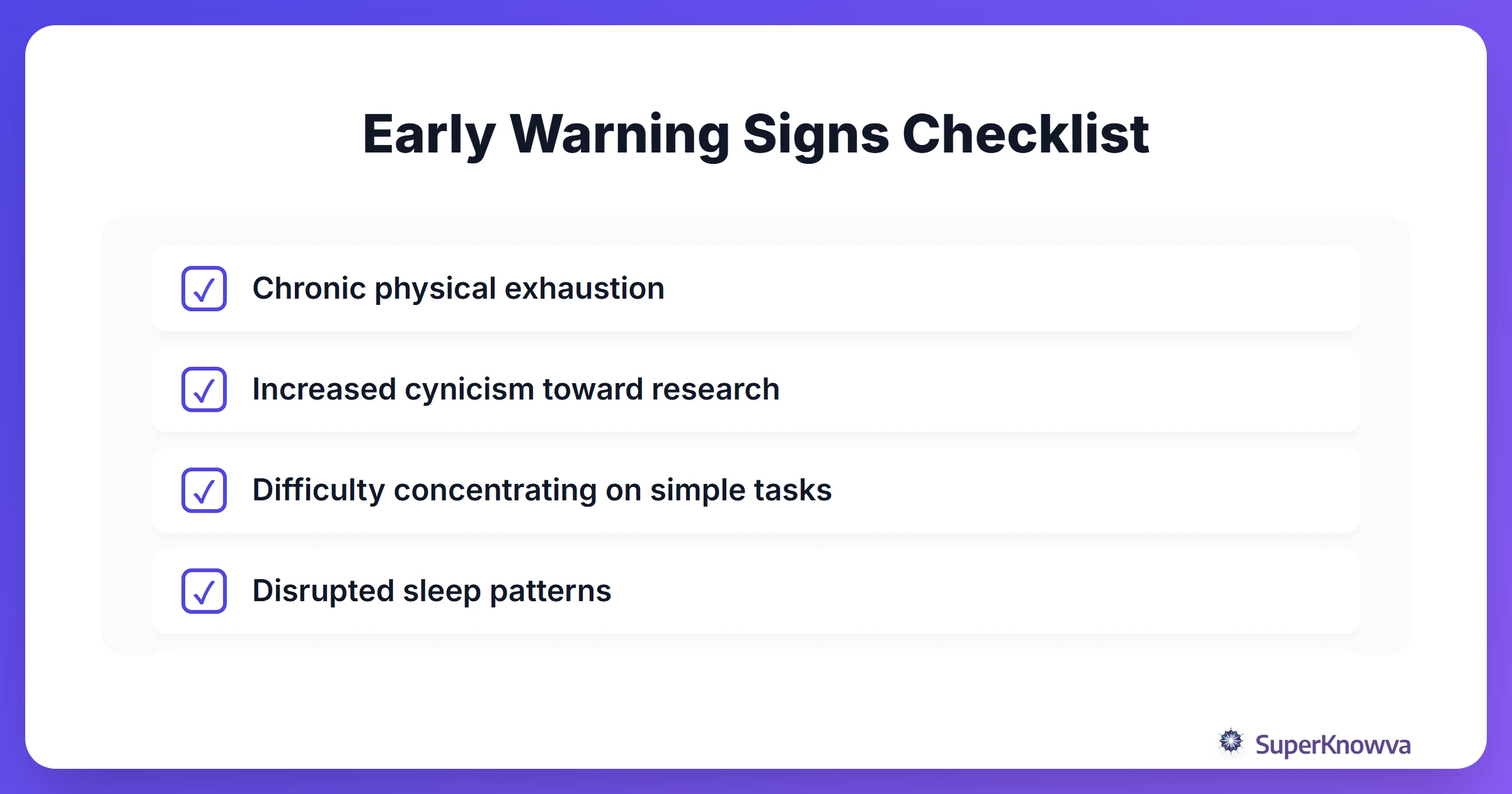
- The Physical Toll: Think chronic fatigue that eight hours of sleep can’t fix, weird tension headaches, or that 3:00 AM "brain-racing" insomnia.
- The Emotional Slide: You might find yourself snapping at your advisor, feeling zero passion for the research you used to love, or hitting a "brain fog" so thick that reading a single abstract takes half an hour.
- The Lack of Structure: Summer is dangerous because the usual "academic rhythm" vanishes. Without the guardrails of a standard semester, the line between "home" and "work" disappears entirely.
If this sounds like your current reality, it’s time to pivot. You can check out our guide on 7 signs you're exhausted and how to recover for a deeper look at the biology of the bounce-back.
The Unique Pressures of Summer Graduate Programs
Summer intensives are a different beast. The main culprit? Compression. Taking a fifteen-week curriculum and shoving it into six weeks leaves zero margin for error. It turns every Tuesday into a "final exam" scenario.
Then there’s the FOMO. Seeing your non-academic friends on vacation while you’re stuck in a windowless library leads to a specific kind of resentment. Universities like RIT emphasize that burnout occurs when expectations pile up without the relief of a traditional break. Without a "reset" button, your stress just stacks until something snaps.
Prioritizing Wellness: It’s Academic Fuel, Not a Distraction
To survive a summer research slog, you have to treat your brain like the high-performance machine it is. Graduate student wellness isn't a luxury; it's the foundation of your cognitive output.
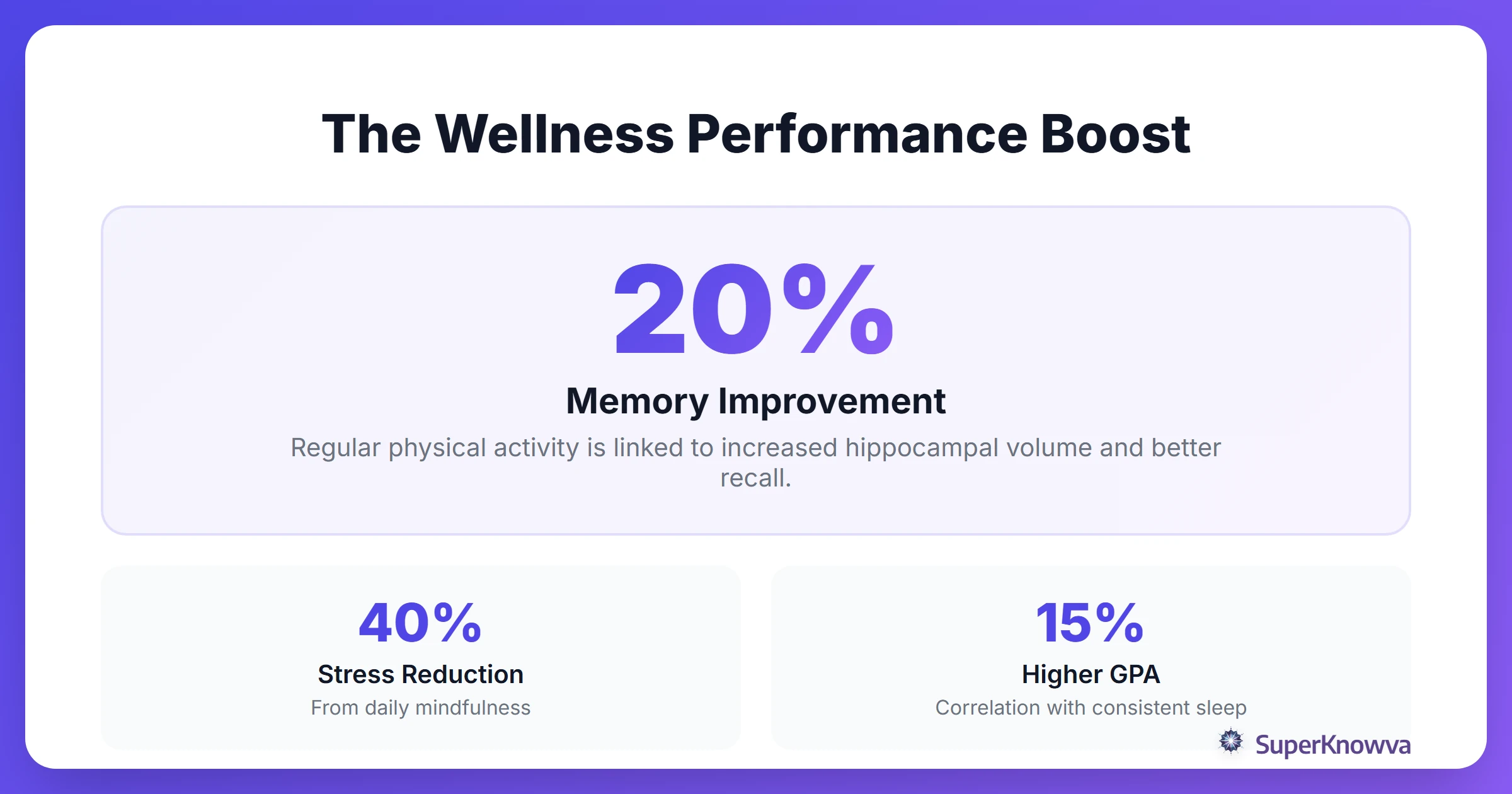
- Move (Even Just a Little): You don’t need a two-hour CrossFit session. A 20-minute brisk walk is enough to drop your cortisol levels and clear the cobwebs. Check out how physical activity boosts cognitive function to see why your gym time is actually making you a better researcher.
- Eat for Focus: High-intensity study blocks burn through glucose. Skip the third energy drink and prioritize complex carbs to avoid the mid-afternoon crash that feels a lot like burnout.
- Mindfulness in the Gaps: You don't need to be a monk. Using simple meditation techniques for focus between research sessions prevents stress from one task from bleeding into the next.
Using AI to Kill "Decision Fatigue"
A huge part of burnout is decision fatigue, the mental energy spent figuring out what to do next. Traditional planners often fail because they don't account for how our brains forget information over time.
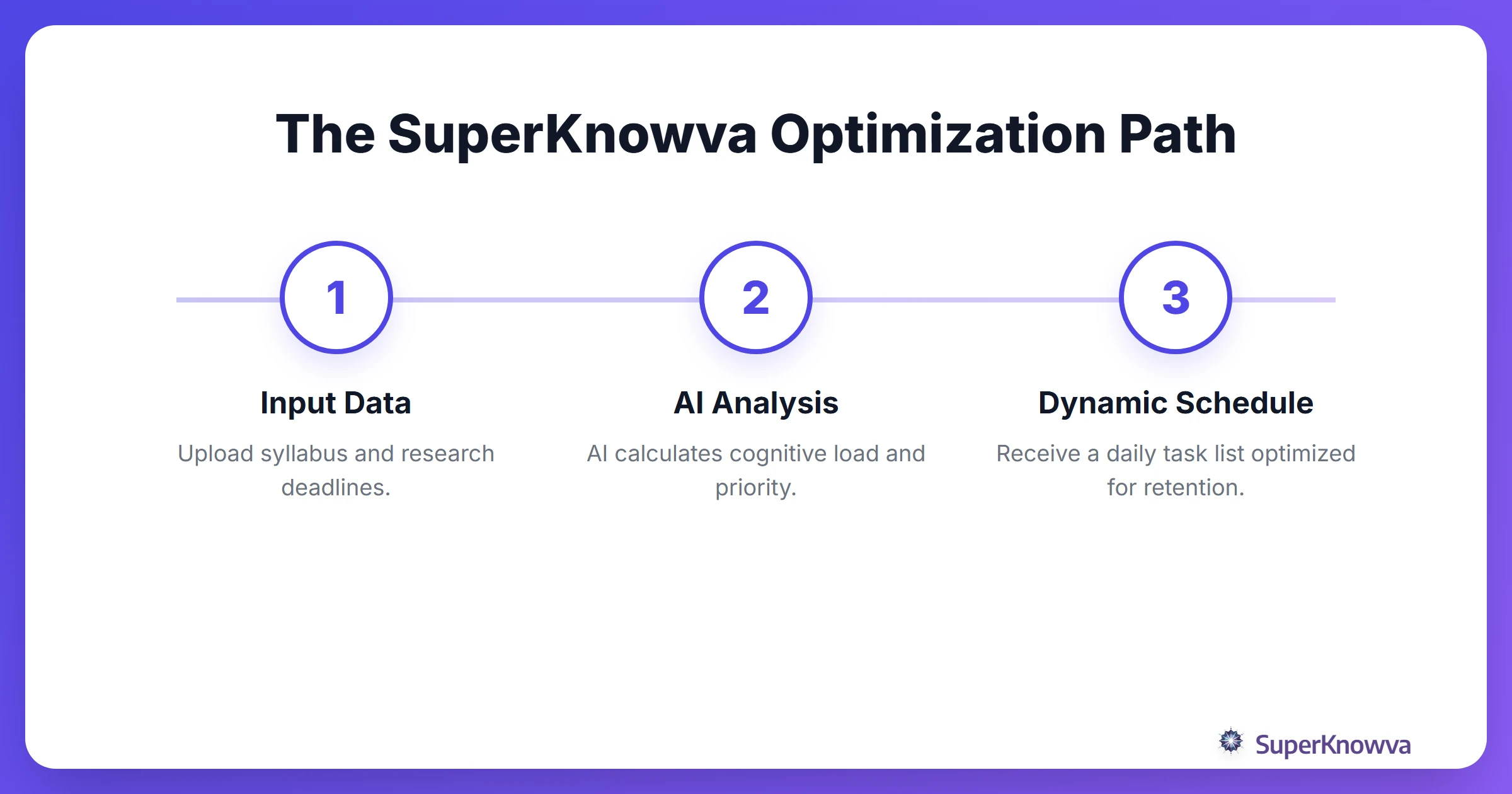
This is where SuperKnowva’s AI study scheduling steps in. Instead of wasting an hour color-coding a calendar you’ll probably ignore by Wednesday, our AI automates the "when" and "how."
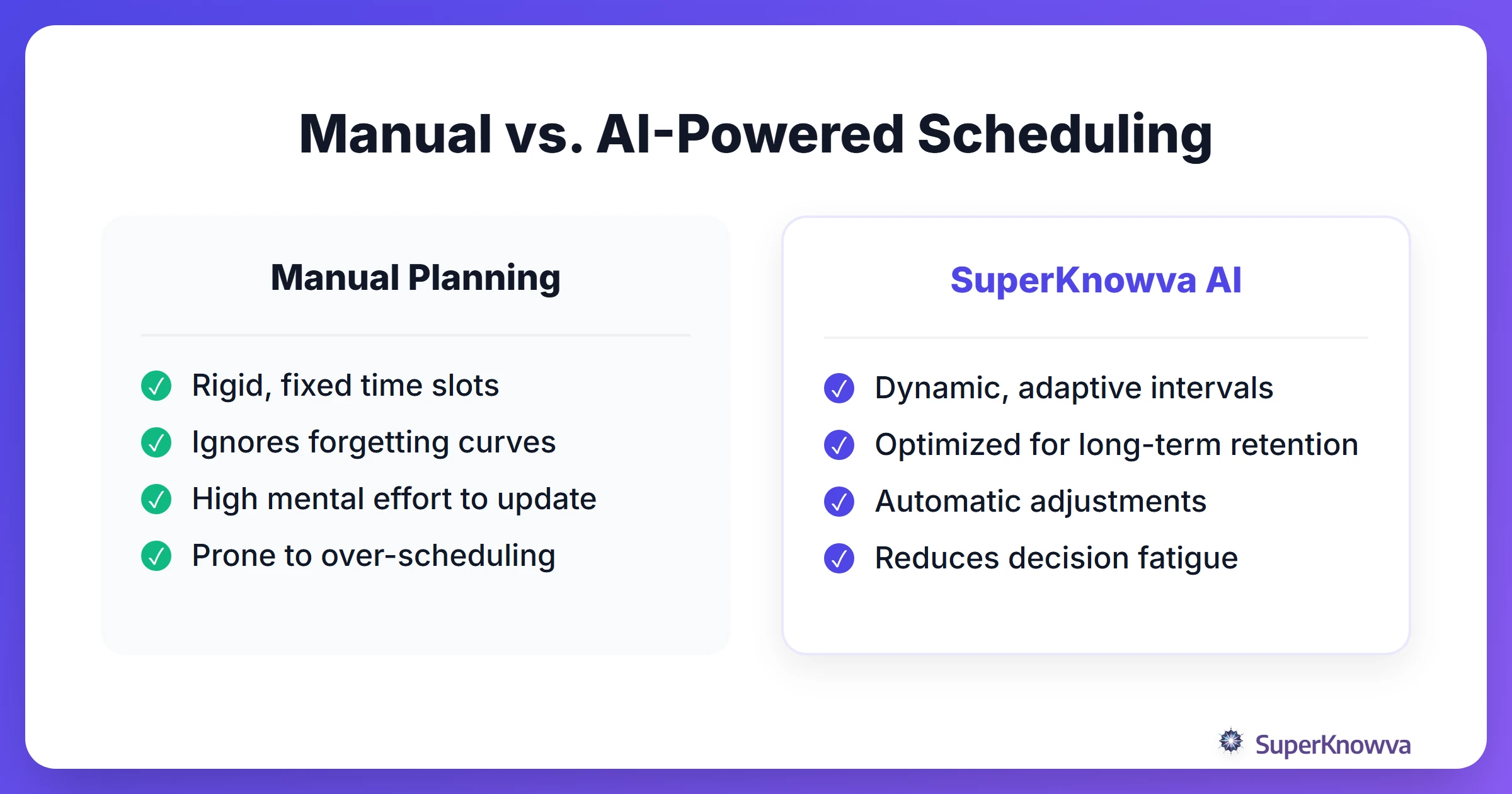
By uploading your syllabus or research milestones, the AI chops massive projects into bite-sized daily tasks. It calculates the best times for you to review material based on your own progress, ensuring you actually retain your research without the 12-hour caffeine-fueled cram sessions. It’s about saving your brainpower for the work, not the planning.
Setting Boundaries: Protecting Your Peace
When your lab is your life, it’s easy to let work leak into every waking hour. You need "hard stops." Decide that at 7:00 PM, the laptop closes. Period. The "student" version of you goes off the clock, and the "human" version takes over.
Communicate these boundaries clearly. Let your friends and family know your "on" and "off" hours so they can support you. Remember, social interaction isn't a distraction; it protects against burnout. If you’re also juggling a job, read our tips on managing part-time work and full-time study to keep those boundaries firm.
Creating a Sustainable Summer Research Routine
Sustainability is the enemy of burnout. Your summer shouldn’t be a sprint; it’s a marathon where you actually want to finish in one piece.
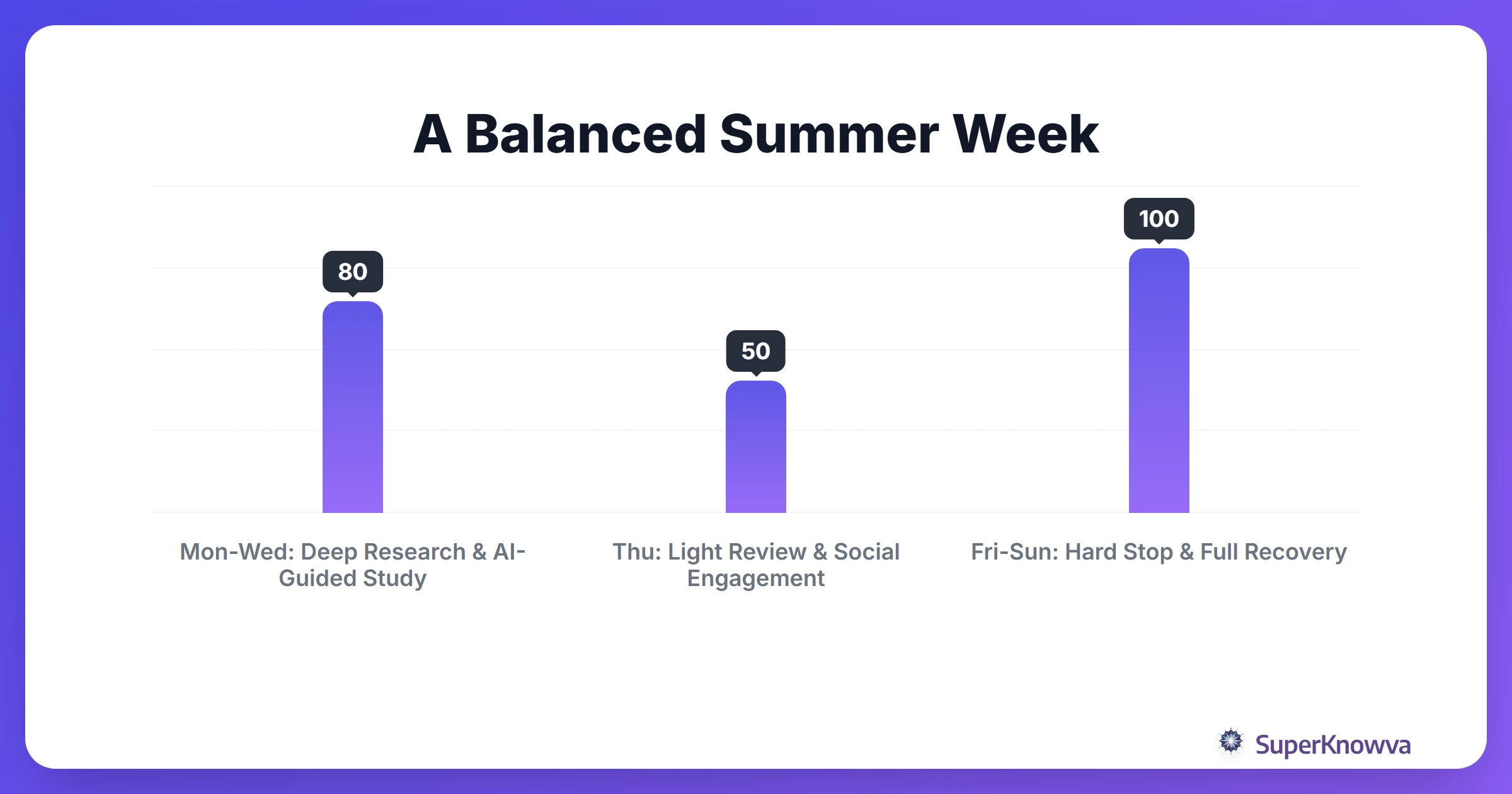
- Work with Your Biological Clock: Are you a morning person? Tackle the heavy data analysis then. Save the boring admin emails for your afternoon slump.
- AI-Optimized Intervals: Traditional time-blocking is okay, but AI-optimized intervals are better. They adapt. If you master a concept quickly, the AI moves you on; if you’re struggling, it builds in more review time automatically.
- The "No-Fly Zone" Day: You need at least one day a week where you are strictly prohibited from doing academic work. No "just checking one email." Your brain needs this total shutdown to consolidate everything you learned during the week.
Preventing student burnout requires you to be proactive. By mixing self-awareness with physical wellness and the efficiency of SuperKnowva’s AI tools, you can get through your summer intensives with your mental health and your GPA fully intact. Give yourself permission to rest; your research will be better for it.