Summer internships once meant ironed shirts, a daily commute, and small talk by the office watercooler. These traditions are changing. By 2026, the office is wherever you open your laptop. For students, mastering remote work skills is more than a bonus; it is the new standard for career success.
The Rise of the Virtual Internship: Why Remote Skills Matter
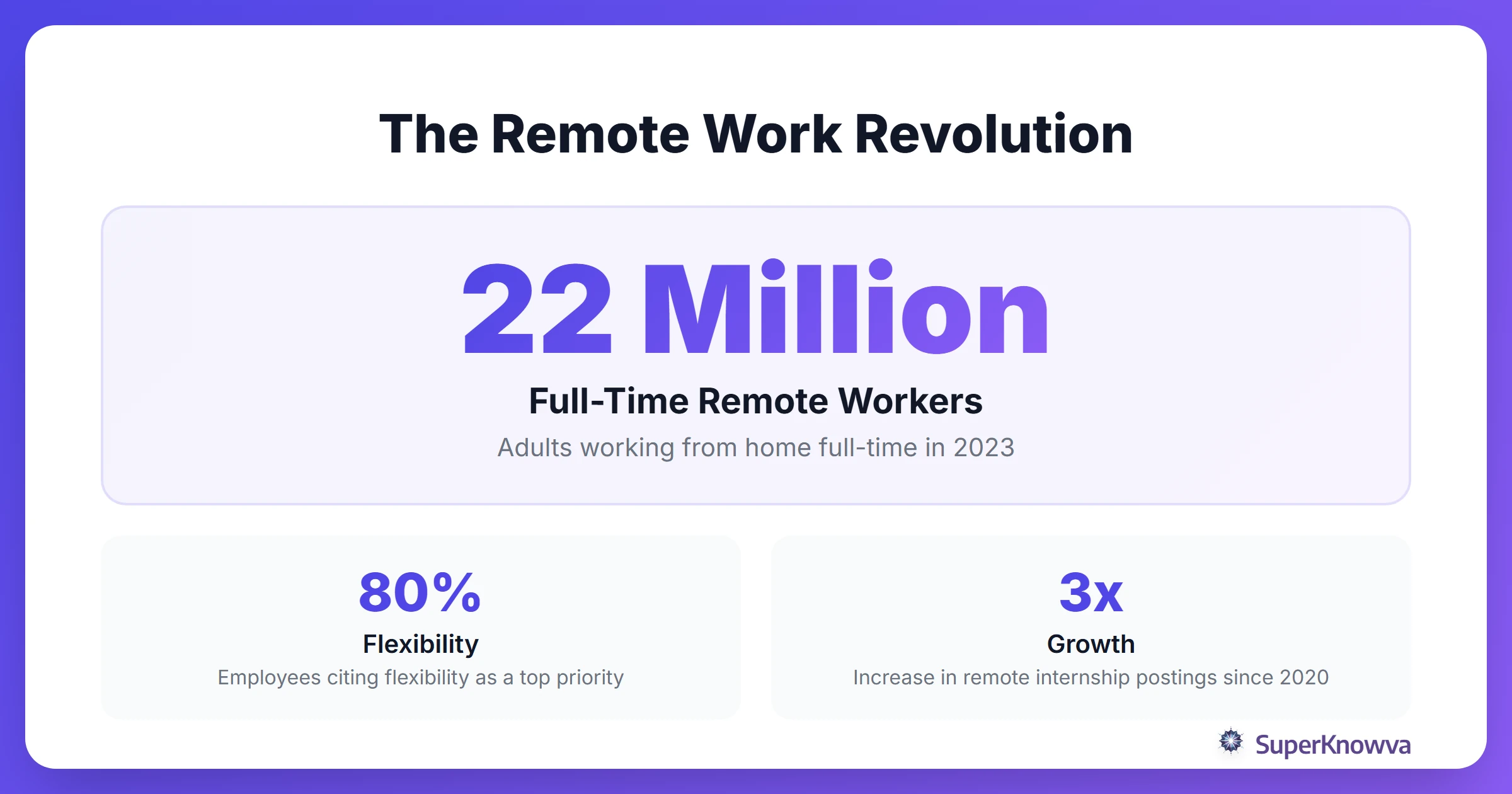
Let’s be real: the shift toward virtual work isn't some temporary leftover from the pandemic. It’s the new reality. Recent data shows that full-time remote workers now number over 22 million, and remote internship postings have tripled since 2020.
Remote internships require a high level of self-reliance. You are not just learning a job; you are learning to be your own IT department, office manager, and motivator. Developing virtual collaboration skills early makes navigating the transition to the workplace much easier when you graduate into a hybrid or remote-first world.
Mastering Digital Communication and Collaboration Tools
In a remote setup, your "office" is essentially a collection of browser tabs. To stay afloat, you need to be more than just "okay" with the "Big Four": Slack for the quick pings, Zoom or Microsoft Teams for face time, and Trello or Asana to keep your projects from falling through the cracks.
But technical skill is only half the story. The real secret? Understanding the difference between synchronous and asynchronous communication. Do you really need to hop on a 30-minute call, or could this be a quick Loom video or email? Knowing when to use which is one of the most vital soft skills employers are looking for right now.
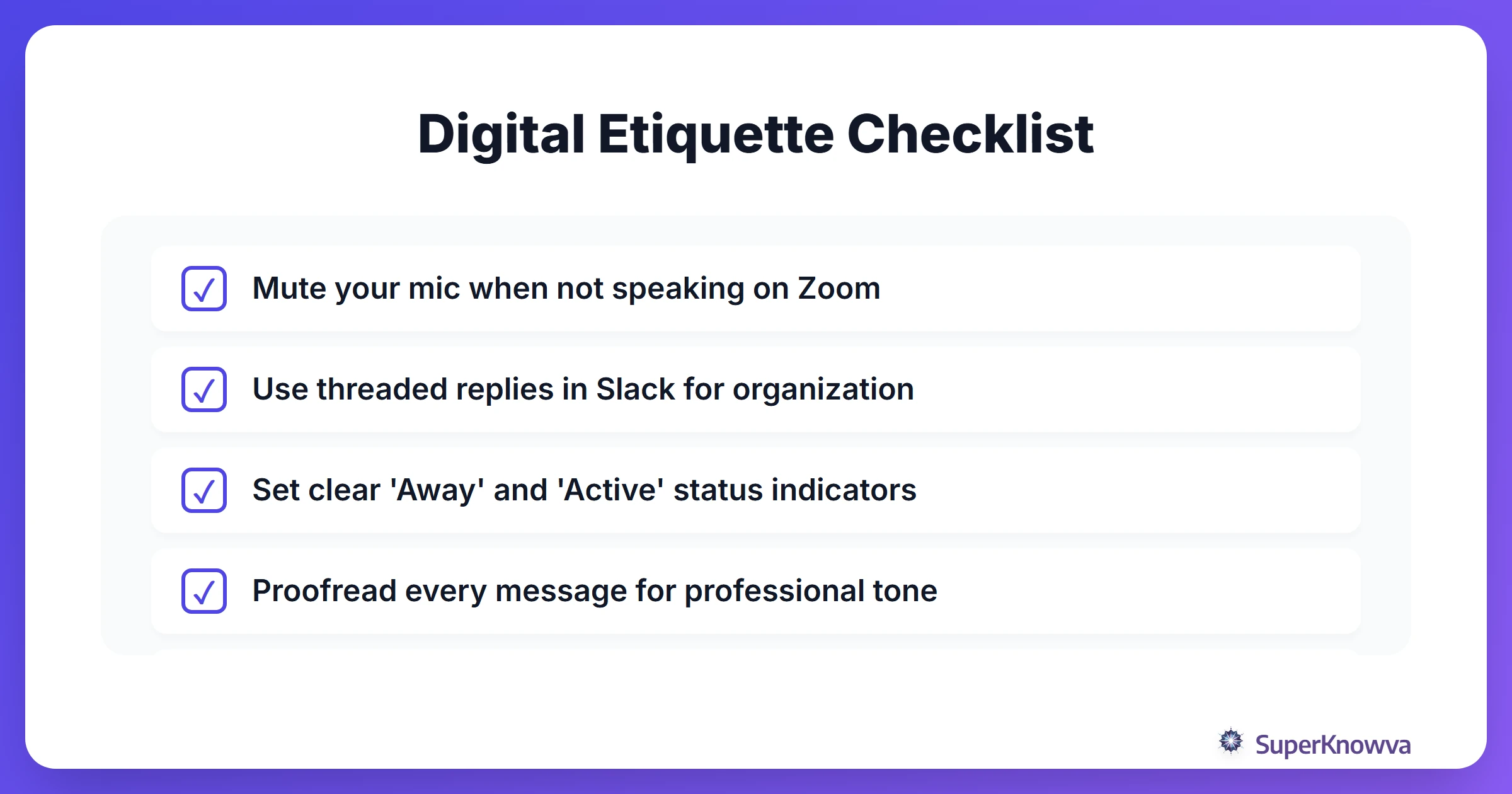
Don't ignore etiquette. Simple things, like using threaded replies in Slack to keep channels clean or making sure your background doesn't look like a laundry hamper exploded, help prove you are a professional.
Time Management in a Borderless Workspace
One of the biggest traps of working from home? The "pajama-to-desk" pipeline. Without a physical commute to bookend your day, the lines between "study time," "work time," and "relaxing time" get incredibly blurry. It’s easy to procrastinate all morning and then find yourself staring at a screen at 10:00 PM.
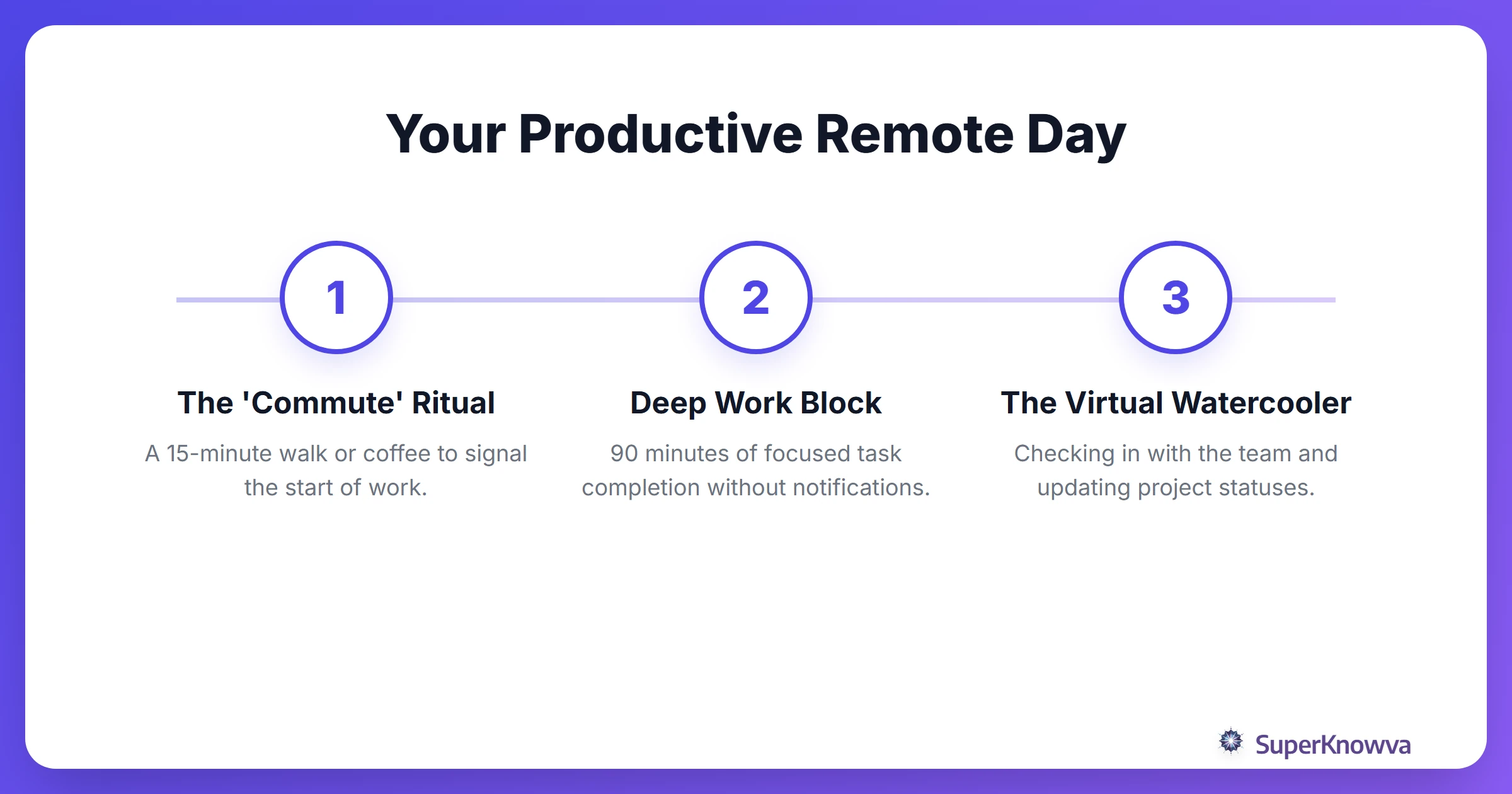
To stay sane, try the "Deep Work" philosophy. Instead of trying to multitask, schedule 60 to 90-minute blocks where your phone is in another room and your notifications are silenced. Focus on one complex task, and nothing else.
It also helps to have a "work zone." Even if it’s just a specific corner of the kitchen table, your brain needs that physical cue to switch into professional mode. And when 5:00 PM hits? Close the laptop. Set boundaries so you don't burn out before the summer is even over.
Building a Professional Presence from Your Laptop
How do you impress a boss who only sees you as a small square on a screen? In a physical office, people see you working. In a remote role, you have to show them. You can't rely on "accidental" hallway chats, so you have to be intentional.
- Be Visible: Send a "Good morning" message when you log on and a "Wrap-up" summary of your work before you log off.
- Virtual Networking: Use your guide to building professional connections to ask for 15-minute "virtual coffee chats." People are usually happy to help. You just have to ask.
- Take Initiative: If you finish a task, suggest the next step or ask for feedback immediately.
By building an online presence within your company’s internal network, you make sure your hard work doesn't go unnoticed just because you aren't in the building.
From Online Learning to Remote Earning
If you’ve already been using AI-powered platforms like SuperKnowva to manage your coursework, you’re actually ahead of the curve. The transition from online classes to remote work is more natural than you might think. The Benefits of Online Education for Remote Work include things you’re likely already doing: troubleshooting your own tech, managing your own schedule, and communicating clearly through text.
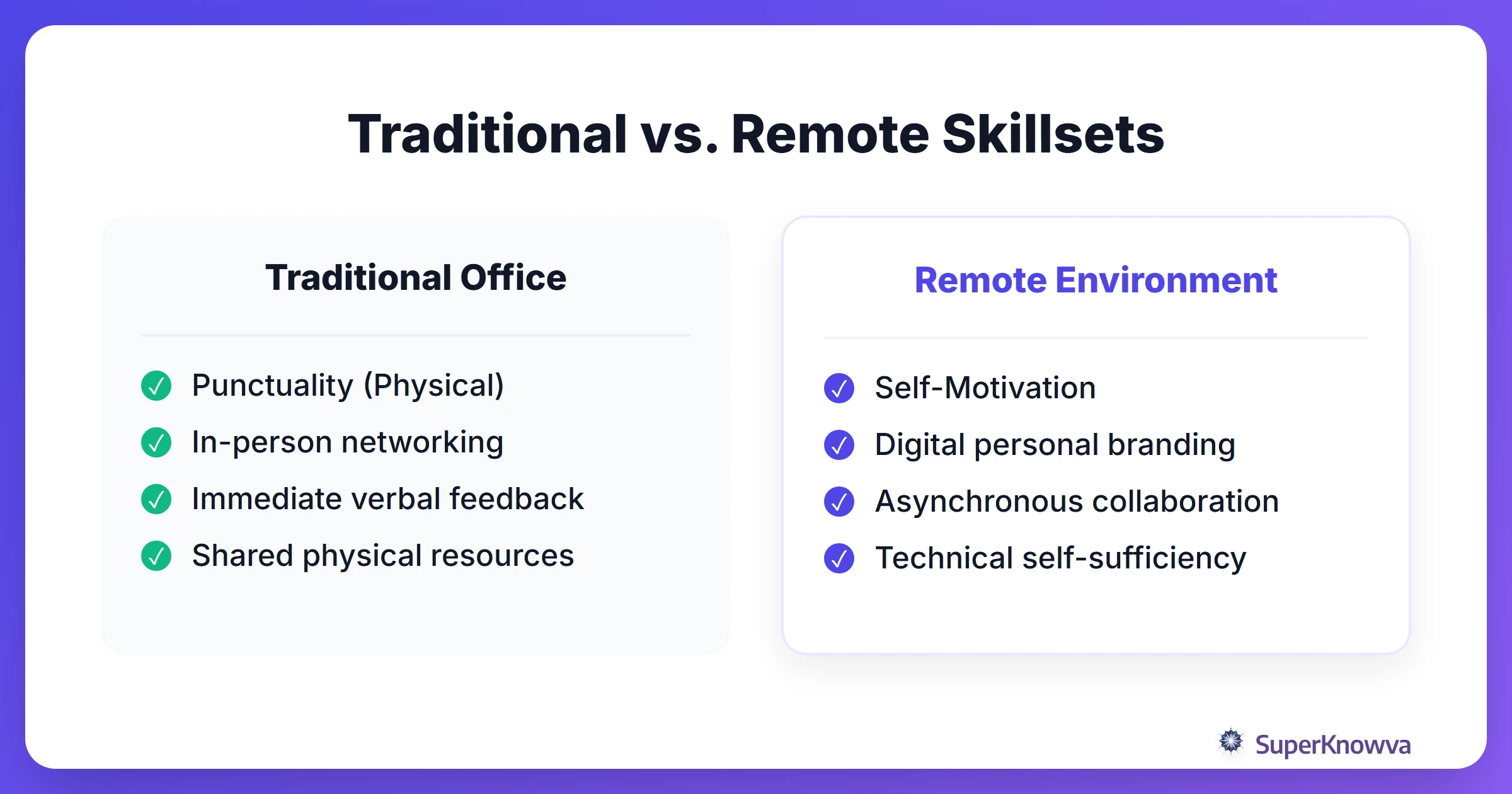
In the virtual workplace, being the person who knows how to fix a "broken" Zoom link or use new cloud-based software makes you an asset. If you want to stand out, you can formalize these skills with programs like the NYU Certificate in Remote Work Success to show recruiters you are prepared for the role.
Finding and Landing Your First Remote Role
Search for positions beyond standard job boards. Sites like We Work Remotely, Remote.co, and FlexJobs specialize in virtual roles. When updating your resume, include keywords like asynchronous collaboration, self-motivation, and digital proficiency.
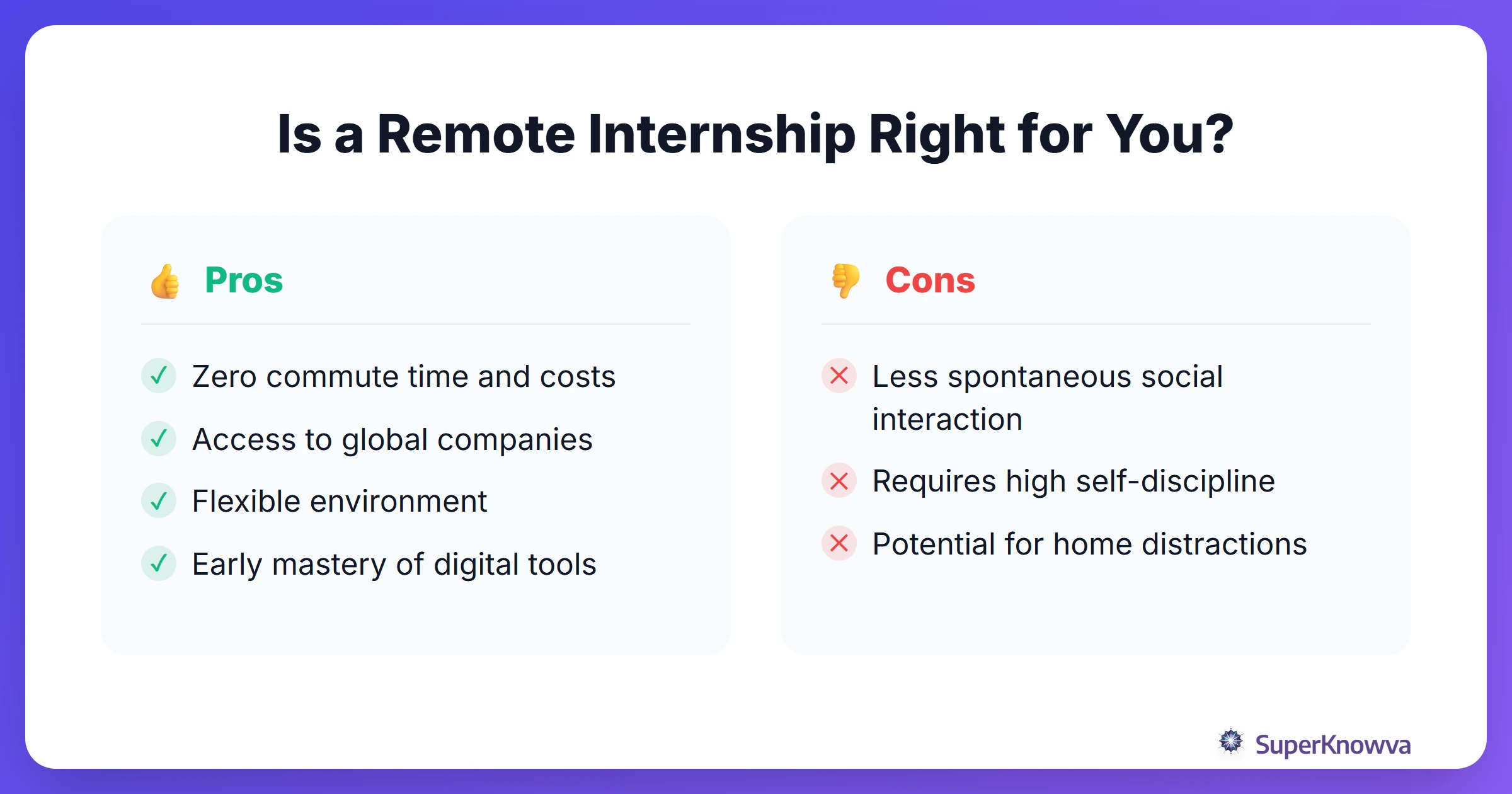
Finally, remember that the interview will likely be on camera. Treat it like a performance: check your lighting, test your mic, and look directly into the camera lens (not at yourself!) to simulate eye contact. With a bit of prep and the right digital tools, your remote summer internship could be the start of a career that takes you anywhere in the world.