You have uploaded your notes to SuperKnowva, completed your practice quizzes, and studied the toughest topics on your syllabus. However, one critical factor in your exam success has nothing to do with a textbook: sleep hygiene for students.
Treating sleep like a luxury is a common mistake. In reality, sleep isn't time off. It is the "save button" for your brain. Without it, intensive study sessions might as well have never happened.
The Science of Sleep: Why Your Brain Needs Rest to Ace Exams
Have you ever walked into an exam feeling like your mind is a total blank, despite studying all night? That isn't just bad luck. It’s a failure of memory consolidation and sleep.
While you’re out cold, your brain is actually working overtime. It moves through stages like REM (Rapid Eye Movement) and deep sleep to process the day's information, strengthening neural connections and filing facts away into your long-term memory. If you don't sleep, you don't save.
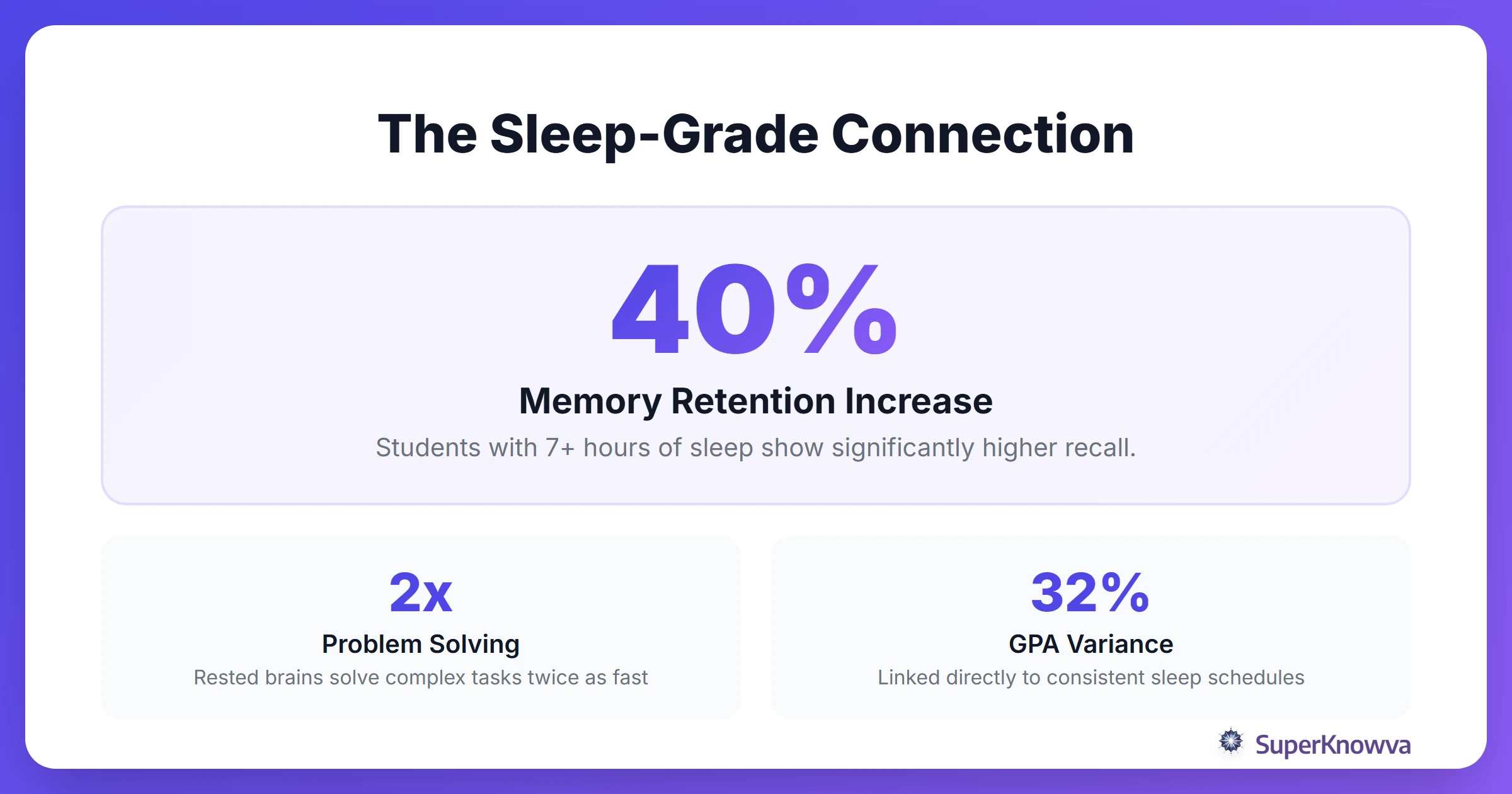
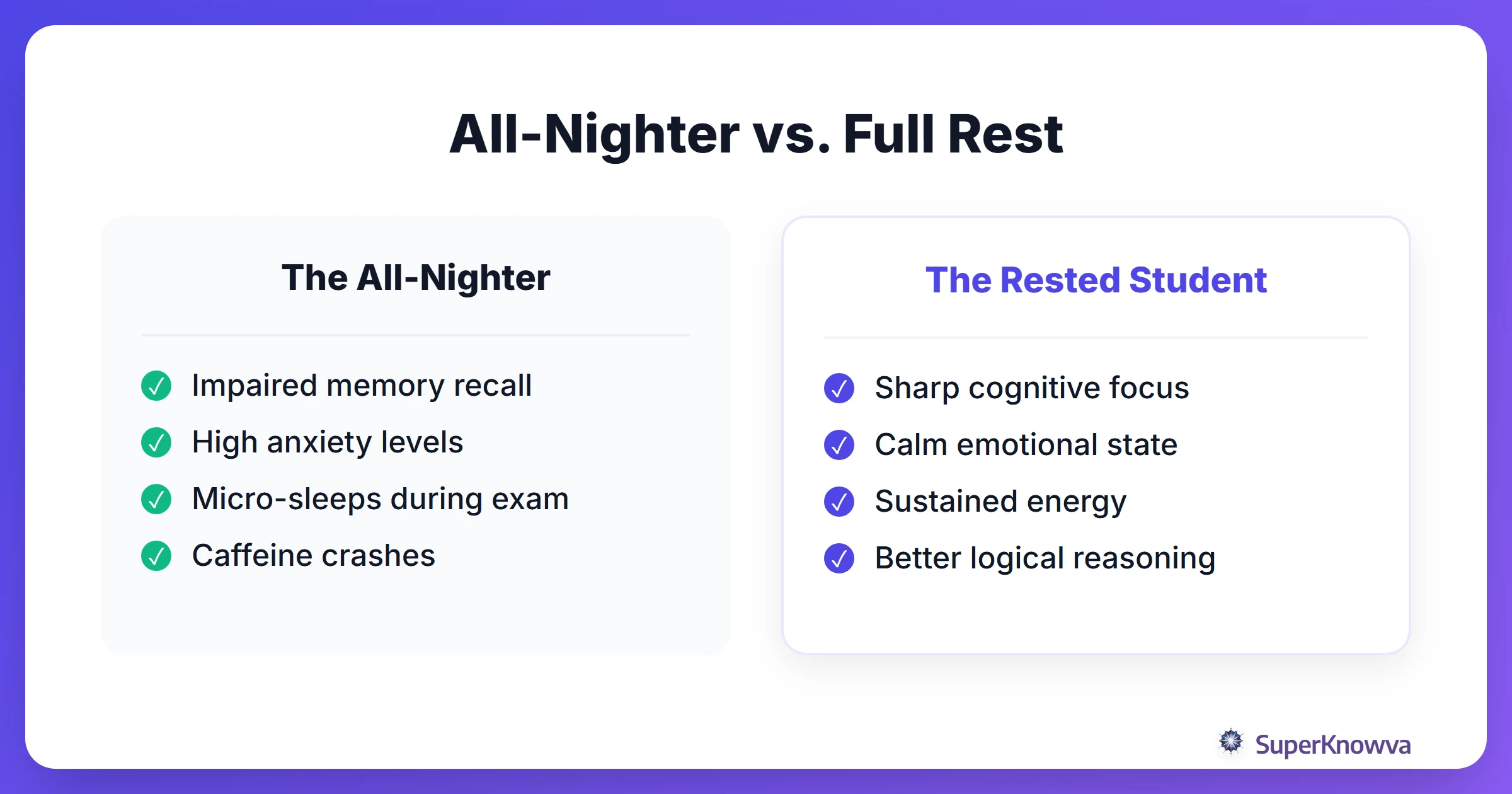
When you are exhausted, cognitive functions are the first to decline. Focus, logic, and problem-solving, the tools needed for difficult math or essay exams, diminish without rest. Research shows a rested brain can tackle complex tasks twice as fast as a tired one. To recall formulas under pressure, you must give your brain the recovery time it requires.
Creating the Ultimate Exam-Week Bedtime Routine
High performance isn't an accident; it’s a habit. A solid bedtime routine for students tells your nervous system that the "work day" is officially over. During finals, try to start winding down at least 30 to 60 minutes before you want to be asleep.
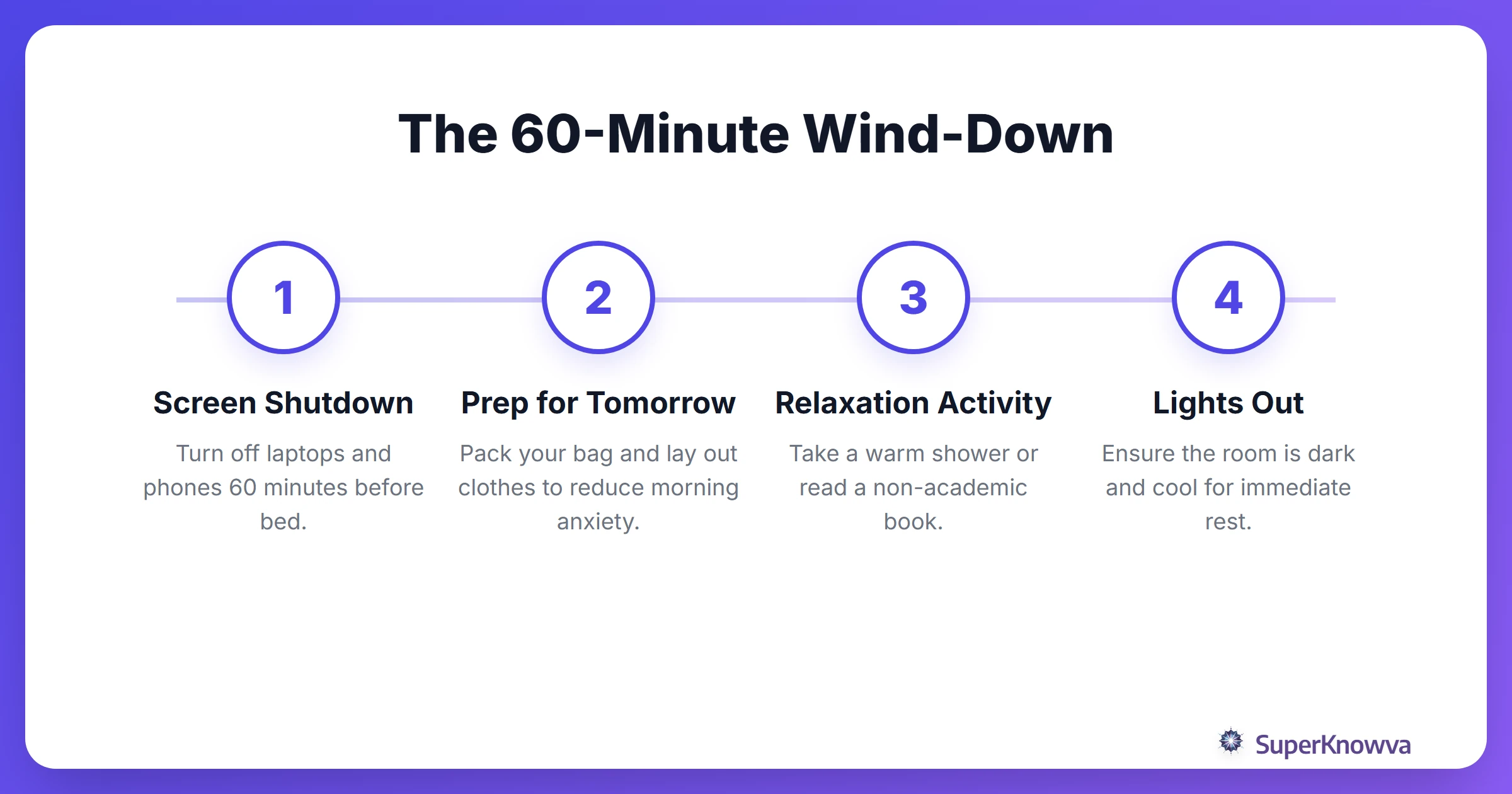
Skip the stimulation and go for relaxation. Maybe that’s a warm shower, some light stretching, or a fiction book that has absolutely nothing to do with your major. And here’s the kicker: keep it consistent. It’s tempting to pull a late one on Friday after a big test, but keeping your sleep-wake cycle steady ensures your internal clock is primed for that 9:00 AM exam on Monday morning.
Optimizing Your Sleep Environment for Maximum Recovery
If you want high-quality rest, you need to turn your bedroom into a "Sleep Sanctuary." Your brain needs three things: cool, dark, and quiet. Most experts agree that a room temperature between 60-67°F (15-19°C) is the sweet spot for deep sleep.
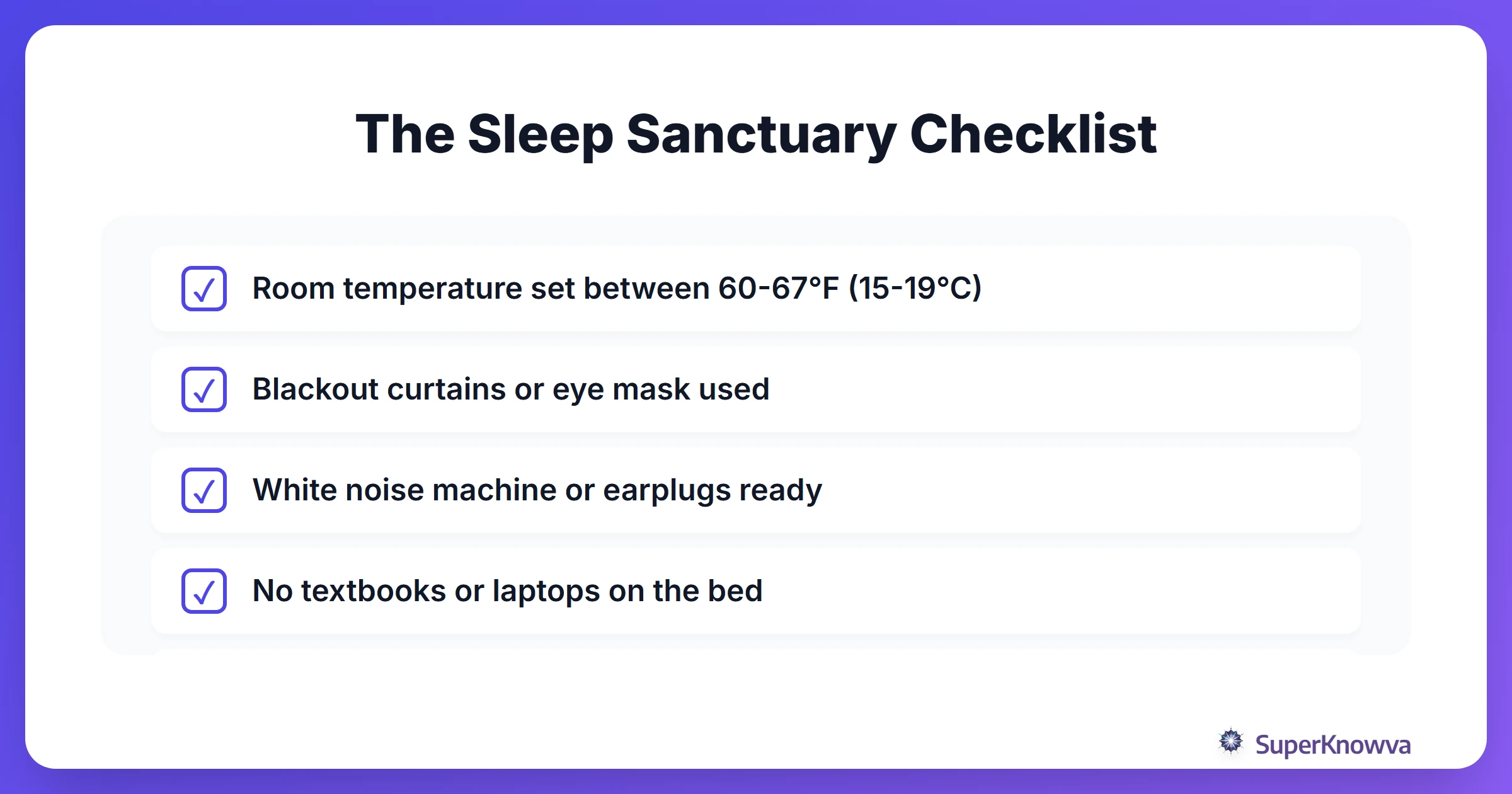
One of the biggest mistakes? Studying in bed. When you turn your mattress into a desk, your brain starts associating that space with stress and alertness. Build a mental boundary. Keep the textbooks and laptops far away from where you sleep. While rest is the priority, you can also boost your cognitive function through exercise to stay sharp, just make sure you finish your workout a few hours before you head to your sanctuary.
Fueling for Rest: Caffeine and Diet During Finals
What you eat and drink at 2:00 PM shows up in your sleep quality at 2:00 AM. That third energy drink might feel like a lifesaver in the afternoon, but you need a "caffeine curfew." Try to cut off the stimulants by early afternoon so they’re out of your system by the time your head hits the pillow.
Your diet matters, too. Heavy, spicy, or sugary snacks right before bed are a recipe for tossing and turning. If you’re hungry late at night, reach for something light like a banana or a handful of almonds. Pairing good sleep hygiene with the best diet for exam performance is a winning strategy to keep your energy levels steady without the midnight jitters.
Digital Detox: Breaking the Screen Habit
We’re all glued to our screens, especially during finals. But while your laptop is a great study tool, it’s a terrible bedfellow. Scrolling through social media or checking emails before bed spikes your cortisol (the stress hormone) and the blue light from your phone tricks your brain into thinking it’s still daytime, delaying the release of melatonin.
Poor sleep is one of the biggest signs of student burnout you shouldn't ignore. Try charging your phone across the room at night. If you absolutely have to study digitally late at night, use "Night Mode" or a blue light filter to take the edge off and protect your circadian rhythm.
Managing Exam Anxiety and Nighttime Racing Thoughts
Even with a perfect setup, exam stress can make your mind race the second the lights go out. If you’re lying there worrying about tomorrow’s paper, try a "Brain Dump." Grab a notebook and write down every single worry or "to-do" item floating in your head. Once it’s on paper, your brain feels like it has permission to let go for the night.

Struggling to drift off? Use the "20-minute rule." If you aren't asleep after 20 minutes, get out of bed. Go to a different room, do something quiet and boring in dim light, and only go back to bed when you actually feel sleepy. As the Nemours KidsHealth Sleep Hygiene Guide points out, consistency is everything. If the anxiety feels like too much, these mindfulness and meditation techniques can help lower your heart rate and quiet the noise.
By prioritizing rest as much as your revision, you aren't just sleeping; you're finishing the job. Use these student wellness tips to get through exam week feeling strong, sharp, and ready.