Is AI going to make your future career obsolete? This concern is common among students and young professionals. While the nature of work is shifting, your value is not disappearing; it is simply moving.
To win in this new era, you need to master the soft skills for ai workplace success. Think of it this way: AI can crunch data and generate code at light speed, but it can’t "read the room," empathize with a frustrated client, or lead a team through a crisis. Your "human-ness" is no longer a footnote on your resume; it’s your greatest competitive advantage.
In this guide, we’ll break down why these interpersonal abilities are your ultimate career insurance policy.
The Great Re-Skilling: Why Soft Skills are the New Hard Skills
We are living through a massive professional pivot. The "hard" technical tasks, including basic data entry, routine admin, and entry-level coding, are being handed off to algorithms. This leaves a vacuum that only humans can fill.
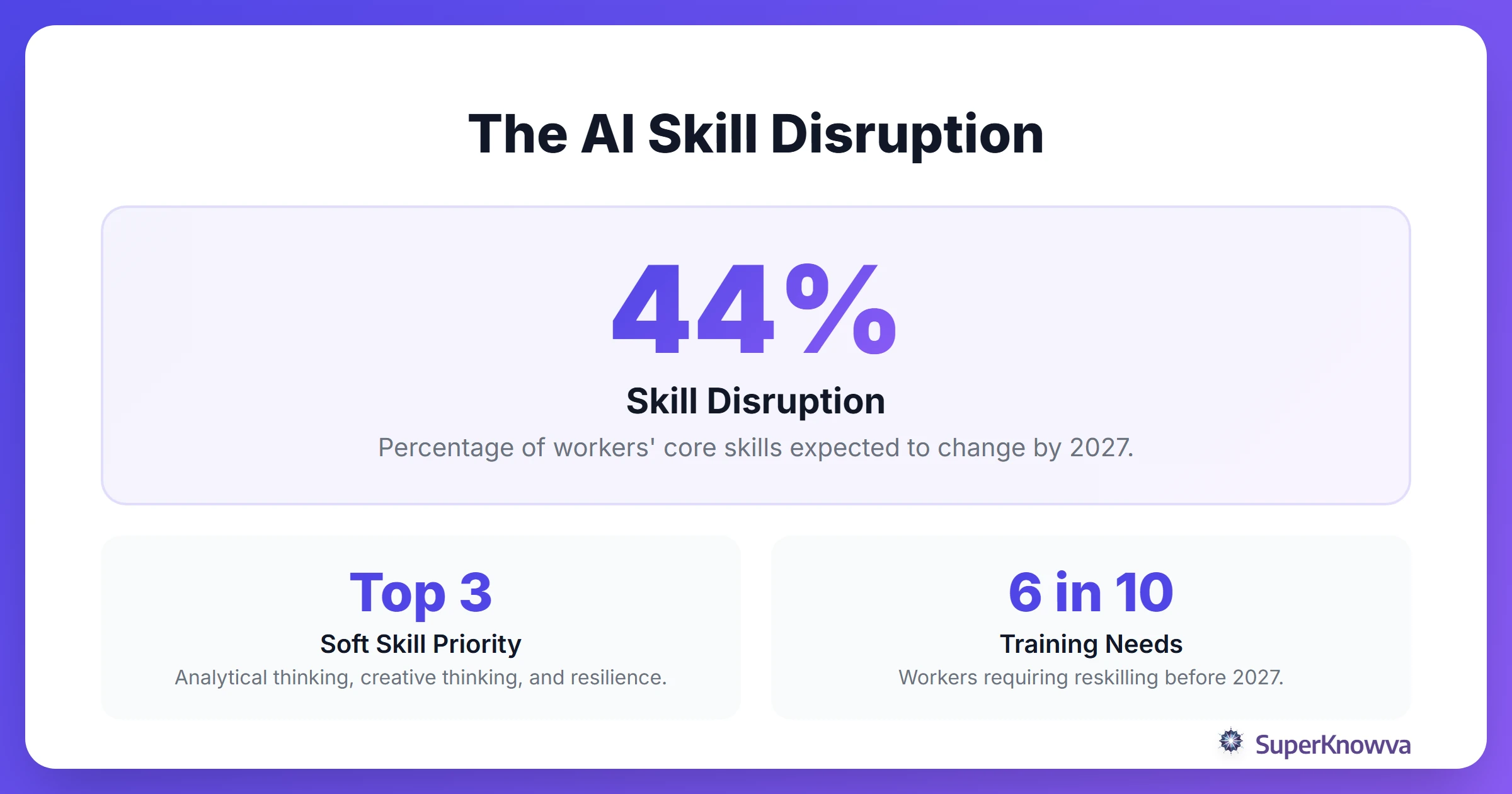
According to a recent ProAction International Study, nearly half of all workers will need to overhaul their core competencies by 2027. Specifically, this ProAction International study predicts a 44% skill disruption in the next few years. In an automated world, the most secure jobs are "human-centric." We’re talking about strategy, high-level relationship management, and complex problem-solving. If you want to stay relevant, you need to understand what employers are really looking for in an AI-driven market.
Critical Thinking: Moving Beyond Data Retrieval
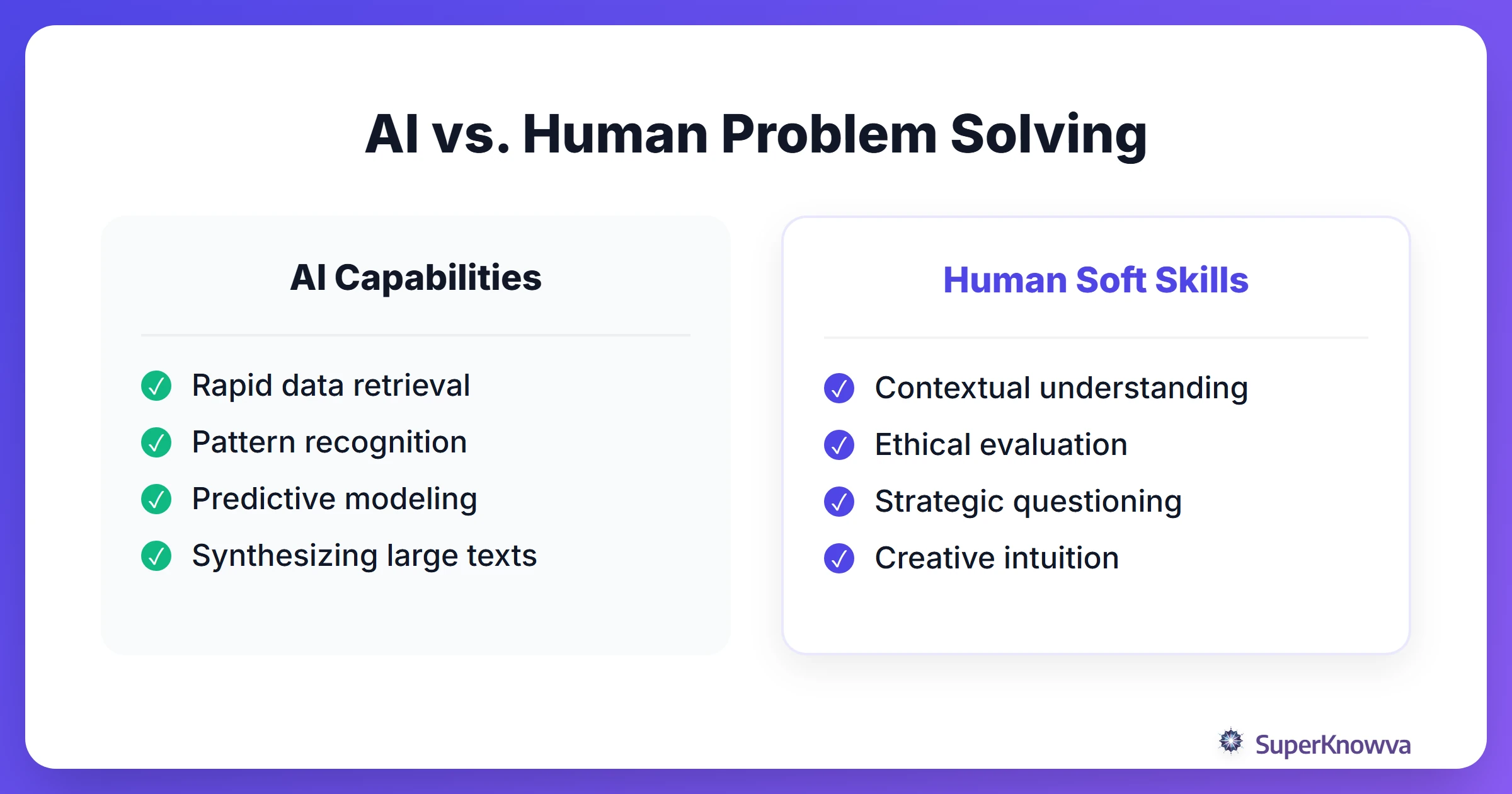
AI is an effective answering machine, but it lacks contextual depth. This is where your critical thinking skills come into play. Your job is no longer just to find information; it is to scrutinize it.
Think of yourself as the ultimate filter. You need to practice "active skepticism" every time you interact with a Large Language Model (LLM). This means:
- Spotting the "Hallucinations": Identifying when AI-generated facts are subtly (or wildly) incorrect.
- Connecting the Dots: Taking disparate data points and weaving them into a cohesive business strategy.
- Making the Tough Calls: Deciding on a course of action when the data is messy, incomplete, or morally grey.
Emotional Intelligence (EQ) and the Human Connection
Algorithms don't have feelings. They don't get burnt out, and they certainly don't know how to resolve a heated office argument. Emotional intelligence at work is the "glue" that keeps organizations from falling apart.
Whether you’re leading a team through a stressful merger or just practicing active listening in a 1-on-1, EQ is irreplaceable. Even in a tech-saturated world, people still want to work with people. Future-proofing your degree isn't just about picking a "safe" major; it’s about learning to read non-verbal cues in a Zoom call and providing genuine support to your colleagues.
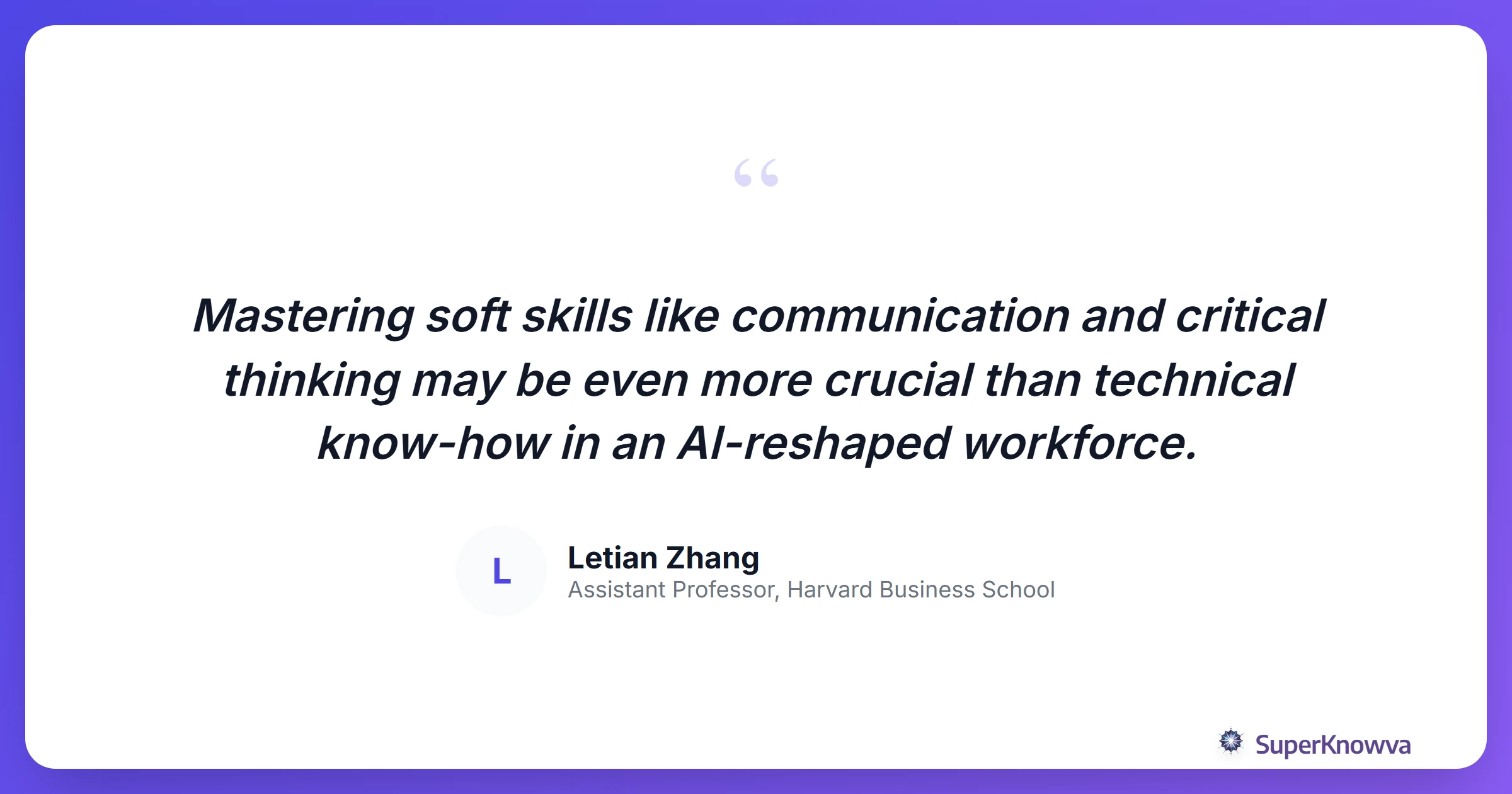
As highlighted by Harvard Business School Research, these foundational human skills are the base upon which all other professional learning is built.
Adaptability: The Art of Continuous Learning
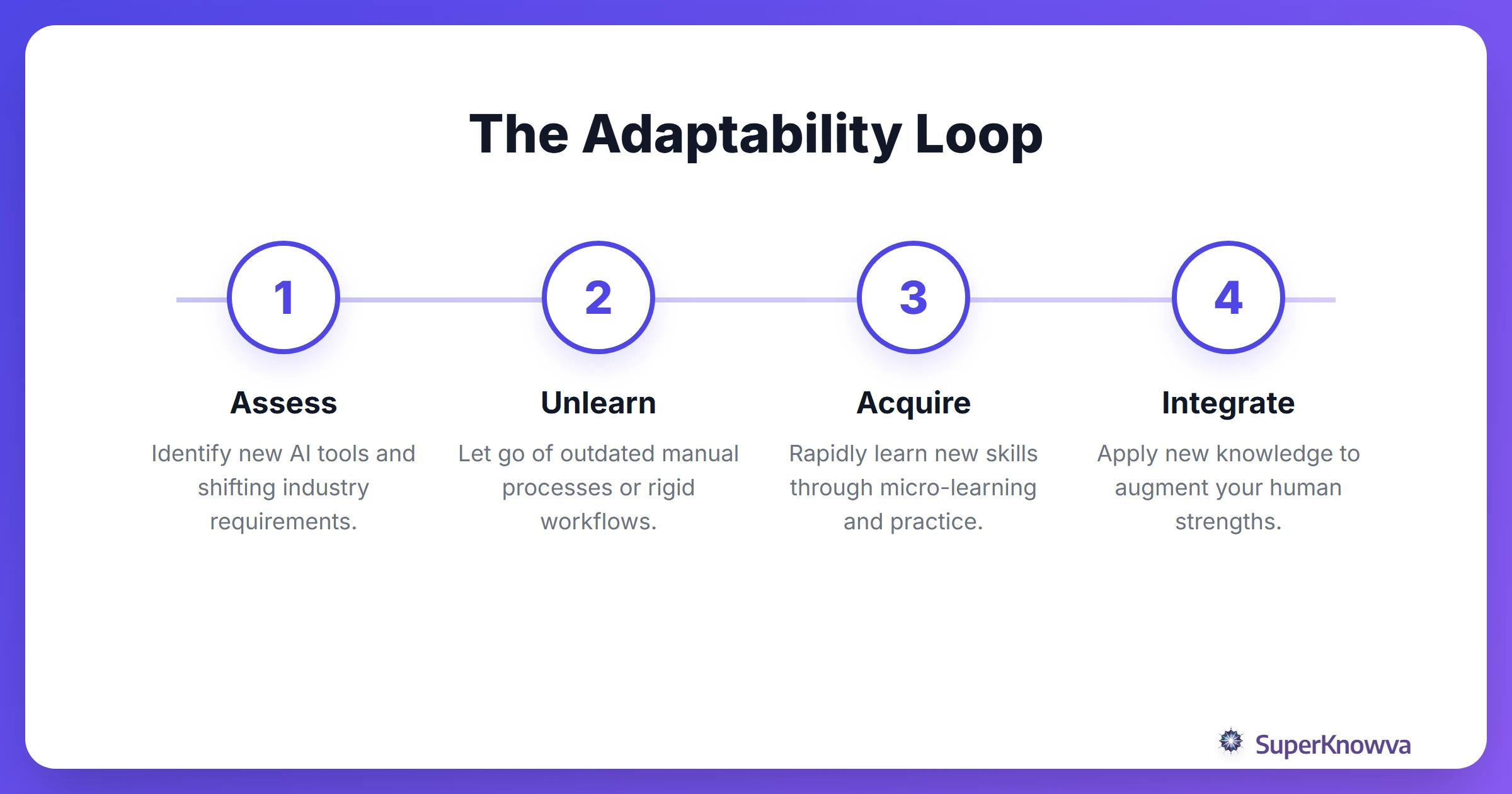
The future of work skills can be boiled down to one word: Learnability. In the past, you could learn a skill and ride it for a decade. Today? Adaptability in the workplace is a survival mechanism.
Staying flexible means being willing to "unlearn" the way you used to do things. It’s a mindset shift. You aren't an "expert" with a static toolkit; you’re a lifelong student. The goal is to constantly look for ways to augment your natural abilities with the latest tools, rather than fighting against them.
Effective Communication: Bridging Humans and Machines
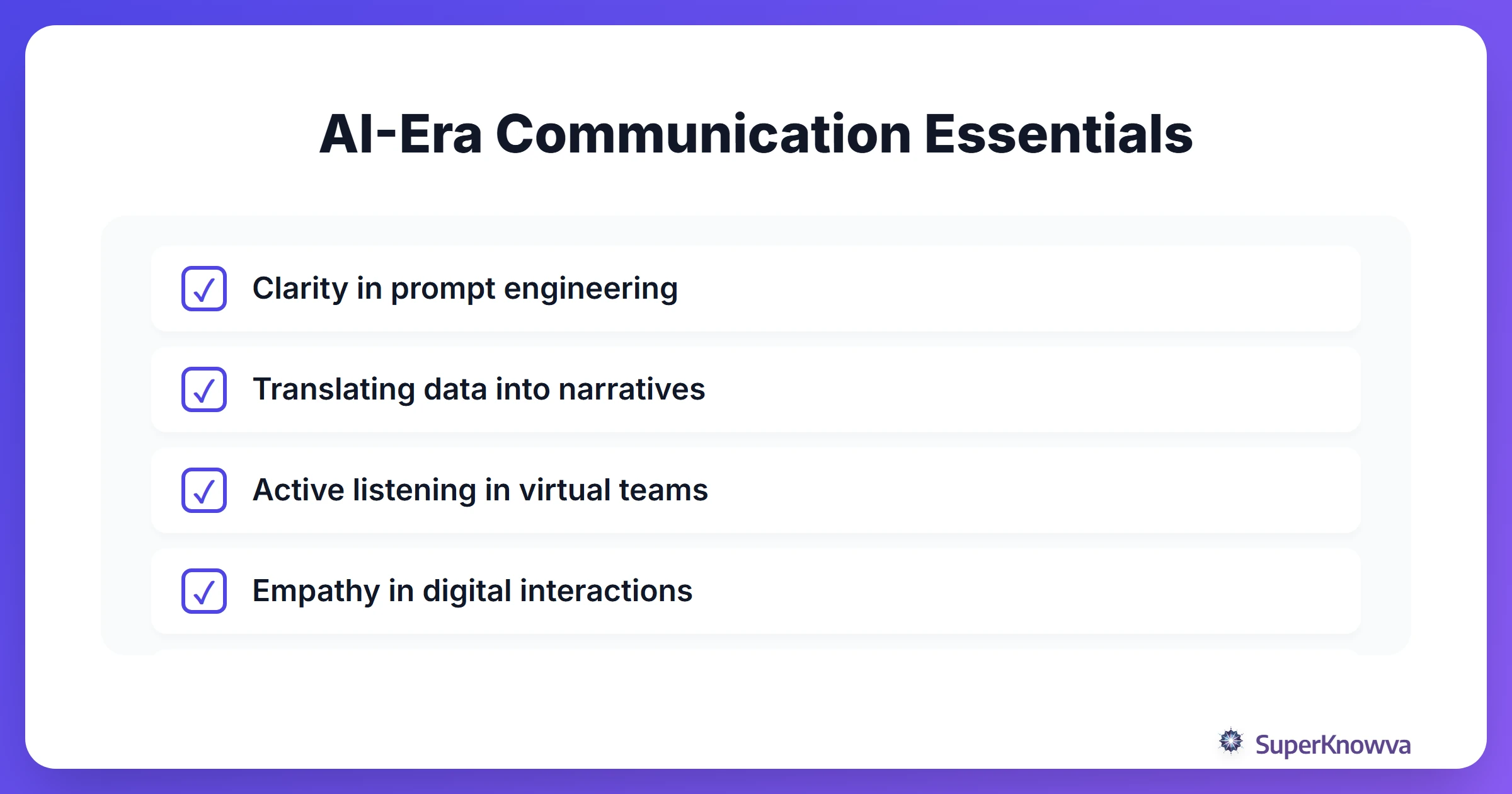
Communication is now a two-way street between people and software. You have to be clear with both.
There is a significant overlap between being a good manager and being a good "prompt engineer." Both require clarity, context, and a specific intended outcome. As a professional, you will often act as a translator, taking dense, AI-generated data and turning it into a story that stakeholders care about. Even with AI writing assistants, maintaining your voice is the only way to build trust.
Ethical Judgment and Responsible AI Use
AI optimizes for efficiency, not morality. It doesn't have a conscience. That’s why humans must remain "in-the-loop" (HITL) to catch privacy leaks, security risks, and biased outputs.
Employers seek workers who act as an ethical compass. If you flag a potential bias in a hiring algorithm or a privacy flaw in a data set, you are more than an employee; you are a protector of the company’s reputation. That is a role no machine can take.
Future-Proofing Your Career: Actionable Steps for Students
If you’re still in school, don’t wait for a "Soft Skills 101" class. You can build these muscles right now in your daily life:
- Step Up to Lead: Take the lead on a group project or join a student org. These are the best "labs" for practicing conflict resolution and motivation.
- Diversify Your Learning: Be AI-literate, but don't ignore the liberal arts. Reading deeply and debating complex ideas is what sharpens your critical thinking.
- Network for Real: Forget the "automated" LinkedIn messages. Focus on building authentic relationships. A machine can’t grab a coffee and share a vision for a new startup.
For seniors currently navigating the transition to the workplace, remember: your interpersonal dynamics will often matter more than your GPA in those first few months.
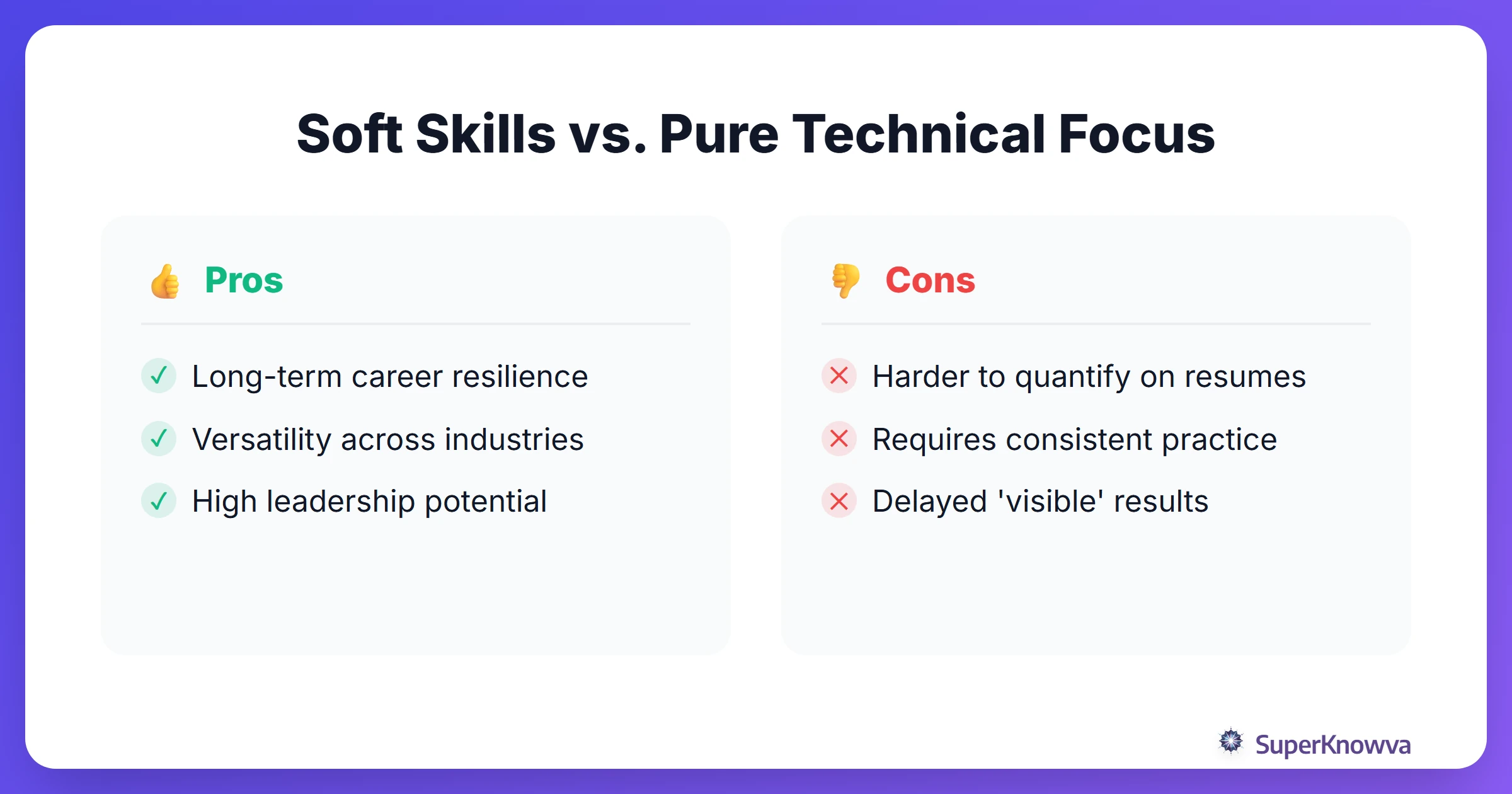
By focusing on your human perspective, you will lead through technological change. Use these tools while relying on your empathy, ethics, and intuition. These qualities are your advantage.