Ever feel like your brain has a "delete" button it hits without your permission? You spend hours hunched over a desk, cramming for an exam, only to realize 48 hours later that half the information has simply vanished.
Many students struggle with this. It is not a personal failure. It is simply how human biology works. Our brains prioritize new, immediate stimuli over yesterday's lecture notes. By using spaced repetition algorithms for study, you can finally plug those leaks. You can stop "renting" knowledge for the exam and start owning it for a lifetime.
At SuperKnowva, we combine cognitive science with AI to change how you retain information. In this guide, we’ll look at the mechanics of memory and show you how AI-driven scheduling can slash your review time while skyrocketing your retention.
What is the Spacing Effect? The Science of Memory
The secret to every effective study tool is the "spacing effect." This isn't new tech; it’s a psychological phenomenon first identified by Hermann Ebbinghaus in the late 19th century. He discovered that forgetting isn't random. Instead, we follow a predictable forgetting curve.
It’s brutal: without a strategy, the human brain typically loses about 70% of new information within just 24 hours. Spaced repetition is the antidote. By reviewing material at specific, increasing intervals, you "reset" the forgetting process. Each review makes the memory a little stickier and the curve a little flatter.
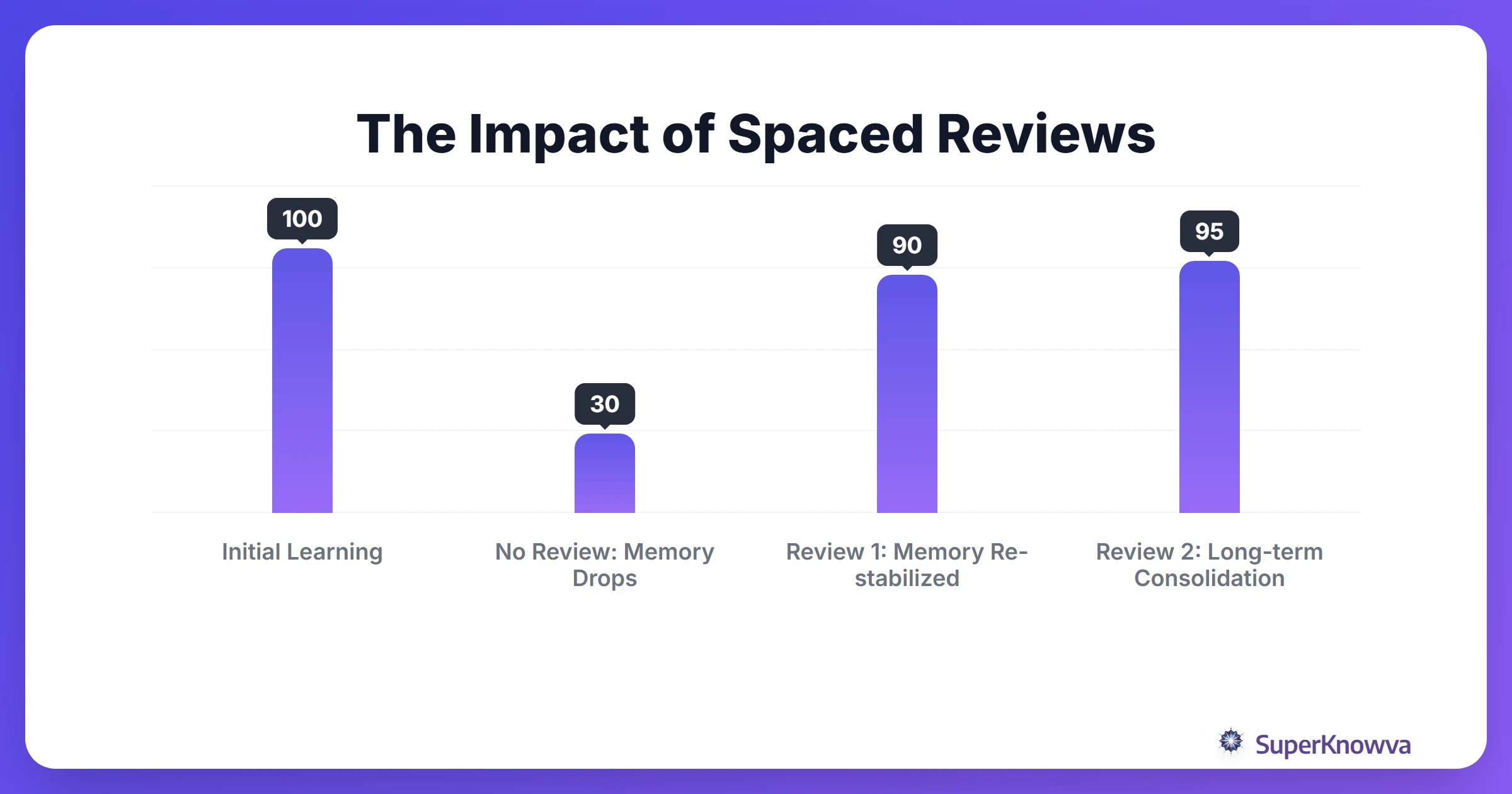
This process is deeply tied to memory consolidation. Understanding the neuroscience of memory consolidation is vital because the algorithm's work actually finishes while you're asleep. During REM sleep, your brain rehearses the day's data, moving it from fragile short-term memory into long-term storage. Spaced repetition is an evidence-based learning technique that hacks this biological rhythm to make learning permanent.
The Evolution of Algorithms: From Leitner to FSRS
Before digital apps, students managed reviews manually. The Leitner System uses physical boxes and flashcards. If you know a card well, it moves to a box you check less often. If you miss it, it goes right back to box one. It works, but it is clunky.
As computers took over, we saw the rise of algorithms like SM-2 (the engine behind Anki). These were revolutionary, but they had a flaw: they treated every brain the same. They assumed everyone forgot at the exact same rate, regardless of whether they were studying French verbs or quantum physics.
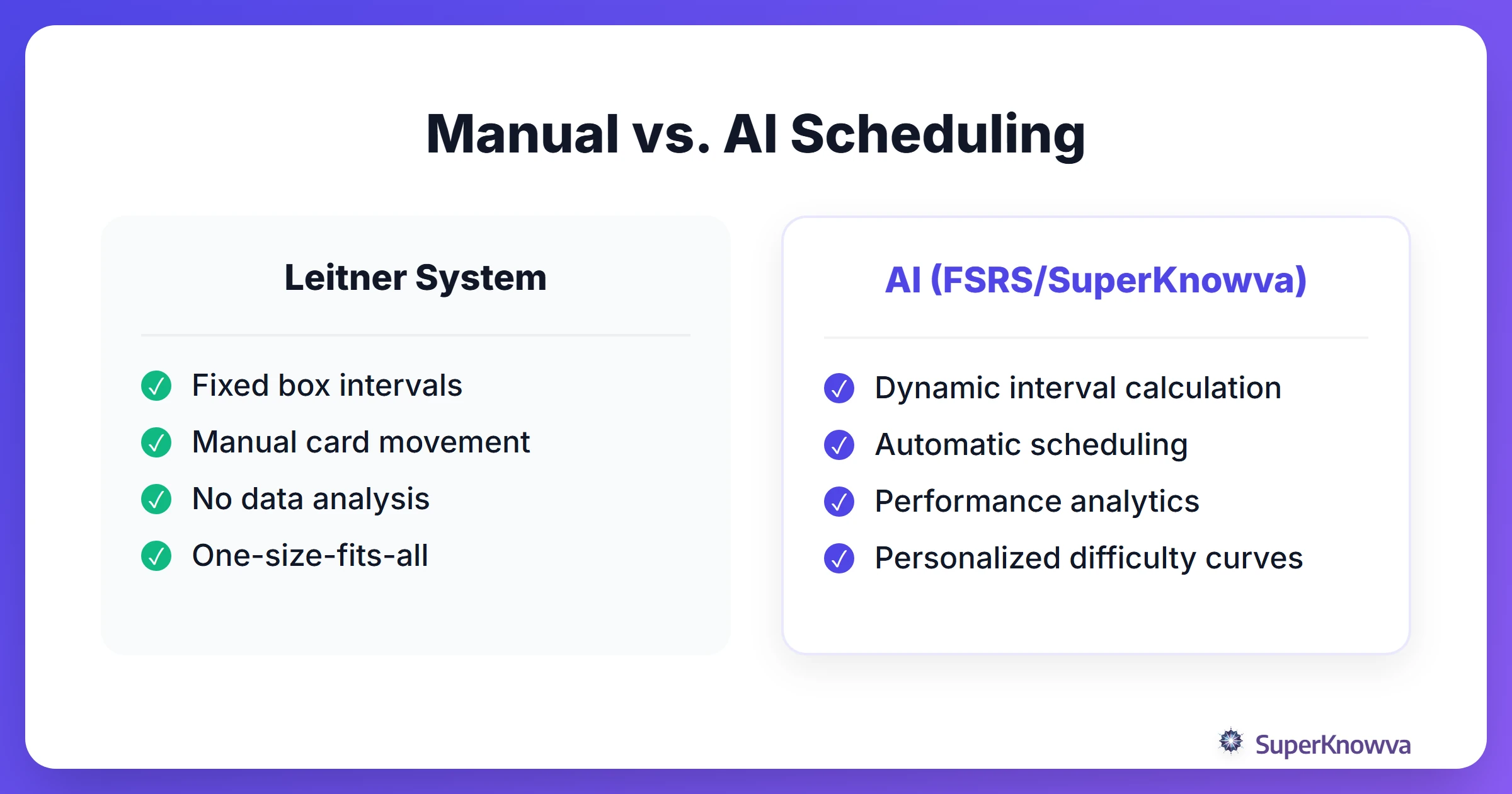
We’ve now entered the era of the FSRS algorithm (Free Spaced Repetition Scheduler). Unlike the "one-size-fits-all" models of the past, FSRS uses complex math to predict your specific "retrievability" and "stability." For those who love the technical details, the FSRS algorithm Wiki explains how it uses stochastic shortest path optimization to find the perfect moment for your next review. Not a second too early, not a second too late.
How AI Personalizes Your Forgetting Curve
Generic study schedules are a recipe for burnout. Who hasn't looked at a calendar, seen 500 cards due, and just given up? This is where AI learning tools like SuperKnowva change the game. Instead of a static calendar, our AI analyzes your past performance to predict your exact point of forgetfulness.
By using neural networks, SuperKnowva maps your individual cognitive load. If you’re struggling with a specific organic chemistry mechanism but breezing through biology definitions, the AI notices. It dynamically shifts your intervals so you spend your energy where it actually moves the needle.
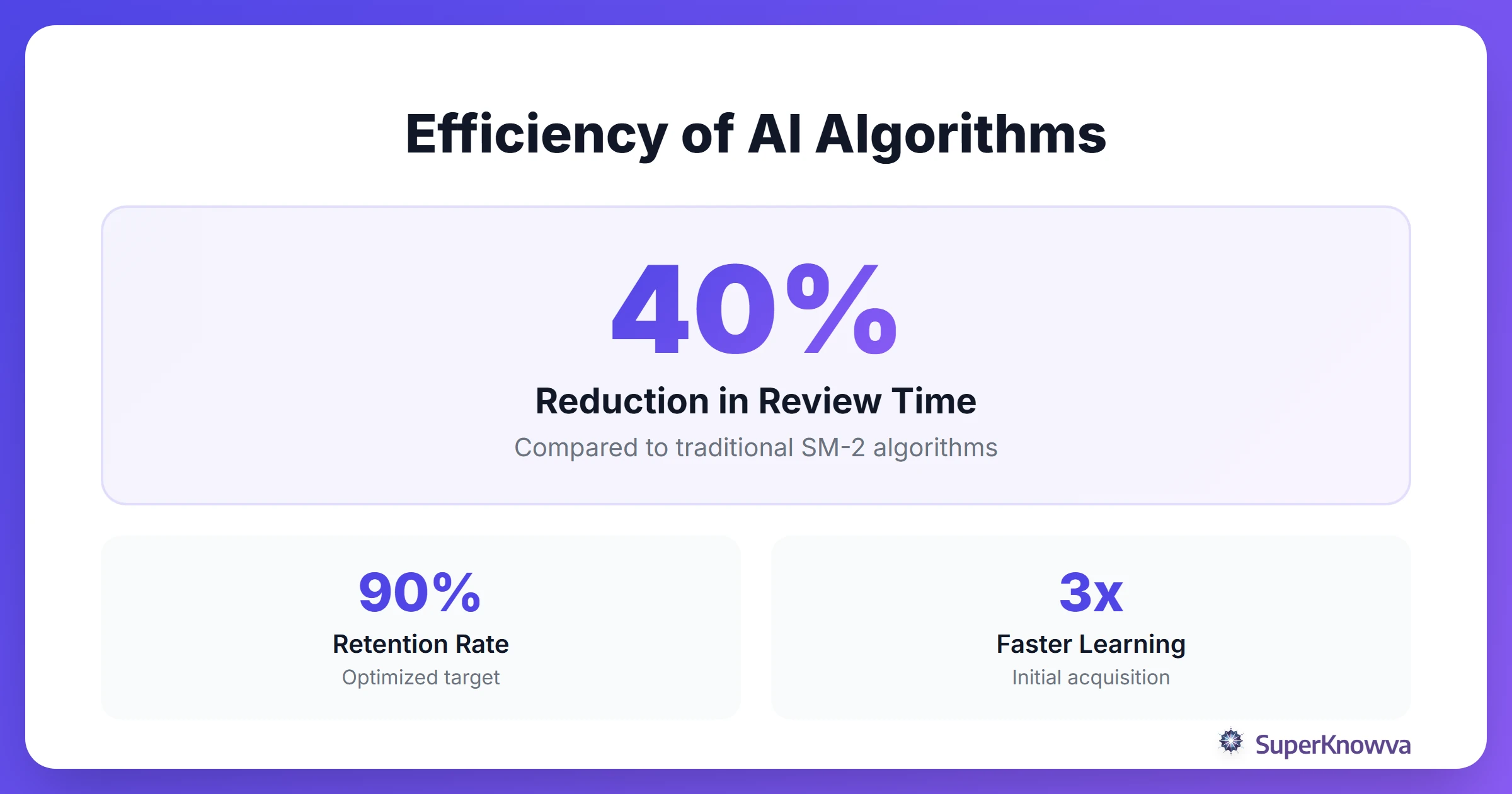
The best part? It kills "review fatigue." Older systems often bury students under a backlog of redundant cards. SuperKnowva’s AI filters the noise, focusing only on the high-impact concepts that are actually at risk of slipping away.
Active Recall: The Engine Driving the Algorithm
Here is the catch: even the smartest algorithm is useless if you’re just passively reading your notes. The algorithm needs high-quality data to work, and that requires "active recall." You have to challenge your brain to pull the information out from scratch.
To get the most out of your sessions, try these tactics:
- Interleaving: Don't just study one subject for five hours. Algorithms are even more effective when you embrace the benefits of interleaving practice by mixing different subjects in one session. It keeps your brain on its toes.
- The Blurting Method: Before you start your digital reviews, try writing down everything you remember about a topic on a blank sheet of paper. Pairing the blurting method for revision with AI scheduling ensures you are testing your recall, not just your recognition.
The goal is "desirable difficulty." If a review is too easy, you aren't growing. If it's too hard, you’ll burn out. The AI finds that sweet spot where your brain has to work just hard enough to weld the neural pathway shut.
Optimizing Your Study Workflow with SuperKnowva
Ready to stop the "cram and forget" cycle? SuperKnowva streamlines the move from raw data to permanent knowledge.
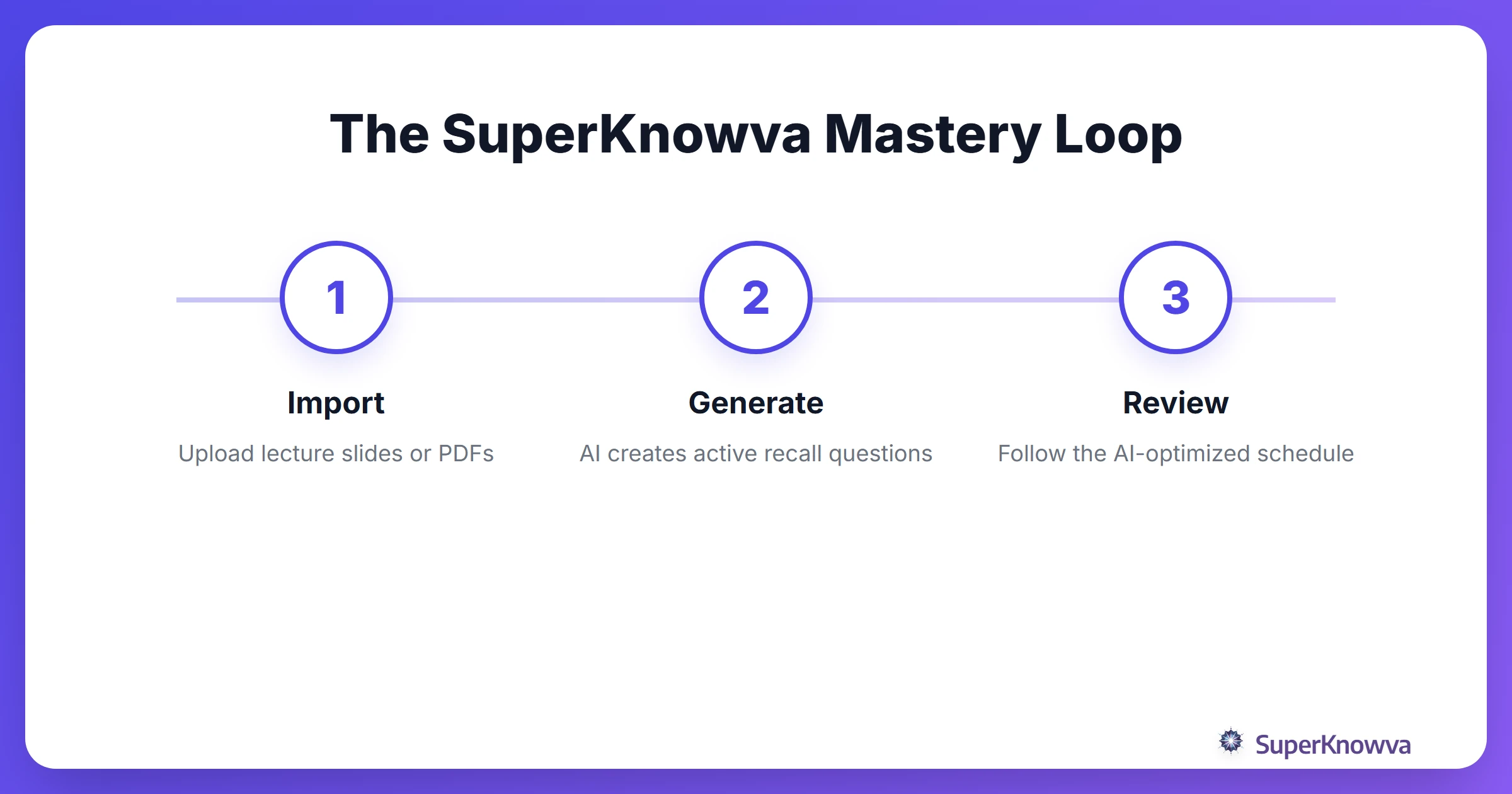
- Import Your Materials: Drop in your lecture slides, PDFs, or textbook chapters.
- AI Generation: SuperKnowva scans the text and builds active recall questions for you.
- Follow the Schedule: Log in, check your "Due Today" list, and go. The AI handles the "when" while you handle the "what."
To see the best results, treat SuperKnowva as your long-term storage vault. By maintaining a daily "streak," you keep the momentum of the algorithm alive. It ensures that no piece of information ever falls through the cracks.
Designing Effective Cards for AI Algorithms
The quality of your AI-driven study session depends on the quality of your cards. Even a genius algorithm can't help you if your flashcards are confusing or five paragraphs long. Follow the Minimum Information Principle: a card should cover one, and only one, specific concept.
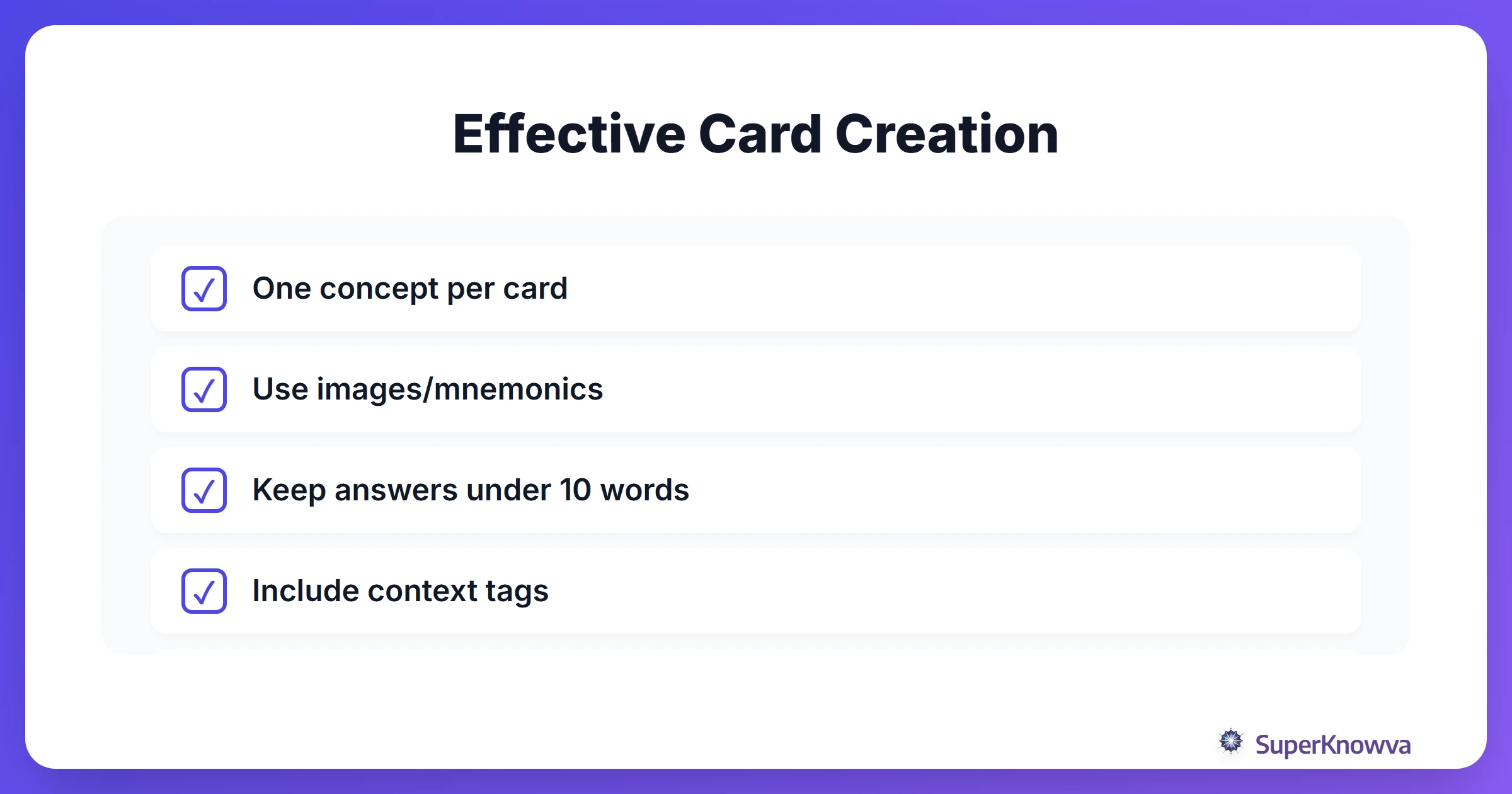
Try these tips for better cards:
- Use Cloze Deletions: These "fill-in-the-blank" questions are perfect for vocabulary or complex definitions.
- Avoid Synonyms: Be precise. You don't want to get a card "right" for the wrong reason because your wording was too vague.
- Simplify First: Before you make a card, use The Feynman Technique to make sure you actually understand the concept. If you can't explain it simply, you aren't ready to memorize it yet.
Combining spaced repetition algorithms for study with smart card design builds a library of knowledge that lasts. Skip the cramming and start mastering. Try SuperKnowva.