Happy Summer Solstice! It’s the longest day of the year, and let’s be honest: the last place anyone wants to be right now is hunched over a desk in a windowless library. With the sun finally out and the birds making a racket, the pull of the outdoors is real. But as a student, you're constantly playing a mental game of tug-of-war. Do you head to the park and risk getting nothing done, or stay inside and feel like you're missing out on life?
It turns out, you don't always have to choose. Understanding the studying outside benefits can turn a soul-crushing study session into a genuine mental reset. Let’s look at the science of why nature helps us learn and how to figure out if you should actually hit the grass or stick to the stacks.
The Science of Nature: Why the Outdoors Boosts Brain Power
A walk through the trees restores focus. According to Attention Restoration Theory (ART), the modern world is exhausting. Urban noise and constant digital notifications demand "directed attention," which drains cognitive resources. Nature offers "soft fascination," the kind of low-key stimulation that lets the brain recover from fatigue.
The biological perks are just as impressive. Natural light is the primary remote control for our circadian rhythms, and that Vitamin D soak-up is directly linked to better moods and sharper focus. Plus, just as physical activity can boost cognitive function, simply being in green spaces restores your mental energy. Fresh air pumps more oxygen into your blood, leading to the kind of clarity you just can't find in a stuffy dorm room. It’s a simple way to level up your summer study habits.
Major Benefits of Studying Outside
The most immediate win? Stress relief. Research consistently shows that being in nature drops your cortisol levels, the hormone that makes you feel like your head is going to explode before finals. When you aren't stressed, your brain actually has the "bandwidth" to absorb new information.
- Ditching the Monotony: Staring at the same four walls for ten hours straight often leads to fatigue. A change of scenery provides the variety needed to stay alert.
- Better Sleep, Better Grades: Outdoor time improves sleep quality. Natural light helps regulate your internal clock, which leads to better rest and improved memory retention.
- Beating the Slump: If you are noticing signs of student burnout, moving your workspace outside can help you recover. It shifts the atmosphere of your work from a chore to an activity.
The Challenges: When Nature Becomes a Distraction
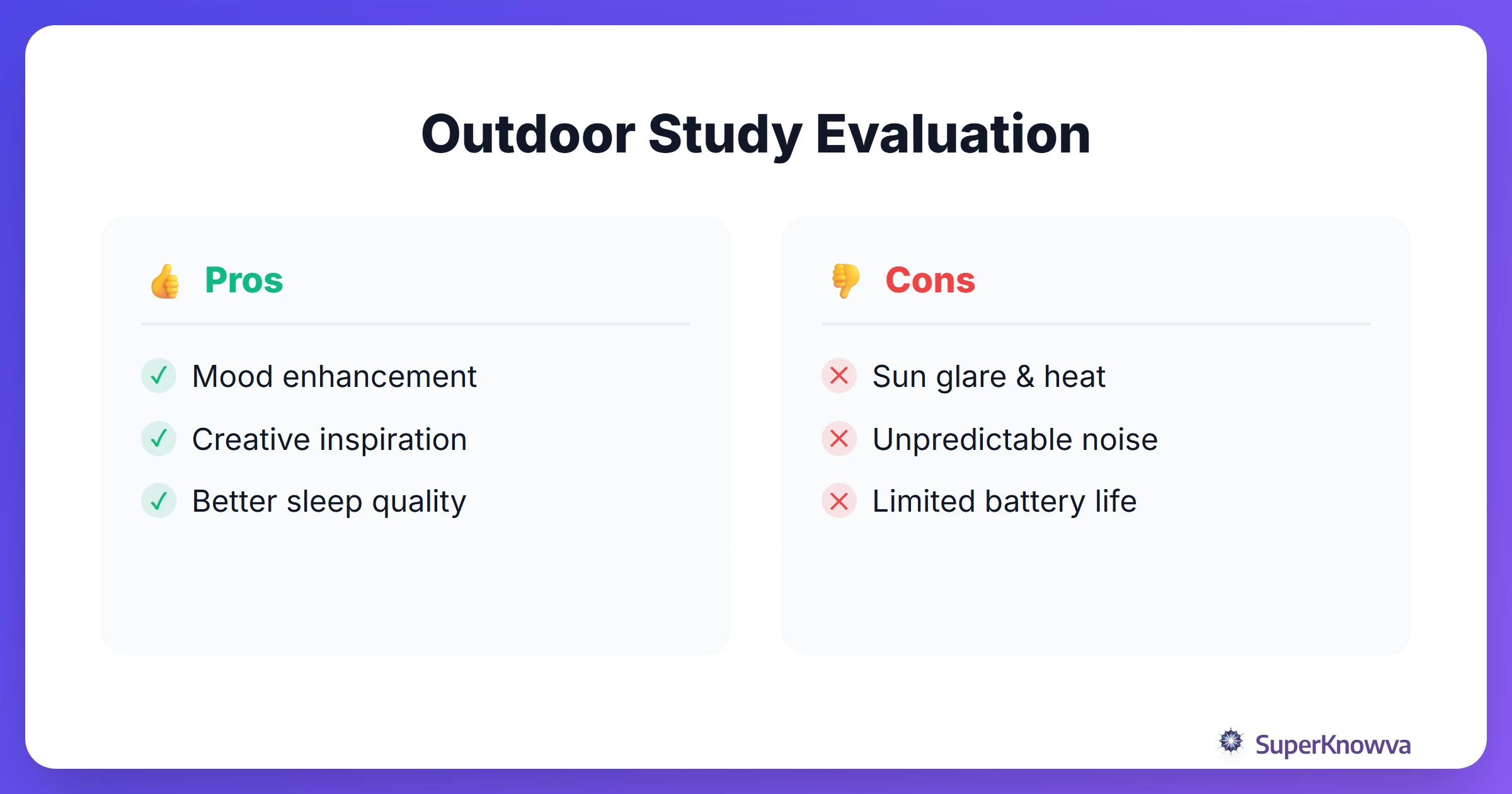
Let’s keep it real: the outdoors isn't always a perfect classroom. Sometimes, nature is just annoying. When taking stock of study options, it's important to weigh the pros and cons of your environment.
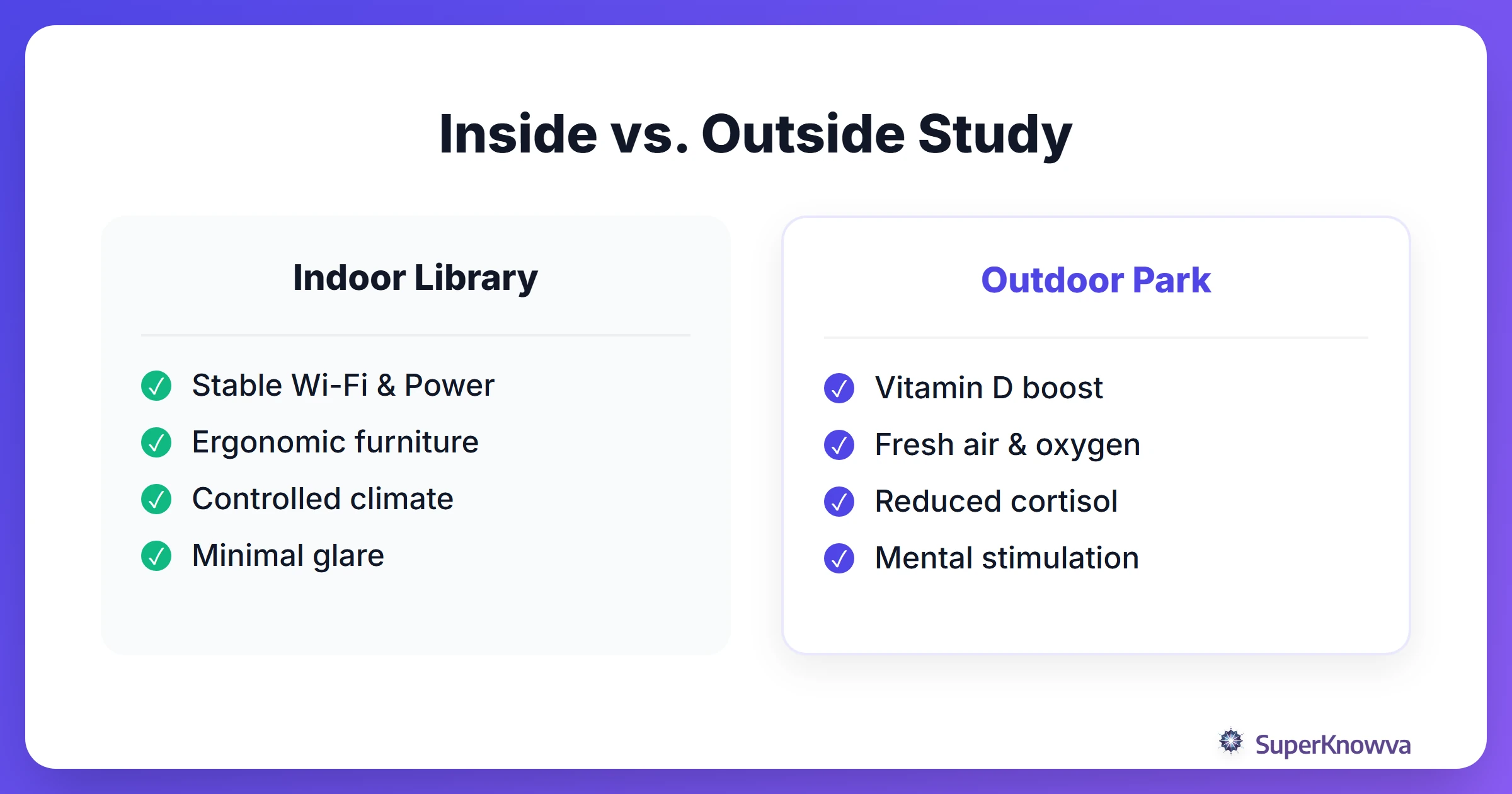
The biggest enemy? Sun glare. Most laptop screens weren't built for direct sunlight, and squinting for two hours is a one-way ticket to a tension headache. Then there are the logistics: wind blowing your notes across the park, bugs, and the unpredictable soundtrack of a public space. Don't forget ergonomics, either. A picnic blanket feels cozy for twenty minutes, but without back support, your student productivity outdoors will tank the second your lower back starts aching.
Inside vs. Outside: Choosing the Right Task
Match your to-do list to your environment. The outdoors is ideal for "divergent thinking," the kind of work that requires creativity, big-picture ideas, or brainstorming.
- Take it Outside: Reading textbooks, light review, sketching out essay outlines, or catching up on educational podcasts.
- Keep it Inside: High-stakes exam prep, tasks that need a second monitor, heavy coding, or anything that requires deep, "don't-talk-to-me" analytical focus.
Learn how to manage potential distractions with these expert tips for studying outdoors to make sure you aren't just "busy," but actually getting things done.
The Ultimate Outdoor Study Checklist
If you're going to do this, do it right. There’s nothing worse than getting perfectly settled only to realize your laptop is at 4% battery. Combining nature with mindfulness for students can seriously boost your concentration, but only if your basic needs are covered first.
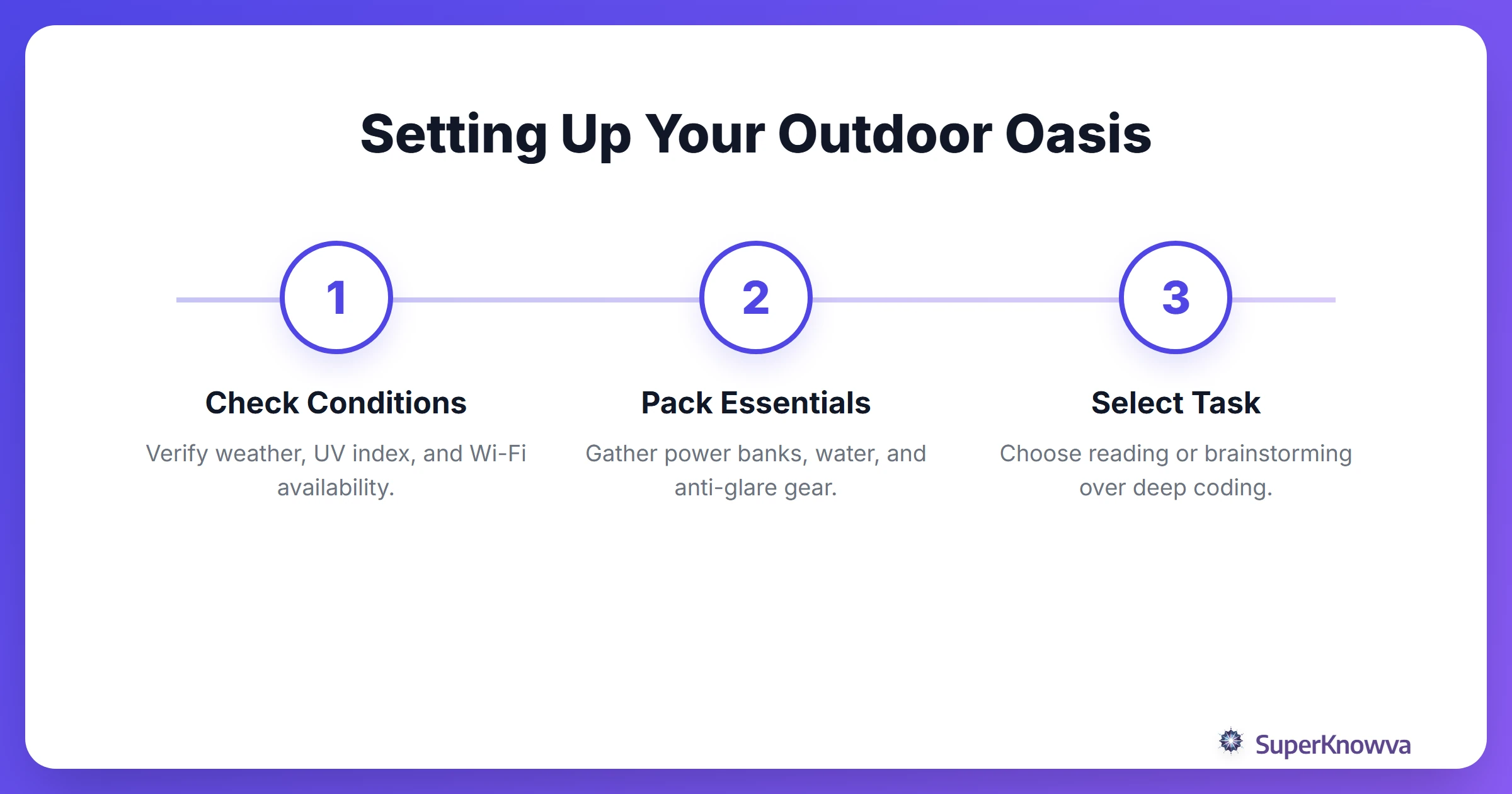
Before you head out, run through this quick list:
- Prep Your Tech: Download your readings for offline use. Public Wi-Fi in parks is a myth at best and a security risk at worst.
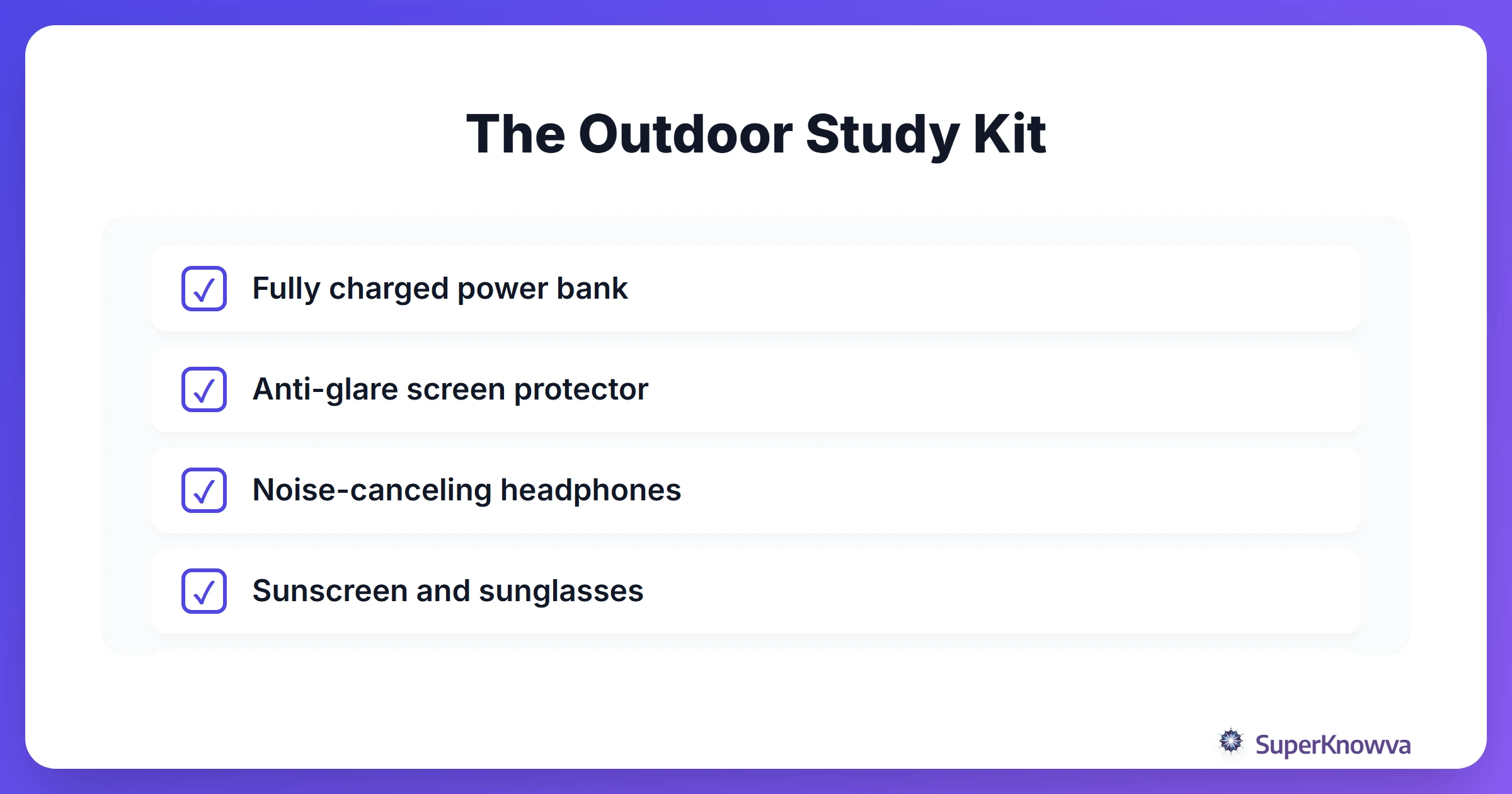
- Power Up: Bring a fully charged power bank and, if you have one, an anti-glare screen protector.
- Stay Comfortable: Pack an insulated water bottle, some SPF, and a portable cushion or a foldable chair. Your spine will thank you.
Combating Burnout with the Summer Solstice
The Summer Solstice is more than just a date on the calendar; it’s a chance to use the study environment impact to your advantage. With all that extra daylight, you can actually balance heavy study blocks with outdoor relaxation without feeling like the day got away from you.
Try using the outdoors as a reward. For every two hours of "deep work" you finish inside, give yourself 45 minutes of reading at the park. This switch-up acts as a mental reset, letting you return to your desk with a second wind. By using the sun responsibly, you can turn the longest day of the year into your most productive one yet.