The Summer Solstice is here. It is the longest day of the year, a day when the sun stays out late and the world is full of life. For students, mid-summer does not always feel like a celebration.
By late June, the "new semester" smell of your summer courses has worn off. The initial excitement of break has likely been replaced by a mounting pile of flashcards or the quiet dread of the fall semester looming in the distance. If you’re staring at your laptop screen and feeling like a ghost of your former self, it’s time for an intervention. It’s time to recharge your academic battery.
At SuperKnowva, we’ve learned that peak performance isn't about the 24/7 grind. It’s about rhythm. You need the intensity to study, but you also need the recovery to actually remember what you learned.
The Longest Day: Your Mid-Summer Gut Check
For thousands of years, people have seen the Summer Solstice as a symbol of renewal and peak power. For you, it’s the perfect "audit" moment. Think of it as the natural halfway mark of the season. It’s the time to look back at what you’ve knocked out so far and decide how you actually want to feel when September rolls around.
Are you running on fumes? Checking in on your academic fatigue now is vital. Too many students think the only solution to stress is to "just keep going" until they hit a wall. But the solstice suggests a better way: recharging instead of just stopping. If you quit entirely, you lose momentum. If you recharge strategically, you gain the power to finish the summer strong without losing your mind.
Is Your Brain in 'Low Power Mode'?
How can you tell if your battery is hitting the red zone? Your brain has its own version of "low power mode." When you are drained, non-essential functions, like your sense of humor or your ability to focus on complex ideas, start to lag. You might get snappy with friends, your memory feels unreliable, or you are just going through the motions without caring about the material.
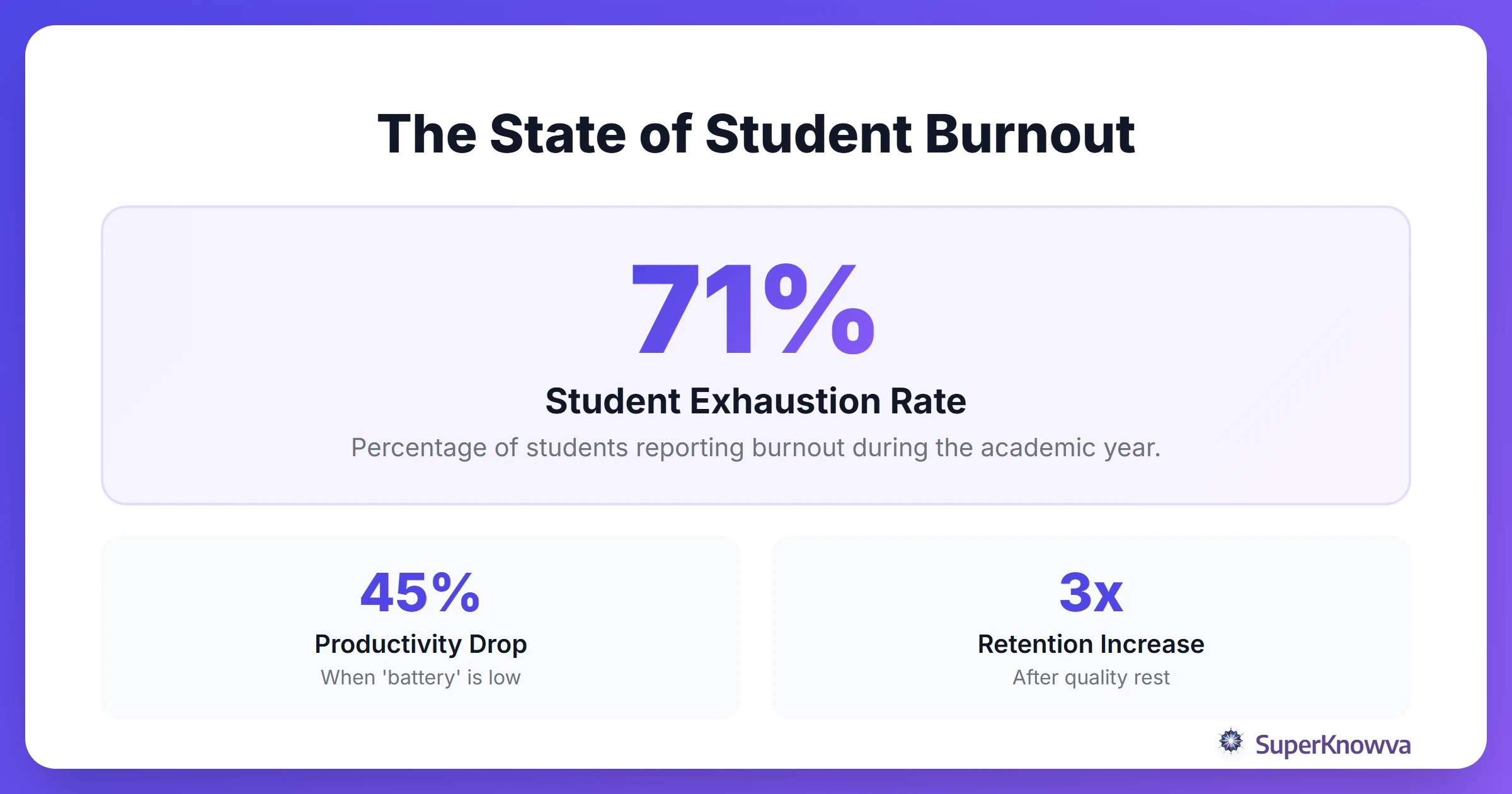
There’s a big difference between being tired after a long day and experiencing deep student burnout. True burnout feels like "auto-mode." You’re doing the work, but you’re hollowed out. You have enough energy to survive the day, but zero energy to innovate or enjoy yourself. If that sounds like you, take a look at these 7 signs of student burnout and how to recover before you push yourself too far.
Using the Sun for a Mental Reset
There’s actual science behind why the solstice is the best time for a reset. Sunlight triggers serotonin, the hormone that keeps you calm, focused, and in a good mood. Plus, getting natural light during the day helps fix your circadian rhythm. Better sleep is the ultimate "cheat code" for academic performance.
If every task on your to-do list currently feels like a personal threat, you need to shift your mindset. Try stepping away from the desk for an outdoor "brain break."
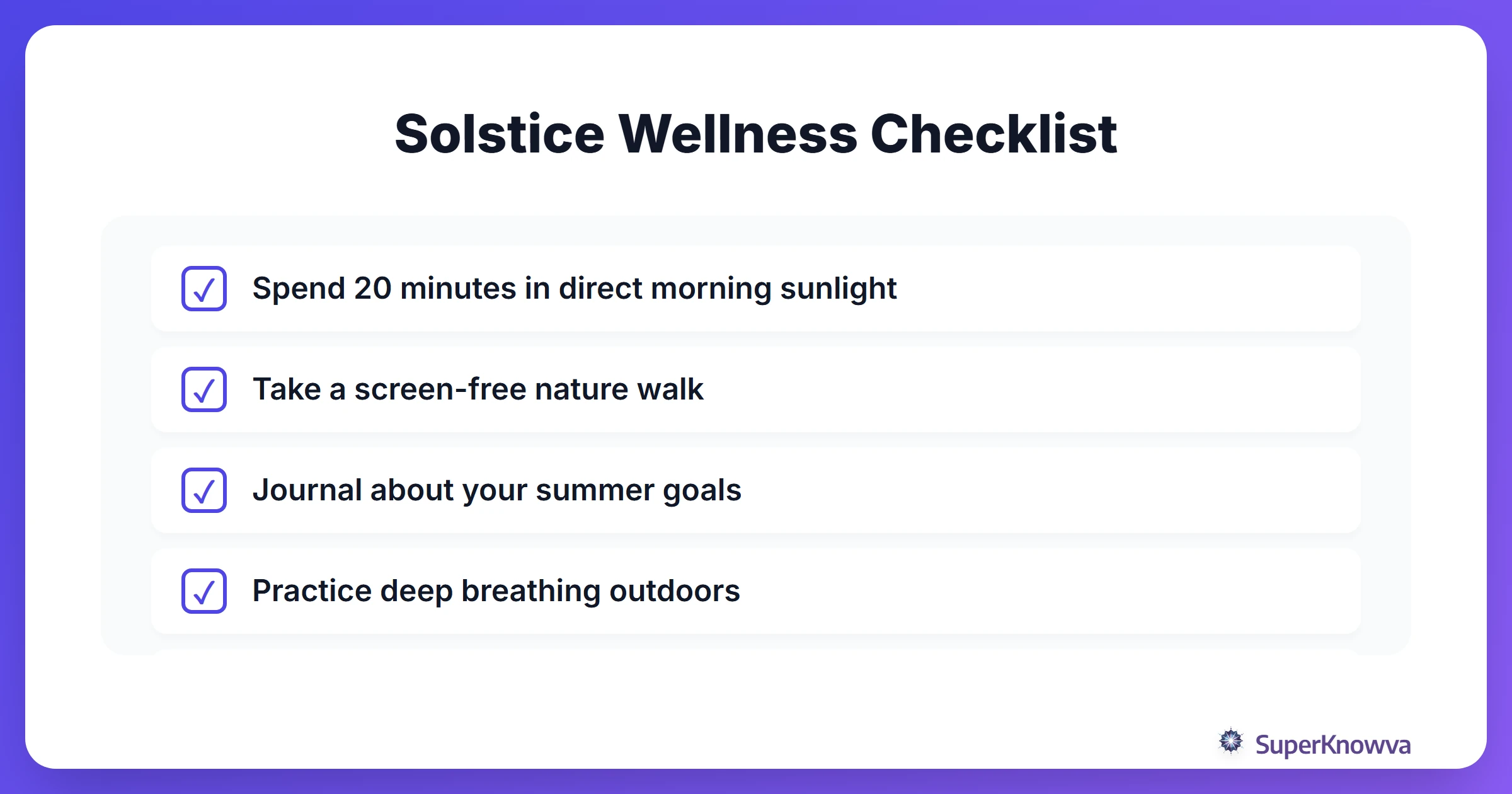
You don't need a grueling gym session to see results. Research on how physical activity boosts cognitive function shows that even a 15-minute walk in the sun can "clear the cache" of your brain. It makes it much easier to absorb that complex chapter later tonight.
The Social Battery: Who’s Draining You?
Your social life and your grades are more connected than you think. During the summer, there’s a lot of pressure to say "yes" to every BBQ and beach trip. But be honest: some friends leave you feeling pumped up, while others leave you feeling like you’ve just finished a three-hour exam.
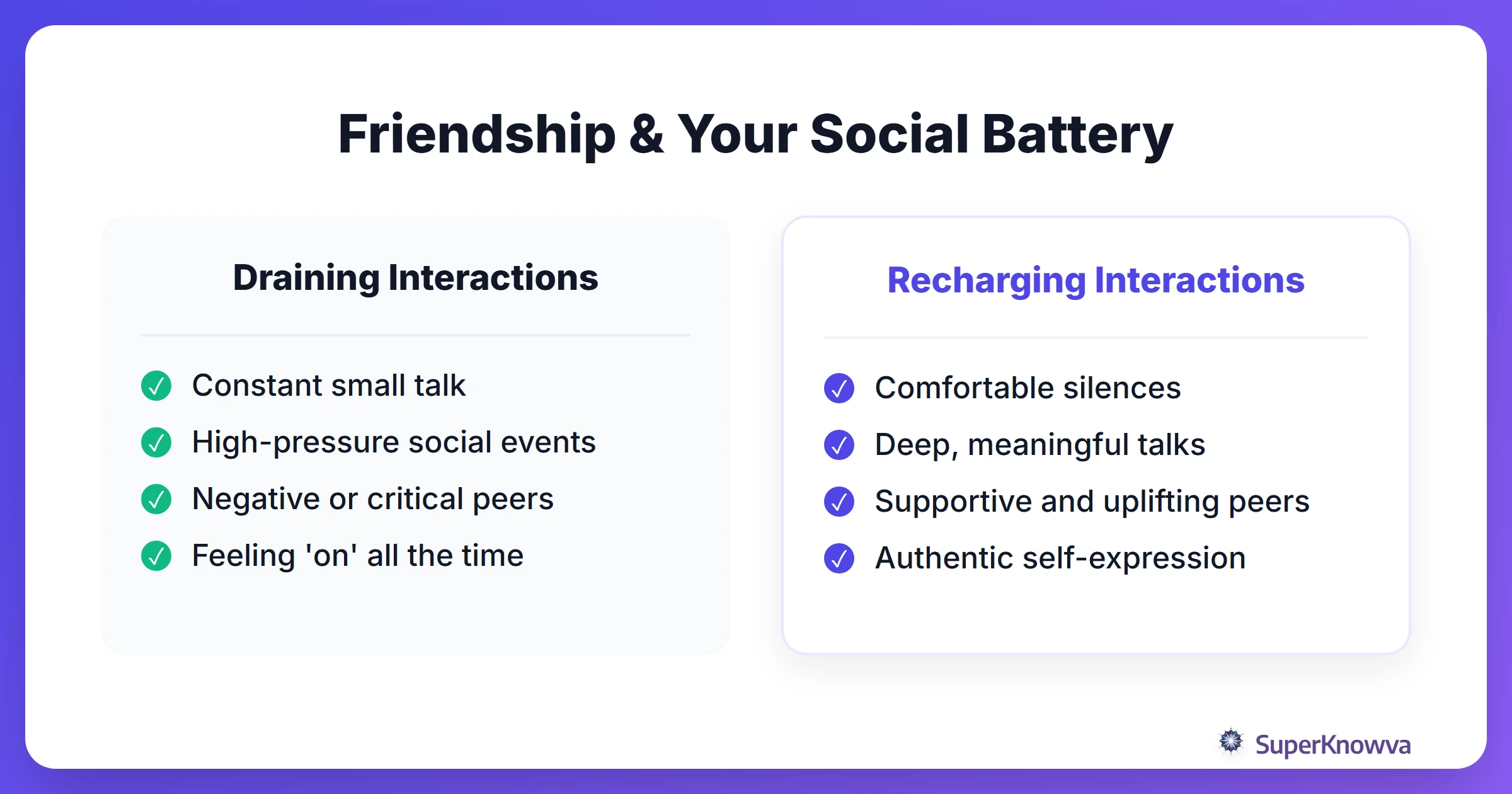
Understanding the value of friends who recharge your battery is essential for student wellness. It is perfectly okay to prioritize people who energize you. If you need a night alone to decompress, say so. Real friends get it. Being honest about your needs is the only way to handle maintaining friendships while acing exams.
Digital Detox: Unplug to Power Up
The constant "ping" of notifications is a silent tax on your brain. Every time your phone lights up, you make a tiny decision: Check it? Ignore it? This decision fatigue adds up, leaving you with less "brain power" for deep work.
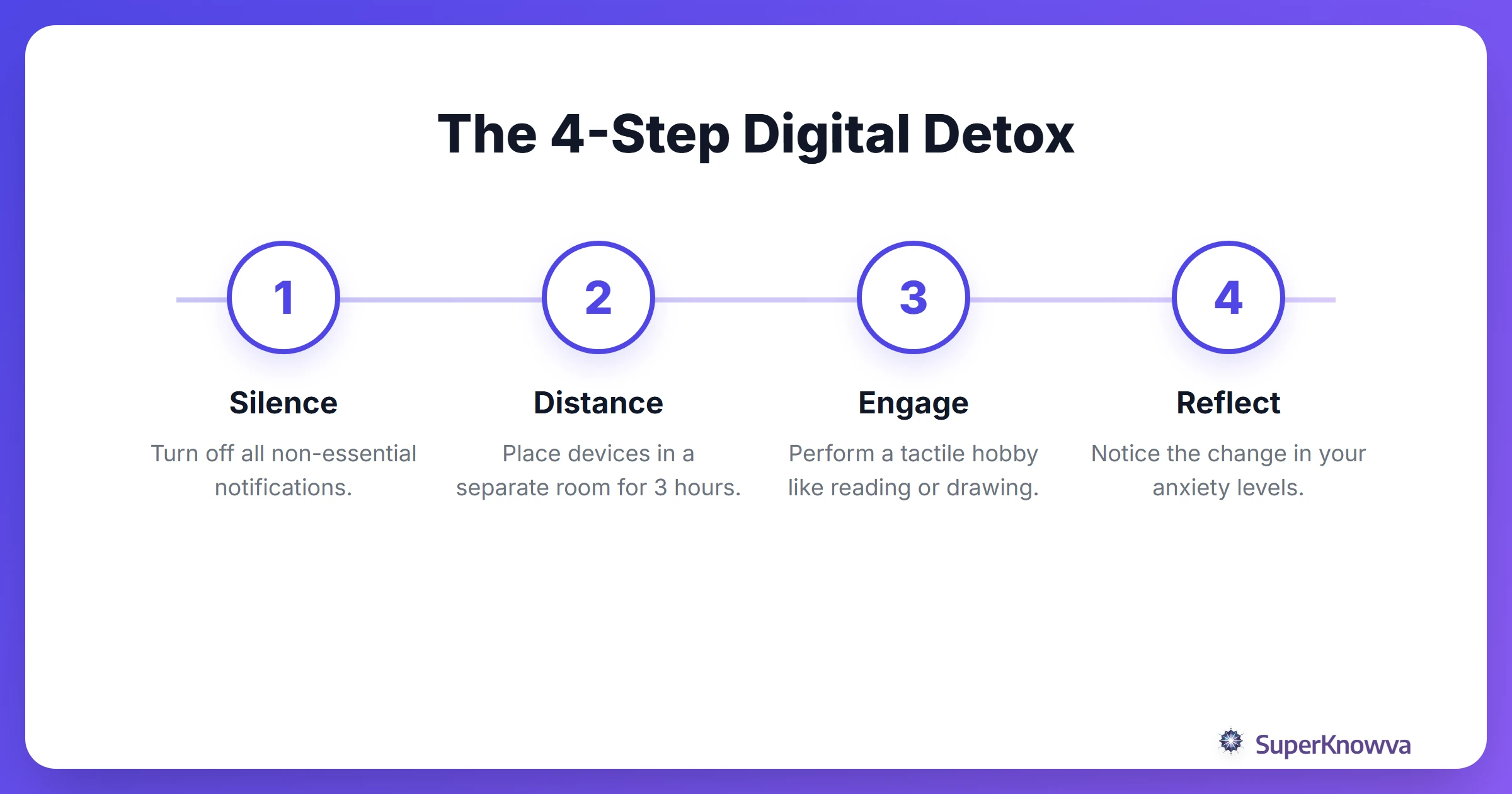
For the solstice, try an off-grid afternoon. Put the phone in a drawer. When you stop the digital noise, your brain enters "default mode," the state where creativity and long-term problem-solving happen. If a full detox sounds terrifying, try some simple mindfulness techniques for focus to help you stay grounded when you are back online.
Creating a Sustainable Summer Rhythm
A solstice reset isn't about having one "perfect" day of rest and then going back to a 12-hour-a-day study grind. It’s about breaking the "all-or-nothing" cycle. Real success comes from a sustainable academic rhythm.
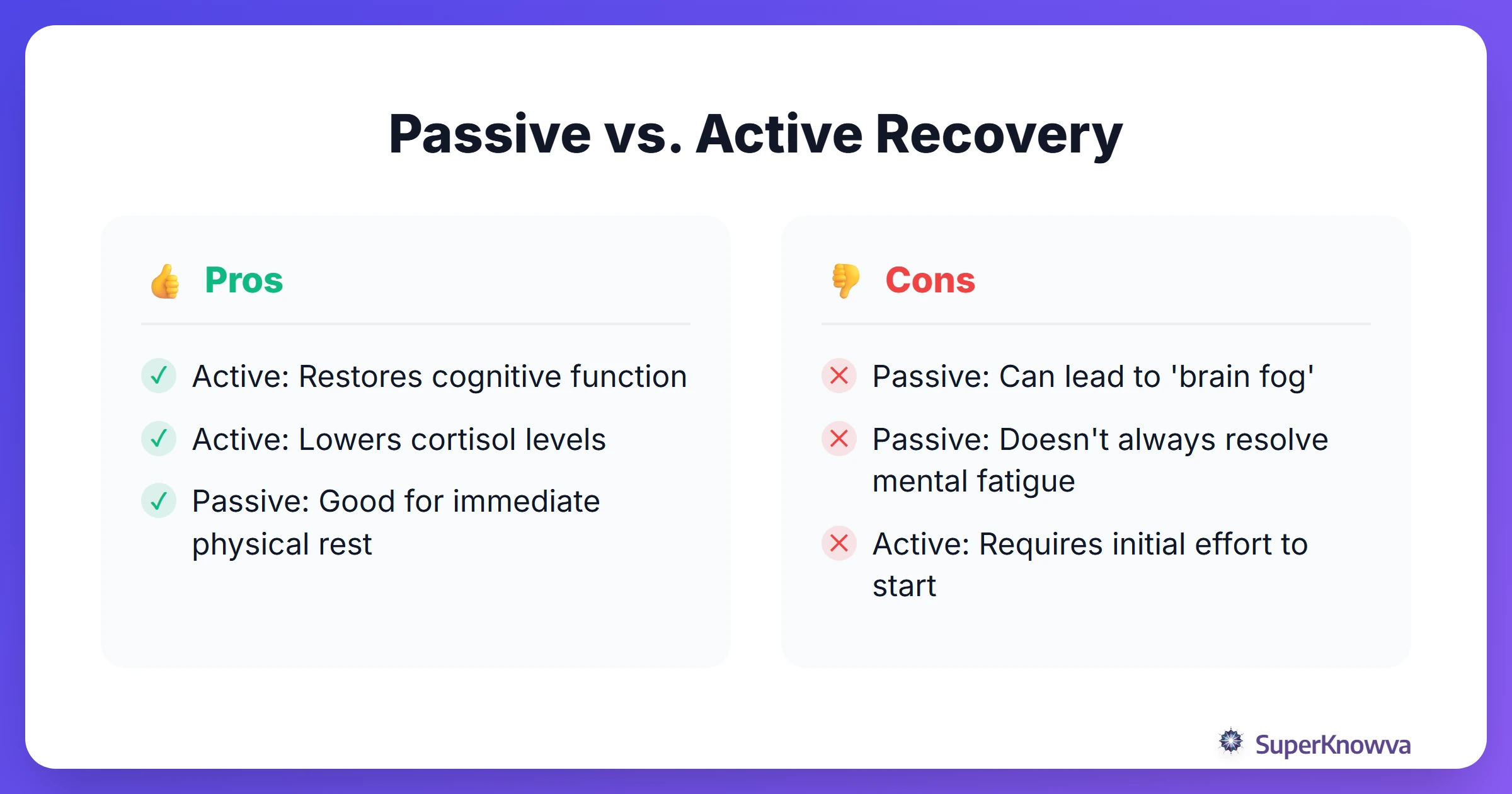
As you head into the second half of summer, think about what 'charging your batteries' really means. You need a mix of "passive rest" (sleep and Netflix) and "active recovery" (hobbies, hiking, or cooking). Set a hard "off" switch for your school day. When you honor your need for rest, your study time becomes twice as effective.
The Bottom Line: Carry the Light Forward
Recharging during the Summer Solstice isn't just about avoiding a slump; it’s about building the habits that lead to long-term success. By spotting the signs of burnout early and protecting your energy, you’re setting yourself up to crush the fall semester.
The whole point of education is to enlighten your mind, not to exhaust your spirit. Use the extra sunlight today to find your rhythm. Happy Solstice from the SuperKnowva team!