Study schedules often feel designed for someone else. Not everyone enjoys 8 AM thermodynamics or dense, 50-page PDFs. Many students spend hours staring at a screen, waiting for a concept to click, while the material feels disconnected from their interests.
But it’s 2026. You don’t just open a textbook; you launch a mission. Instead of a generic chapter on physics, your platform greets you with a personalized simulation of a SpaceX launch. The system knows you are interested in aerospace. This is the daily reality of personalized education platforms.
The "one-size-fits-all" era is finally dead. At SuperKnowva, we’re seeing AI evolve from a simple search tool into an intuitive partner that actually gets you.
Hyper-Personalization: When Learning Becomes Intuitive
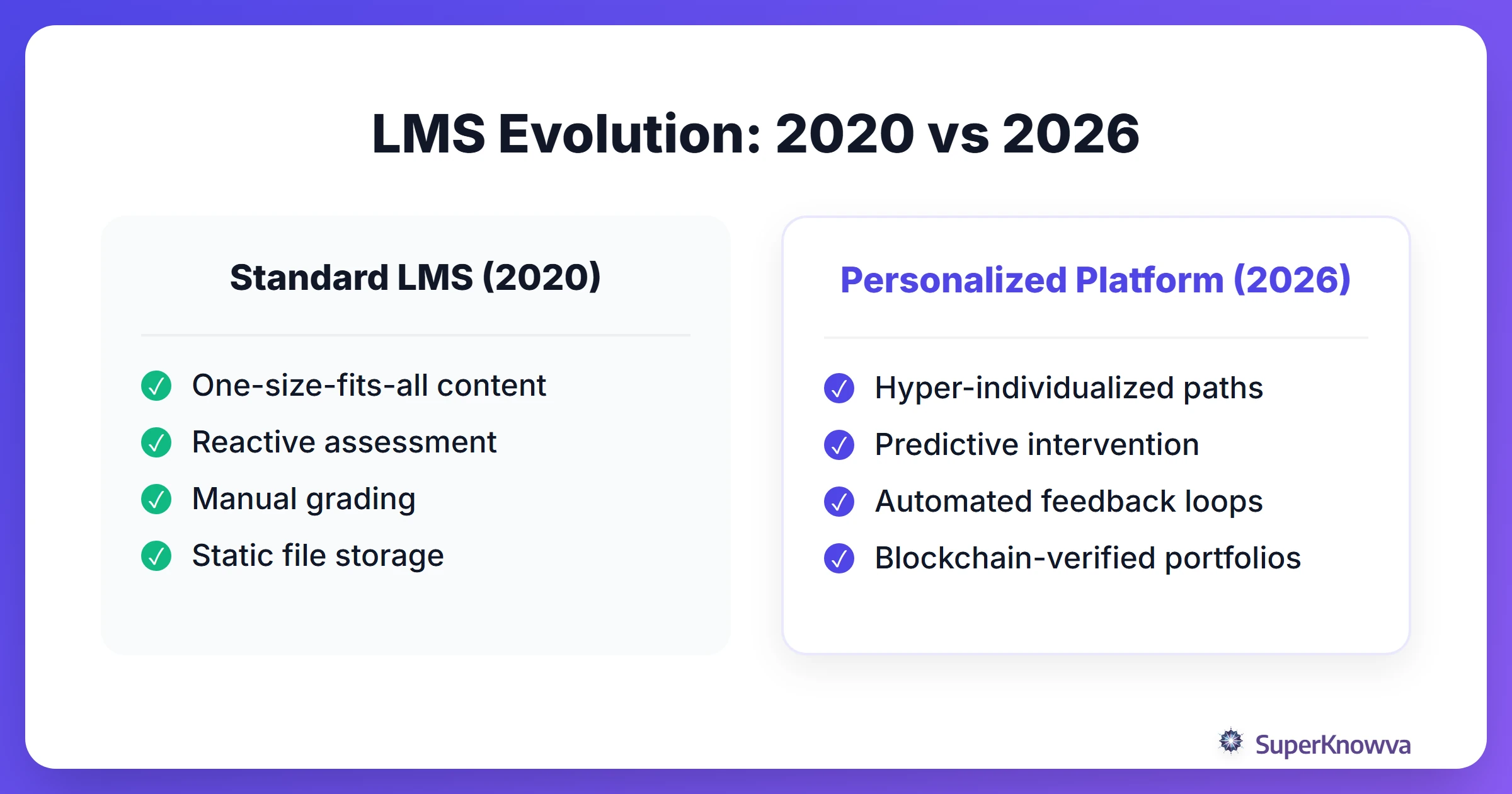
For years, we settled for "adaptive learning." You know the drill: if you get a math problem wrong, the system gives you an easier one. It was fine, but it was reactive. By 2026, we’ve moved into the era of intuitive learning.
Modern platforms now use deep-learning systems to spot a "learning plateau" before you even hit it. By tracking your interaction speed, mouse movements, and even what time of day your brain actually functions, the AI senses when a concept isn’t clicking. It doesn't wait for you to fail a quiz. It proactively shifts gears.
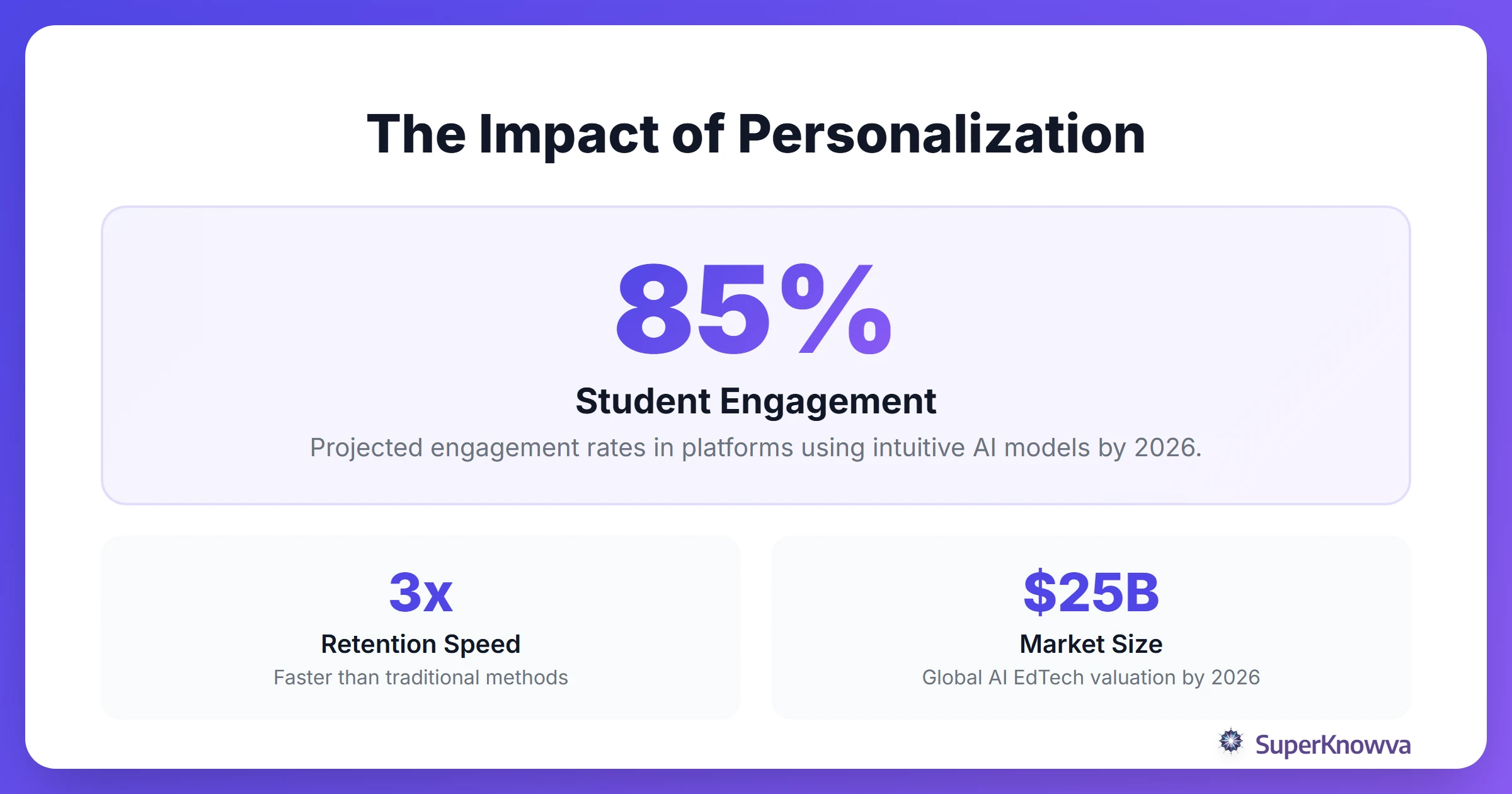
Large Language Models (LLMs) drive this personalization. They have evolved beyond providing simple answers to tailoring tone and difficulty to individual needs. Whether you prefer a conversational approach or a technical breakdown, the system adapts its delivery. This AI-powered learning transformation ensures that the friction of learning, such as the frustration of not understanding a concept, is minimized for every learner.
Generative AI: Your World, Your Curriculum
The static textbook? It’s a relic. In 2026, the future of personalized education platforms is defined by real-time co-creation.
If you struggle with biological cell structures but spend weekends building worlds in Minecraft, AI creates a 3D interactive model of a cell to explore like a game. You aren't just reading about mitochondria; you're walking through them.
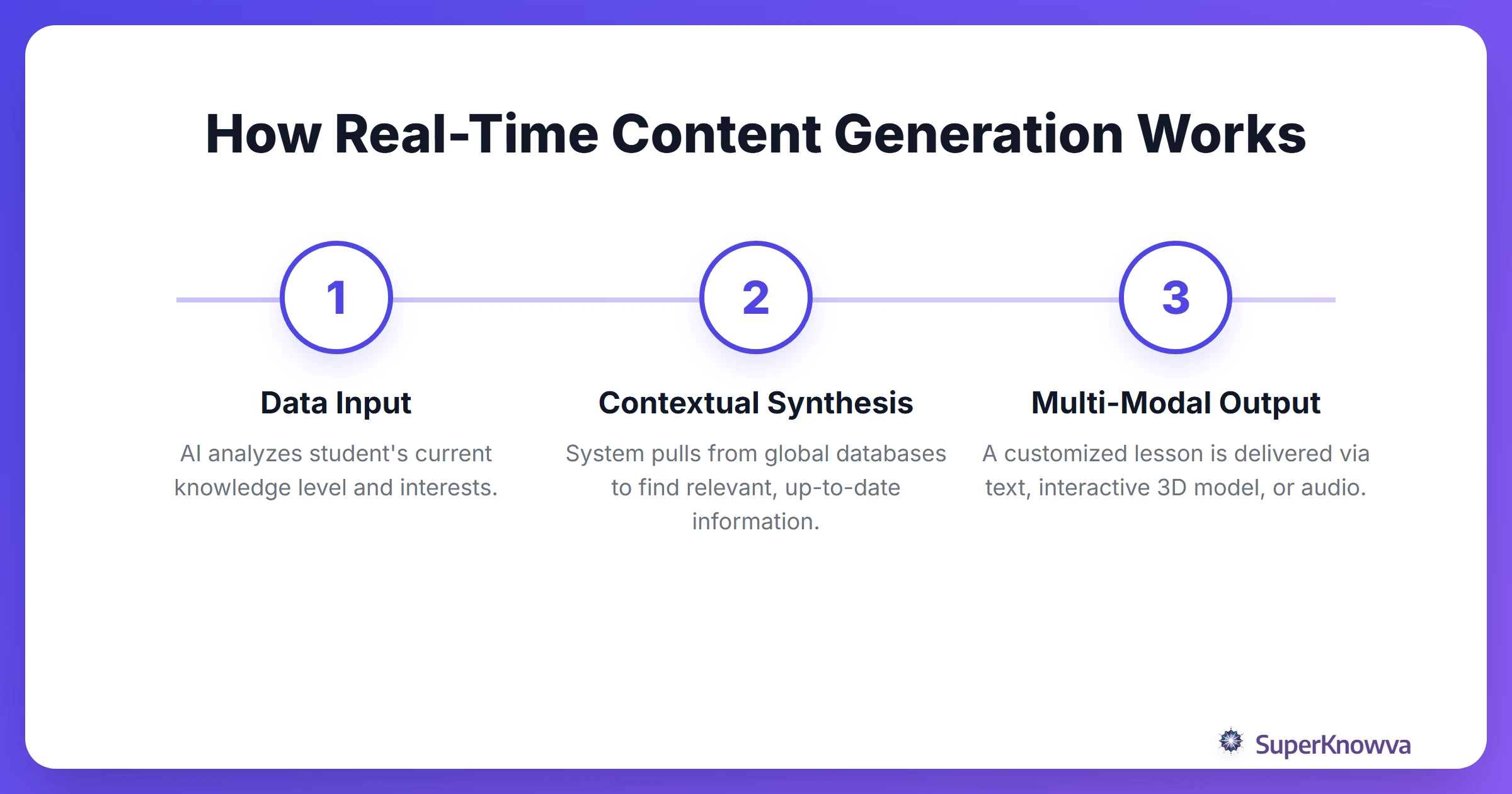
This goes beyond text. We are seeing growth in gamified learning with AI, where formats switch between audio summaries, interactive video, and hands-on challenges. Education no longer feels like a chore; it is an experience built for your career goals.
Emotional AI: The End of the Digital Burnout
Learning isn't just a mental workout; it’s an emotional one. We’ve all had those days where the brain fog is too thick to push through. That’s where affective computing, or Emotional AI, comes in.
Platforms can now detect signs of frustration or exhaustion through subtle cues. If the system senses you’re burning out, it won't just keep pushing. It might suggest a five-minute mindfulness break or pivot to a lighter, more engaging topic to keep you in the "flow state." This level of emotional intelligence in AI keeps the human at the center of the technology.
But here’s the catch: the goal isn't to replace humans. The best platforms in 2026 use AI to flag when a student needs a human touch. When the system detects a deep-seated conceptual struggle that an algorithm can't fix, it alerts a human mentor. No more digital isolation.
The "Learner Passport": Owning Your Success
As we learn across different apps and platforms, our records used to get messy. Not anymore. Enter the "Learner Passport."
By 2026, blockchain has become the standard for securing your data. Every skill you master on SuperKnowva is recorded as a permanent, verified micro-credential.
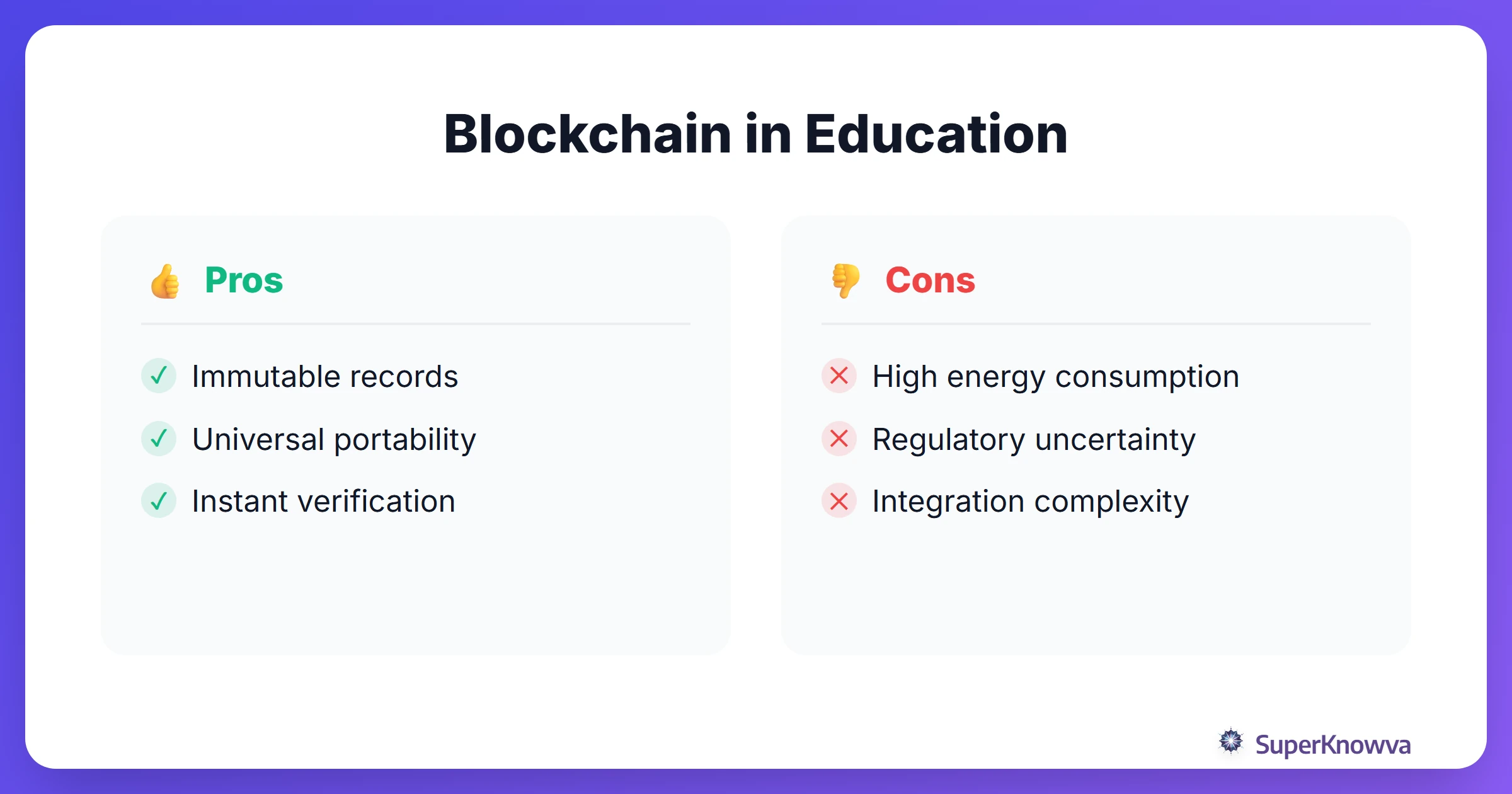
This shift puts the power back in your hands. When you apply for a job, you don't just send a piece of paper from a university. You share a verified, blockchain-backed portfolio of exactly what you can do. This is revolutionizing the future of open universities and a global job market that finally cares more about your skills than your school's zip code.
The New Educator: From Lecturer to Architect
Teachers haven't been replaced; they have been upgraded. They are no longer the primary source of information; they are Learning Architects.
With AI-driven dashboards, educators can see real-time data on an entire class at a glance. They don't waste hours grading basic multiple-choice quizzes. Instead, they use that time for high-impact, 1-on-1 coaching. The classroom has transformed into a hub for creative problem-solving rather than a room for passive listening.
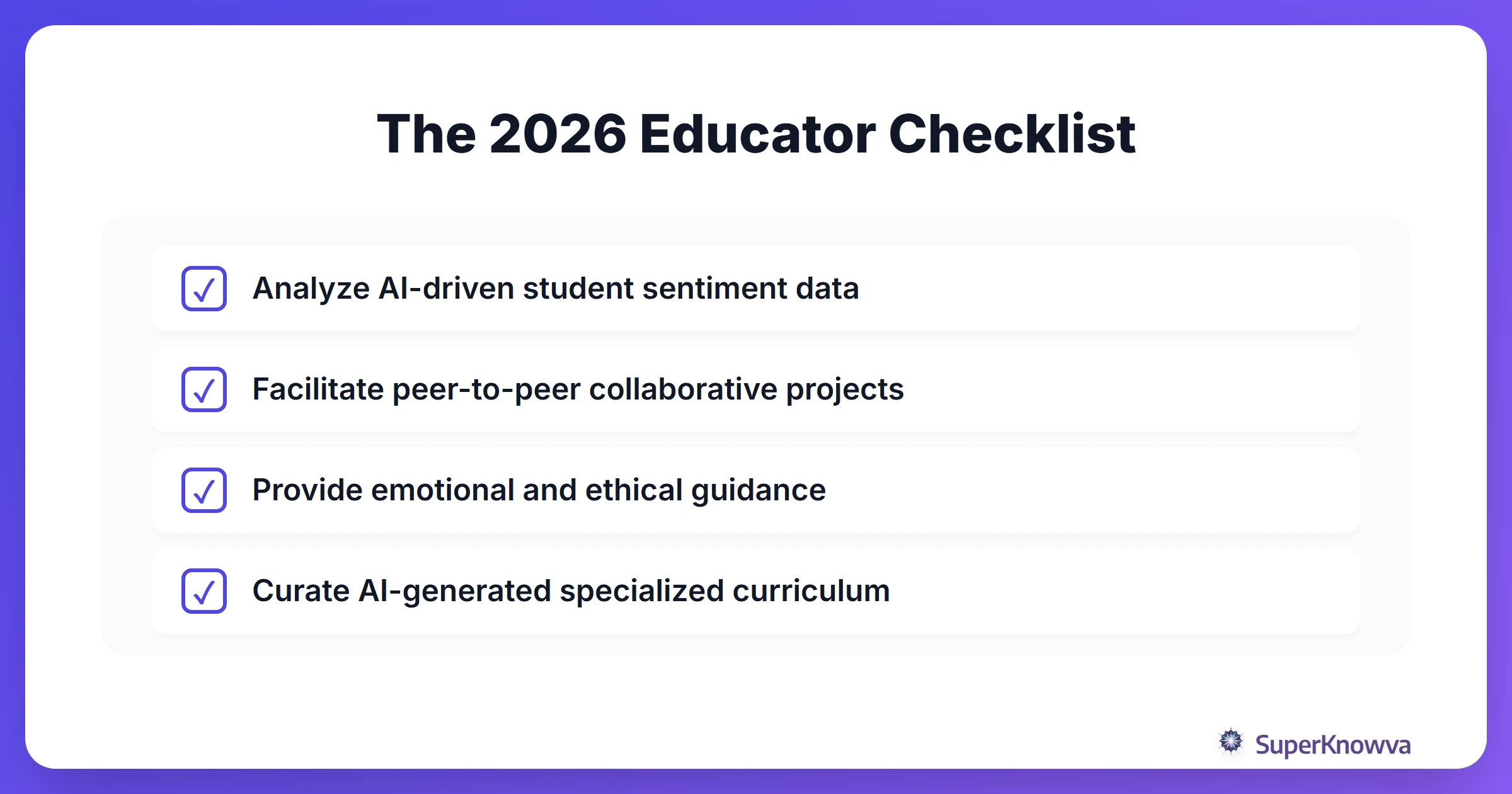
As AI handles the "what," human soft skills like empathy, ethics, and critical thinking have become the most valuable assets. When comparing AI tutors vs. human tutors, the winner is the hybrid model. Technology handles instruction; humans handle the "why."
The Road Ahead: Privacy and Fairness
It’s not all sunshine and perfect algorithms. The future of personalized education platforms faces some serious hurdles that we have to talk about.
- Algorithmic Bias: We have to ensure AI doesn't accidentally favor certain groups over others. It’s a constant battle for developers.
- Data Privacy: Collecting emotional data is powerful, but it’s also personal. Strict regulations like the EdTech Privacy Act of 2025 are now the baseline for protecting students.
- The Digital Divide: We can't let AI for inclusive learning become a luxury. High-tech education must be accessible to everyone, not just those with the biggest budgets.
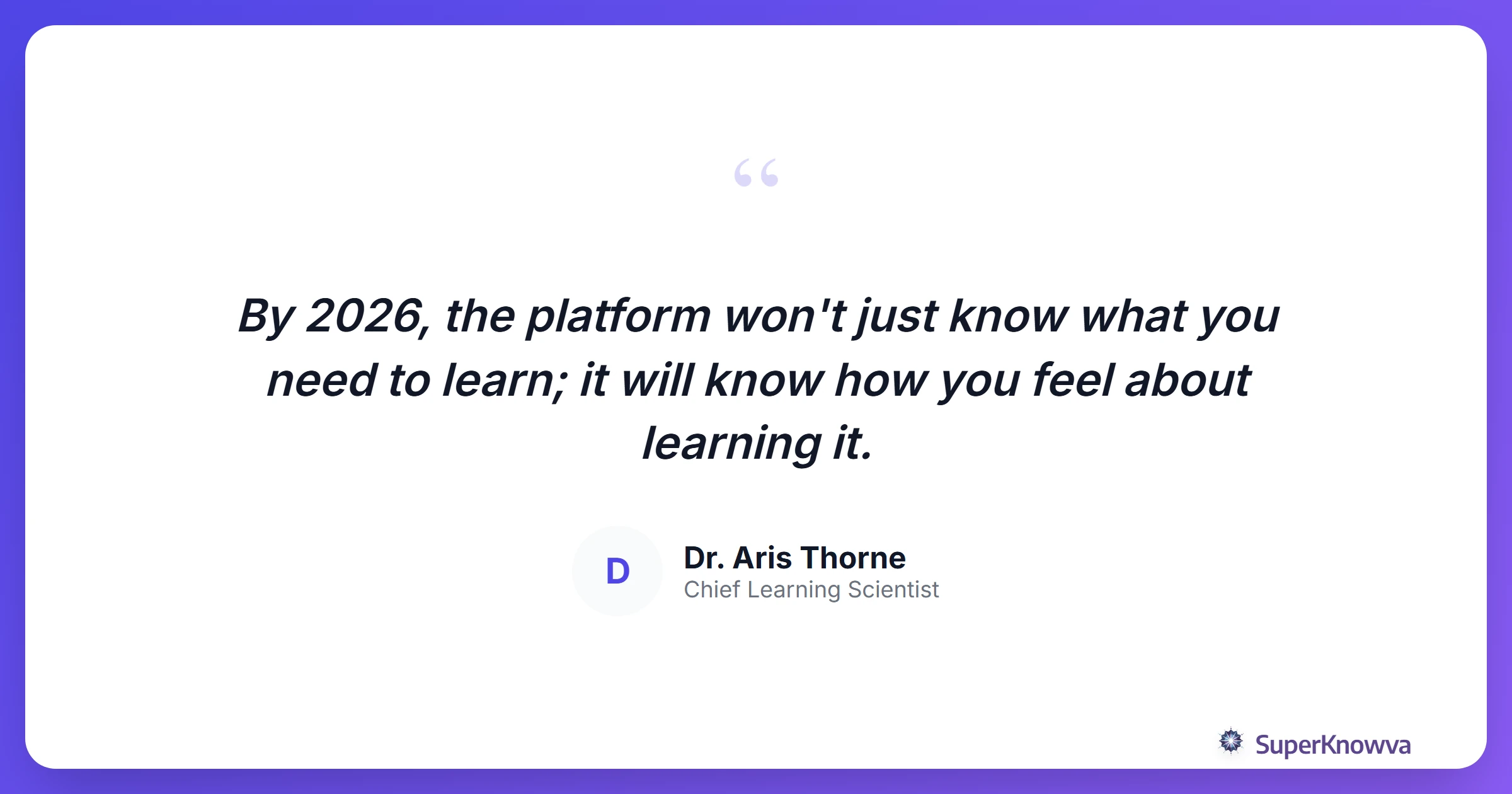
As noted by industry experts, the progress toward 2026 hasn't just been about faster chips. It’s been about making education more compassionate and effective.
The future of learning has arrived. Adopting these changes now ensures you stay prepared for industry shifts.