The cap and gown are tucked away, the diploma is framed, and your career has officially begun. For most new graduates, the student to professional transition is a significant change that is both exciting and intimidating. You have the degree, but you are finding that the corporate world follows a different set of rules than the university lecture hall.
At SuperKnowva, we believe the best learning happens after the tassels are turned. Making this leap successfully isn't just about technical skills; it requires a shift in how you view your time, your output, and your definition of success. Here is how to manage the transition from campus life to career growth.
The Mindset Shift: Goodbye Syllabus, Hello Results
In college, your path to an 'A' was clearly mapped out. You had a syllabus, a list of deadlines, and a professor telling you exactly what was on the exam. In the professional world? That syllabus is gone. Success is no longer about checking off a list of requirements; it’s about delivering impact and solving problems before they land on your desk.
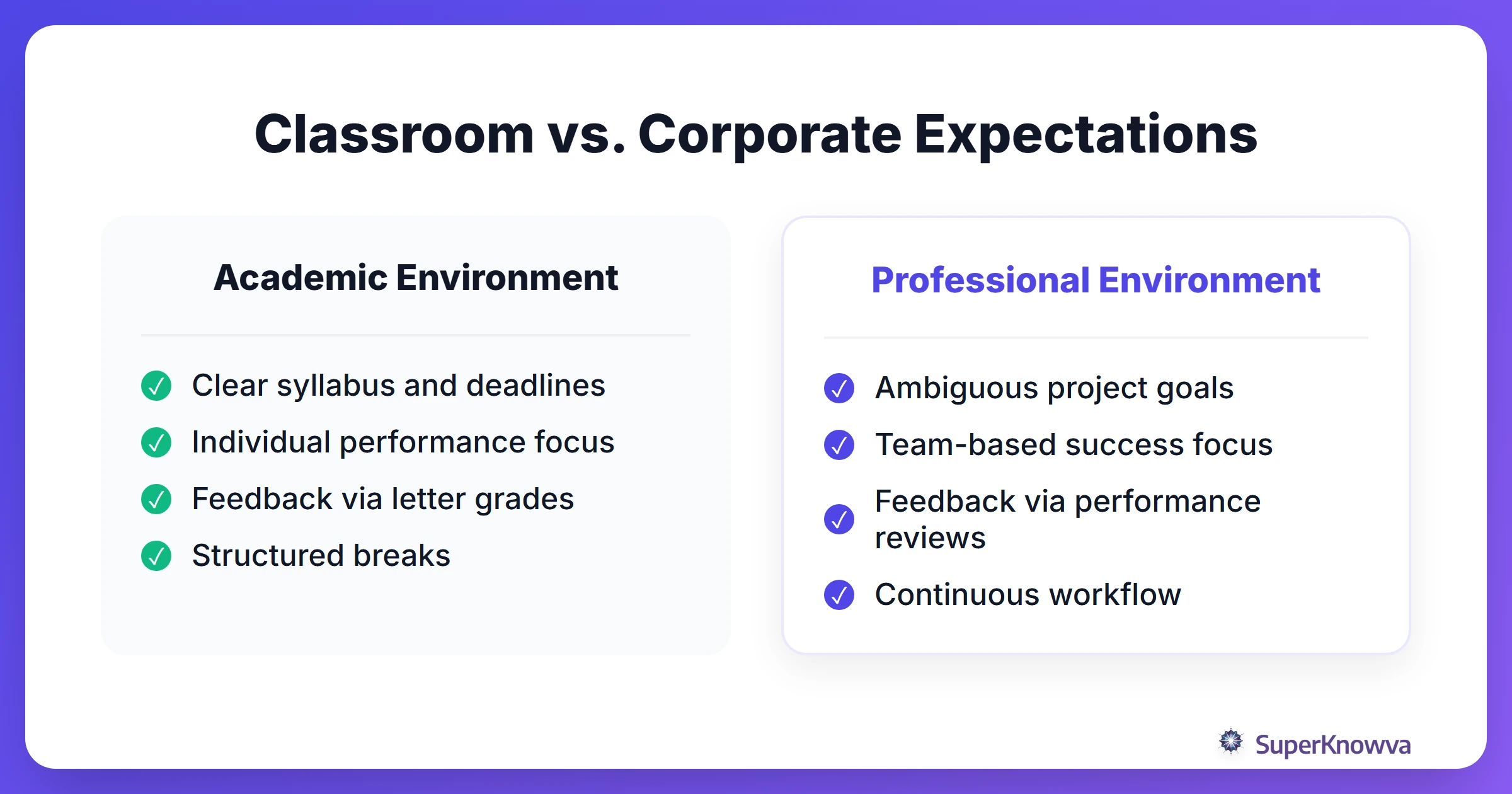
The biggest hurdle for most grads is ditching the "passive" student mindset. In a classroom, you wait for instructions. In an office, you’re expected to spot a gap and offer a solution without being prompted. You also have to change how you handle "grades." In school, a 'C' is a permanent stain on your transcript. In your career, constructive criticism is just data. It’s a tool for growth, not a final judgment on your worth. For a deeper look at how these office dynamics actually play out, check out our guide on navigating the transition to the workplace.
Surviving the 40-Hour Work Week
Let’s be honest: the lack of "naps between classes" is a massive shock to the system. The shift to a 40-hour work week is often the hardest adjustment for new hires. Unlike a college schedule where you can front-load your work and disappear for an afternoon, a professional role requires sustained, consistent energy.
Reliability is your new currency. In the corporate world, "on time" usually means you’re in your seat and ready to go five minutes early. But here’s the catch: while you want to impress everyone in your first month, you have to watch out for the "new hire burnout." Setting healthy boundaries early on ensures you can keep up the pace for the long haul, rather than hitting a wall by month two.
Mastering the Art of "Office Speak"
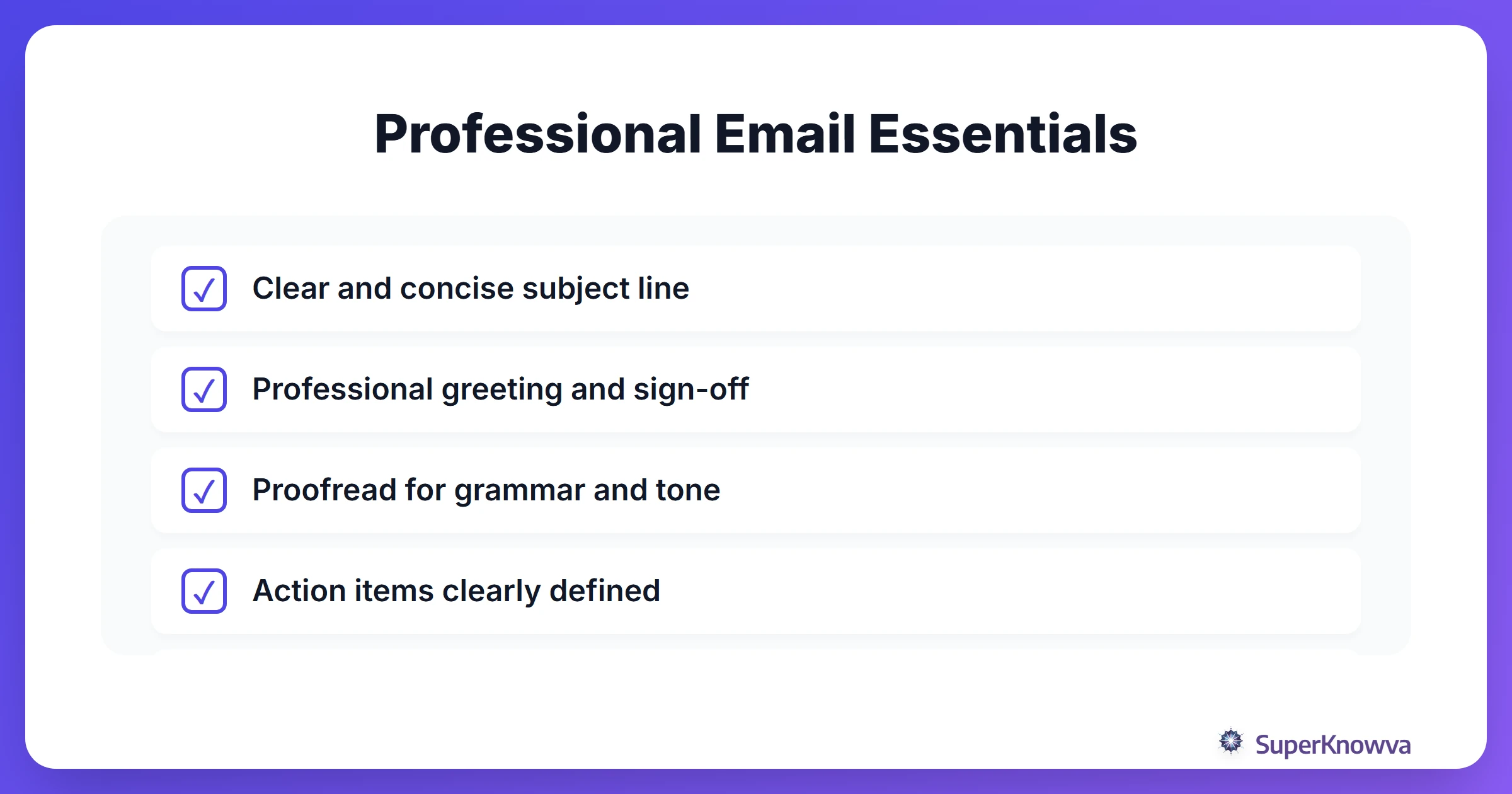
That casual, one-line email you used to send to your professor? It won’t cut it now. Every digital interaction, whether it’s a Slack message, a Zoom call, or a formal email, builds your professional brand.
Then there’s the "office politics" side of things. This isn't about being "fake" or manipulative; it’s about building genuine relationships and understanding the unique culture of your company. Spend your first few weeks in "listen mode." Pay attention to the unwritten rules. When it comes to the dress code, it’s always better to be the person who is slightly too polished than the one who mistook "tech-startup casual" for "Saturday morning gym clothes."
Why Soft Skills are Your Secret Weapon
Your technical skills might have gotten you through the door, but your soft skills are what will keep you in the room. In your first year, your Emotional Intelligence (EQ) often matters more than your GPA. In today's market, understanding what employers are really looking for regarding these interpersonal traits can give you a massive edge over other applicants.
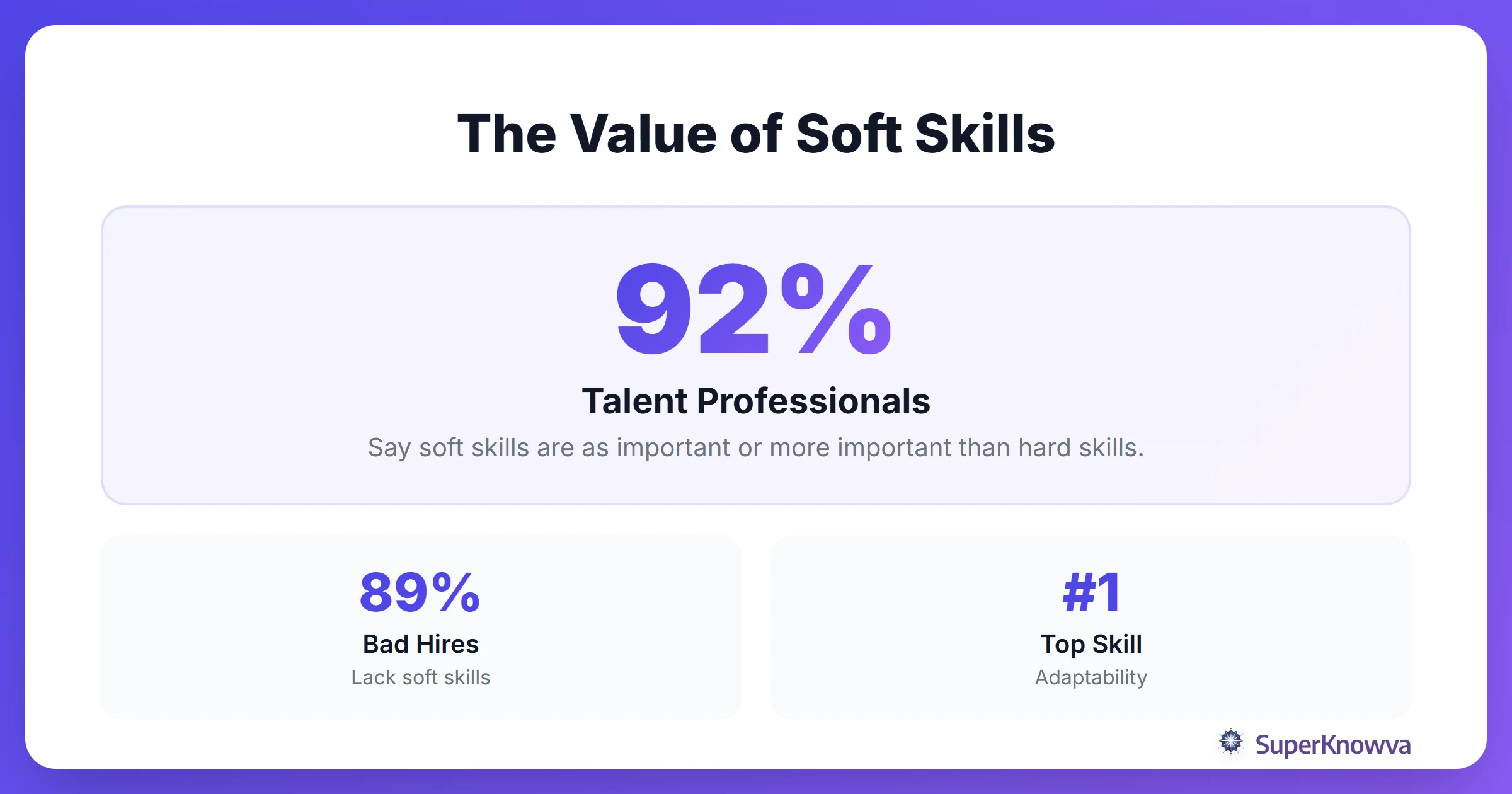
Focus on these three power traits:
- Adaptability: Can you pivot when a project’s goals change at 4:30 PM on a Friday?
- Generational Collaboration: You’ll be working with Boomers, Gen X, and Millennials. Learning to bridge the communication gap between a phone call and a Slack ping is vital.
- The "Can-Do" Spirit: Approaching even the "boring" entry-level tasks with energy builds trust faster than anything else.
The "First Paycheck" Reality Check
Getting that first "real" paycheck is a core memory. But before you go out and splurge, you need to understand your total compensation package. Your base salary is only one part of the story.
Real-world accounts highlight the importance of patience and case management skills during these early stages, and that same patience applies to your wallet. Between taxes, rent, and those looming student loan repayments, that "big" salary can shrink fast. Take the time to actually read your health insurance options and 401k matching programs during "open enrollment." It’s not the most exciting way to spend an afternoon, but your future self will thank you.
Becoming a Lifelong Student
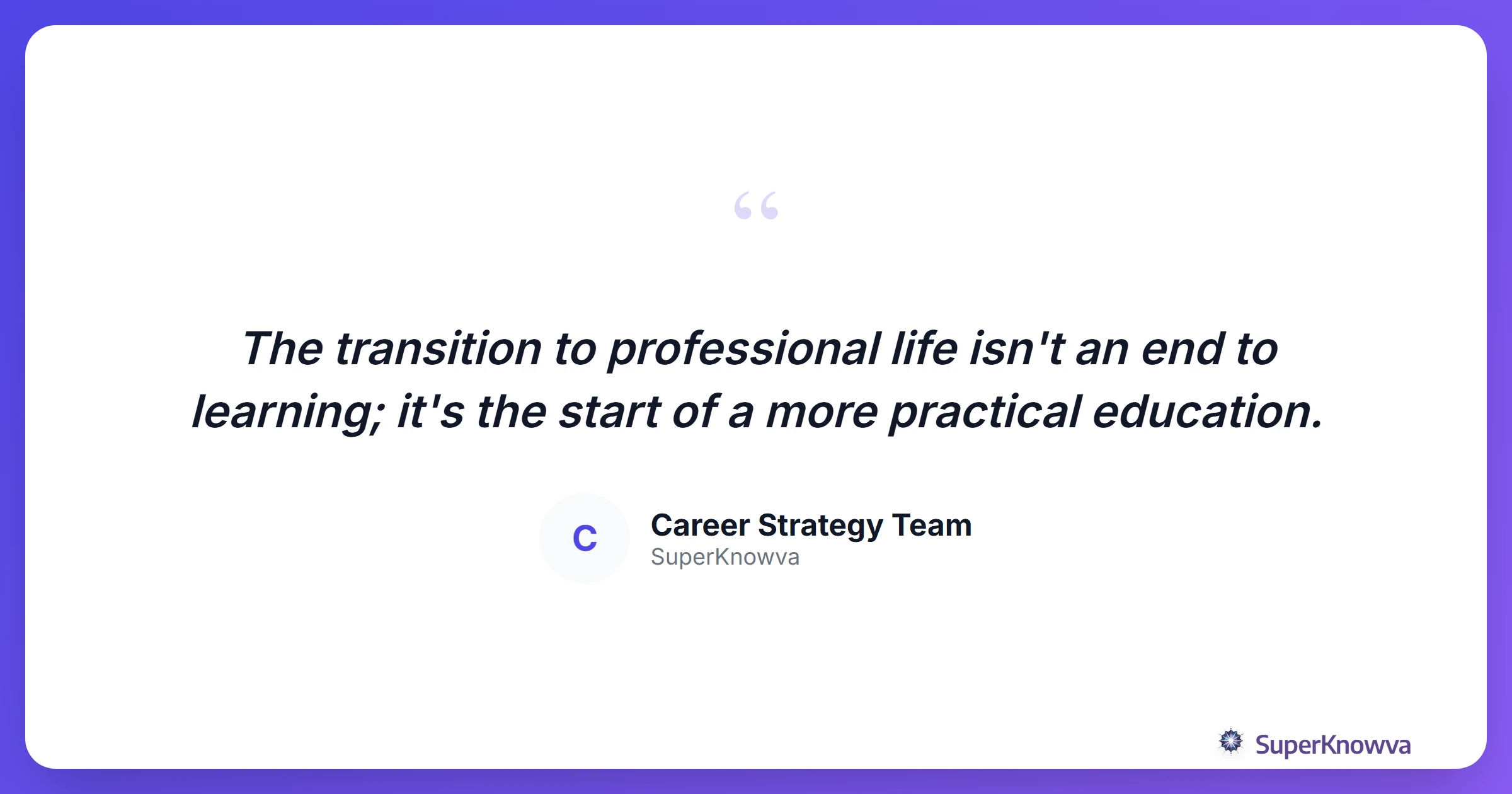
The most successful people in any industry realize that graduation was not the end of their education; it was just the orientation. To stay relevant as technology changes, you must remain curious. Find a mentor who can share practical insights that no textbook ever mentioned.
Use platforms like SuperKnowva, take online certifications, and stay on top of industry trends. Even after you land the job, building professional connections is how you ensure you’re ready for the next one. Plus, maintaining the momentum of building an online presence will help you establish yourself as an authority in your field while you're still "the new kid."
The student to professional transition is a marathon, not a sprint. Take it one day at a time, keep your ears open, and remember: you were hired for a reason. You’ve got this.