It is Sunday night of week two, and you are three days behind on your color-coded spreadsheet. After a bout of burnout, a difficult Cardiology block, or a necessary day off, your usmle step 1 study schedule is no longer on track.
In the high-stakes world of medical licensure, static plans are a liability. They don't account for the fact that life happens. To actually survive Dedicated, you don't just need a schedule; you need a strategy that evolves as you do. By switching to an AI study planner, you can stop racing against a rigid clock and start following a path built for your specific brain.
The Problem with Traditional USMLE Step 1 Study Schedules
For decades, the gold standard was a static PDF or an Excel template. They look great on day one, but they usually crumble under the actual pressure of the USMLE dedicated period.
The real killer is the "Falling Behind" trap. Traditional schedules are fragile. If you miss a single day in a 6-week plan, the entire timeline shifts. This creates a "snowball effect" of uncompleted tasks, mounting anxiety, and the inevitable "skip it and move on" mentality that leaves dangerous gaps in your knowledge.
Beyond that, those generic schedules assume everyone starts at the same baseline. Why would you spend three days on Biochemistry if you’re already a master of metabolic pathways but can’t tell one Renal pathology from another?
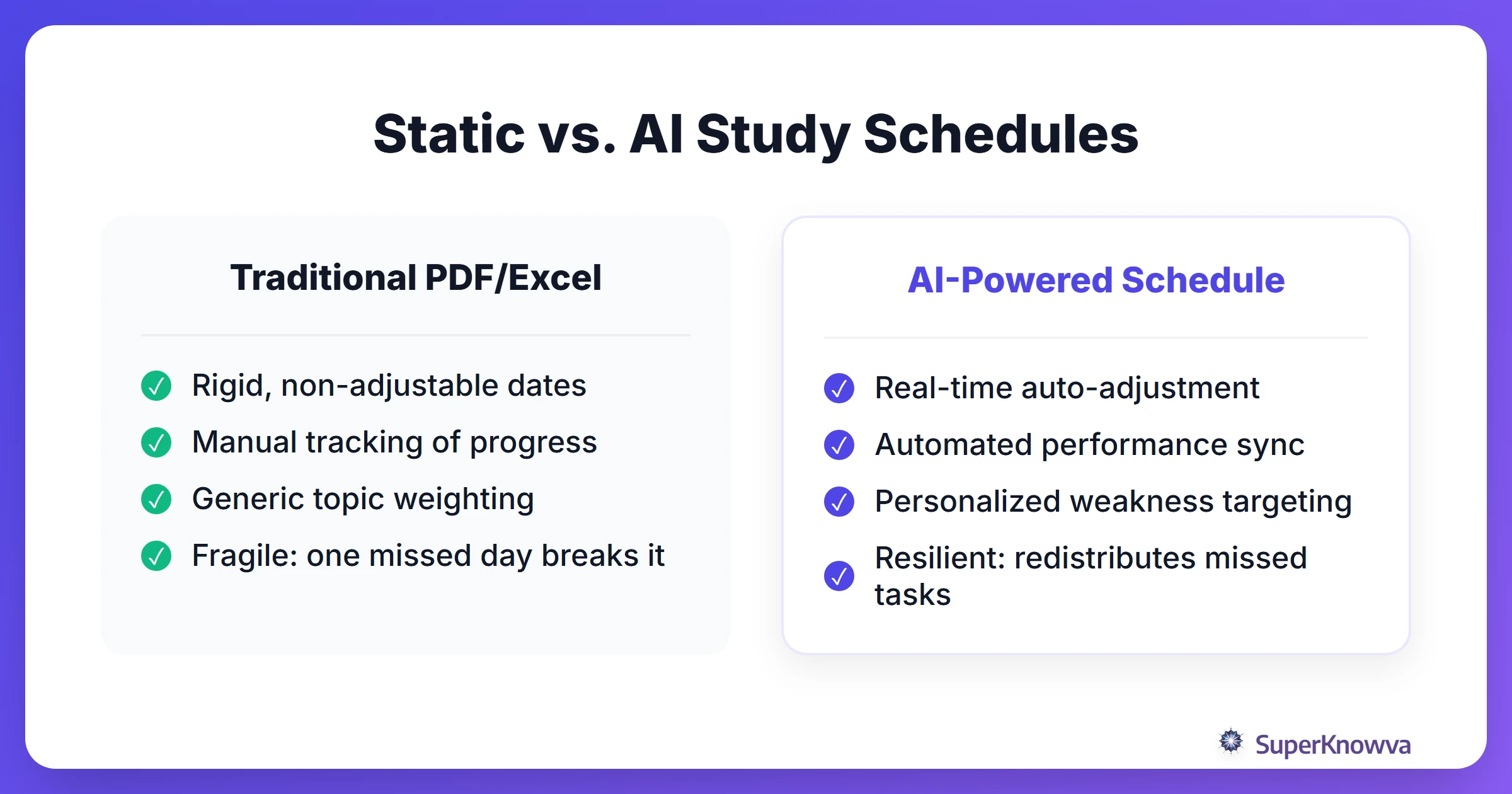
As Inside the Match: How to Make a Step 1 Study Schedule points out, manual scheduling is a part-time job in itself. Every hour you spend moving boxes around a spreadsheet is an hour you aren't doing practice questions.
What Makes an AI Study Schedule "Dynamic"?
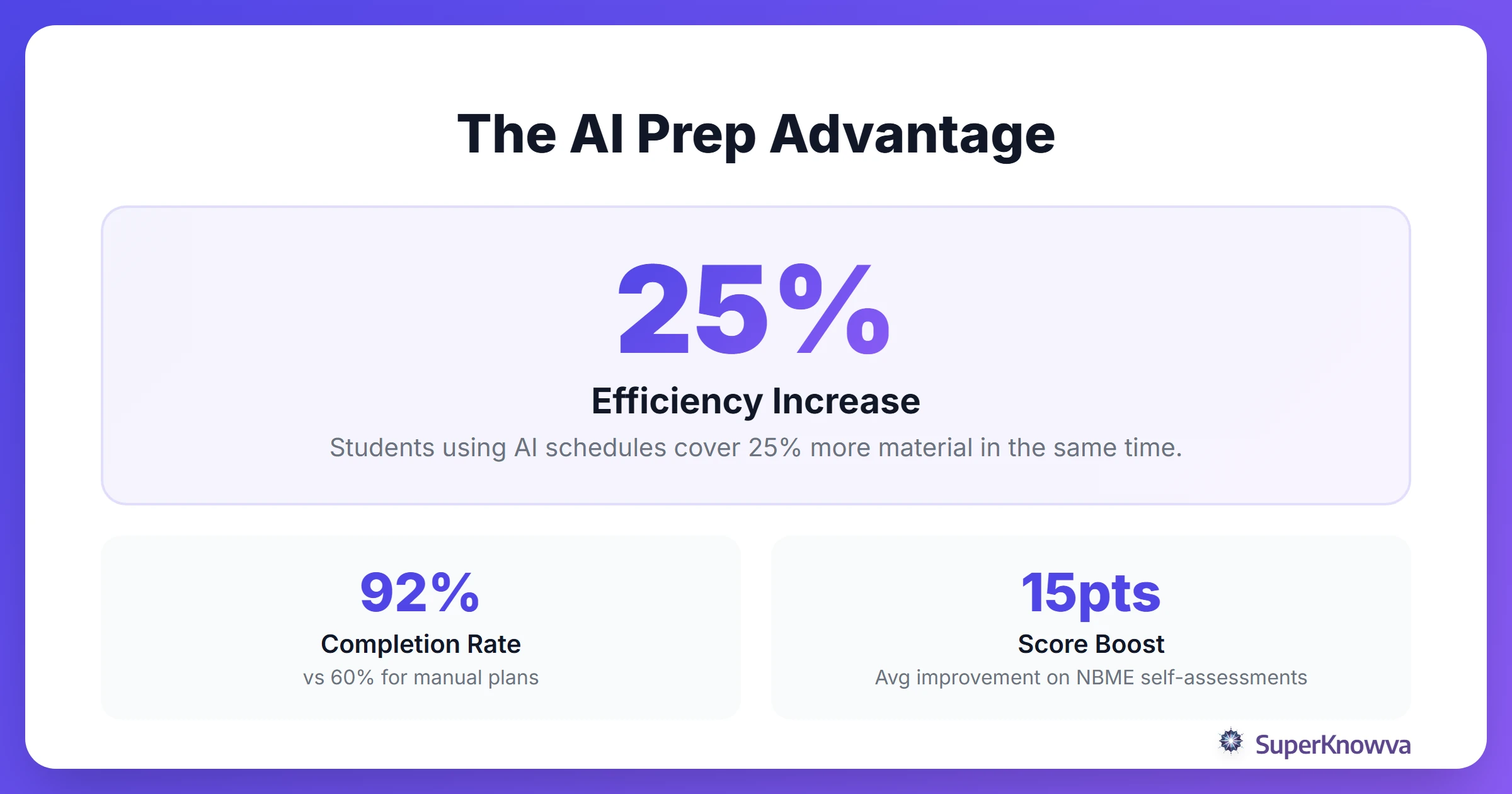
A dynamic schedule isn't just a digital calendar; it’s a plan that breathes. Unlike a standard medical school study plan, an AI-powered system uses your actual performance data to pivot your daily tasks.
- Real-Time Adjustments: If you struggle with a UWorld block on Respiratory Physiology, the system automatically prioritizes those weak spots for your next review session.
- High-Yield meets Low-Mastery: The algorithm identifies the "danger zone," the intersection of high-yield exam content and the topics you consistently miss.
- Built-in Spaced Repetition: Instead of guessing when you will forget the Krebs cycle, the AI predicts your forgetting curve and schedules active recall tasks at the optimal moment for long-term retention.
Curious about the tech behind the curtain? Check out our guide on How AI Provides Personalized Feedback for USMLE Success.
Integrating UFAAPPS Resources with AI Automation
If you’re prepping for Step 1, you’re likely living the "UFAAPPS" life: UWorld, First Aid, Anki, Pathoma, Pharmacology (Sketchy), and Physiology (Costanzo). But trying to sync all of these manually is a logistical nightmare.
An AI framework acts as the glue. For example, when you miss a question on Lysosomal Storage Diseases, the AI doesn't just say "study more." It calculates exactly how many UWorld schedule blocks you have left and points you to the specific page in First Aid or the relevant Sketchy video you need to re-watch.
By automating your "Incorrects" based on your actual history, you stop wasting time on the stuff you already know. This level of focus is exactly what we cover in Ace USMLE Step 1: The Ultimate Guide to AI-Powered Preparation.
Step-by-Step: Building Your AI-Powered Schedule
Ready to ditch the spreadsheet? Building a data-driven Step 1 prep strategy is surprisingly straightforward.
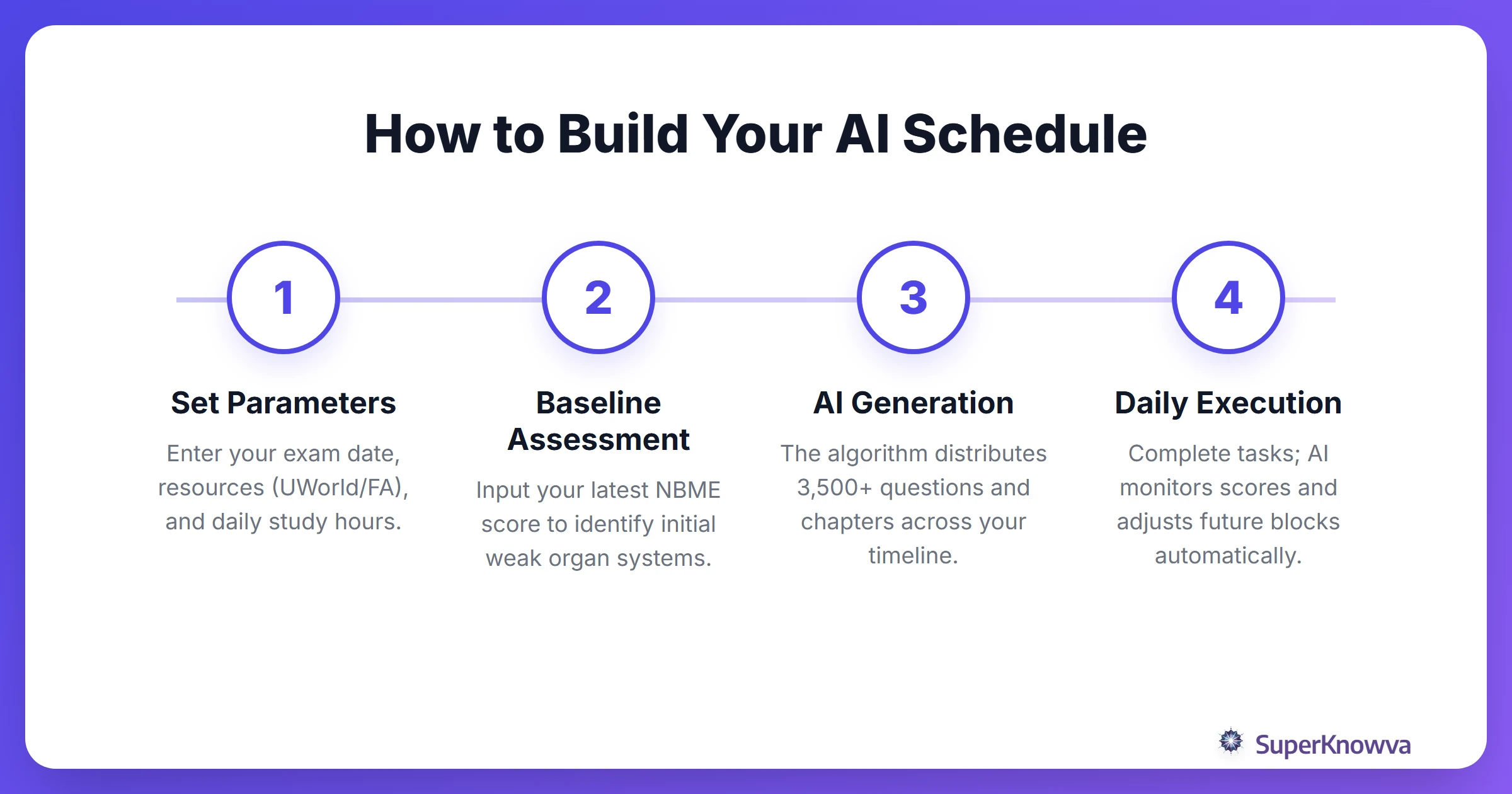
- Set Your Hard Deadlines: Input your exam date and identify your "Buffer Days." These are necessary for mental health and unexpected schedule changes.
- Be Honest with Your Baseline: Use your latest NBME self-assessment score to calibrate the system. This identifies which organ systems require more focus from the start.
- Define Your Daily Blocks: Divide your day into "Content Review" and "Active Recall." The AI will balance these hours based on your schedule and the material remaining.
If you want to see how these modern plans stack up against the old-school way, Blueprint Prep Sample USMLE Schedules shows the static structures students used before the AI shift.
Monitoring Mastery: How the Plan Adjusts
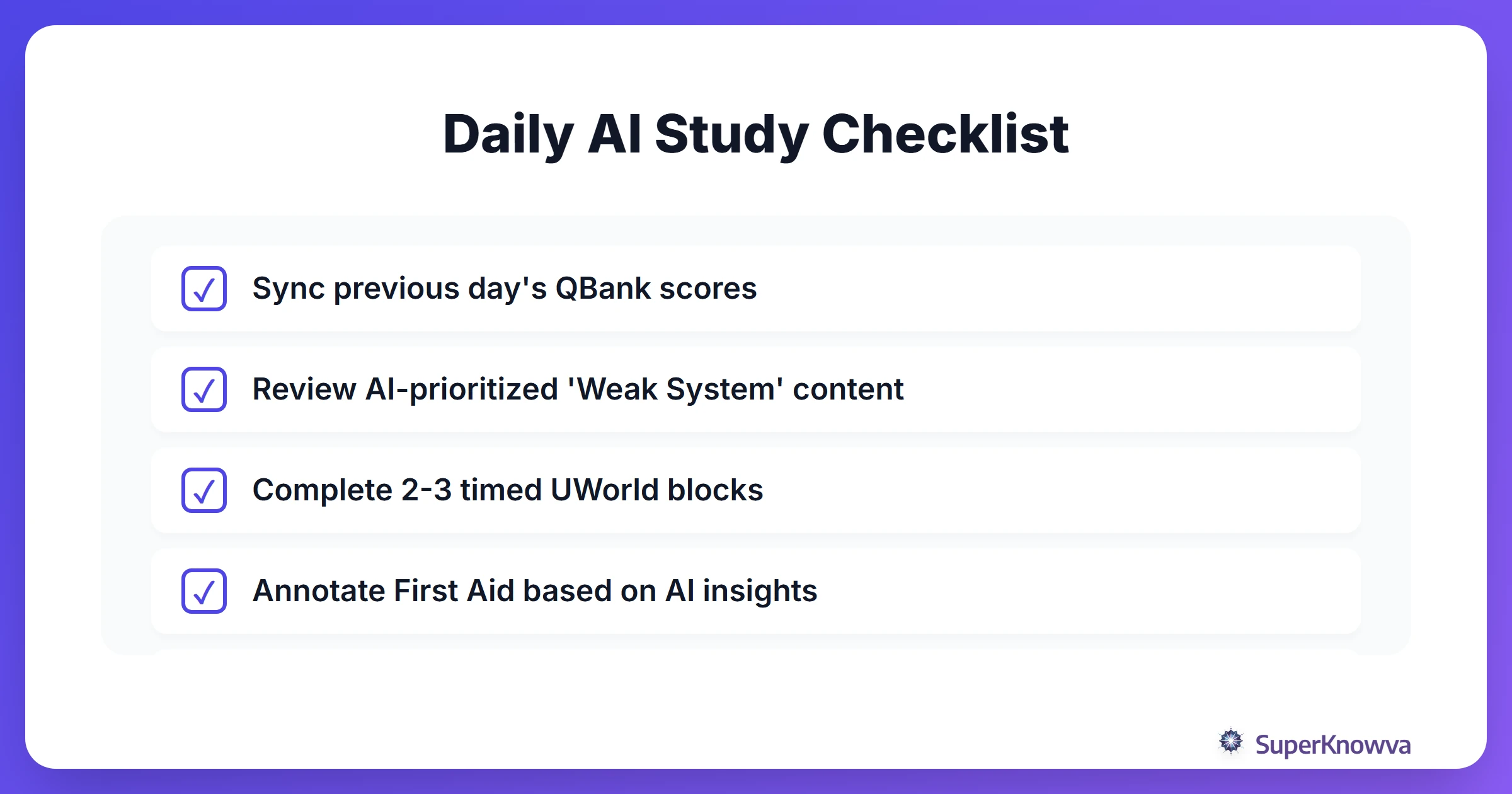
The real magic happens in the feedback loop. Every time you finish a quiz, your study plan "learns" something new about you.
Visualizing this is key. Instead of a simple checklist, platforms like SuperKnowva generate heatmaps of your knowledge. If your Cardiovascular system is glowing deep red, it means that even though you finished the reading, your quiz scores are flagging.
When the AI sees you hitting a plateau, it suggests a "Pivot." It might tell you to stop doing questions and go back to a specific Pathoma chapter until your foundation is solid. This keeps you from building a house on sand.
Pairing your schedule with Smart Studying: The Best AI-Powered Question Banks for USMLE Prep ensures your data is always fresh and actionable.
Optimizing for the 6-8 Week Dedicated Window
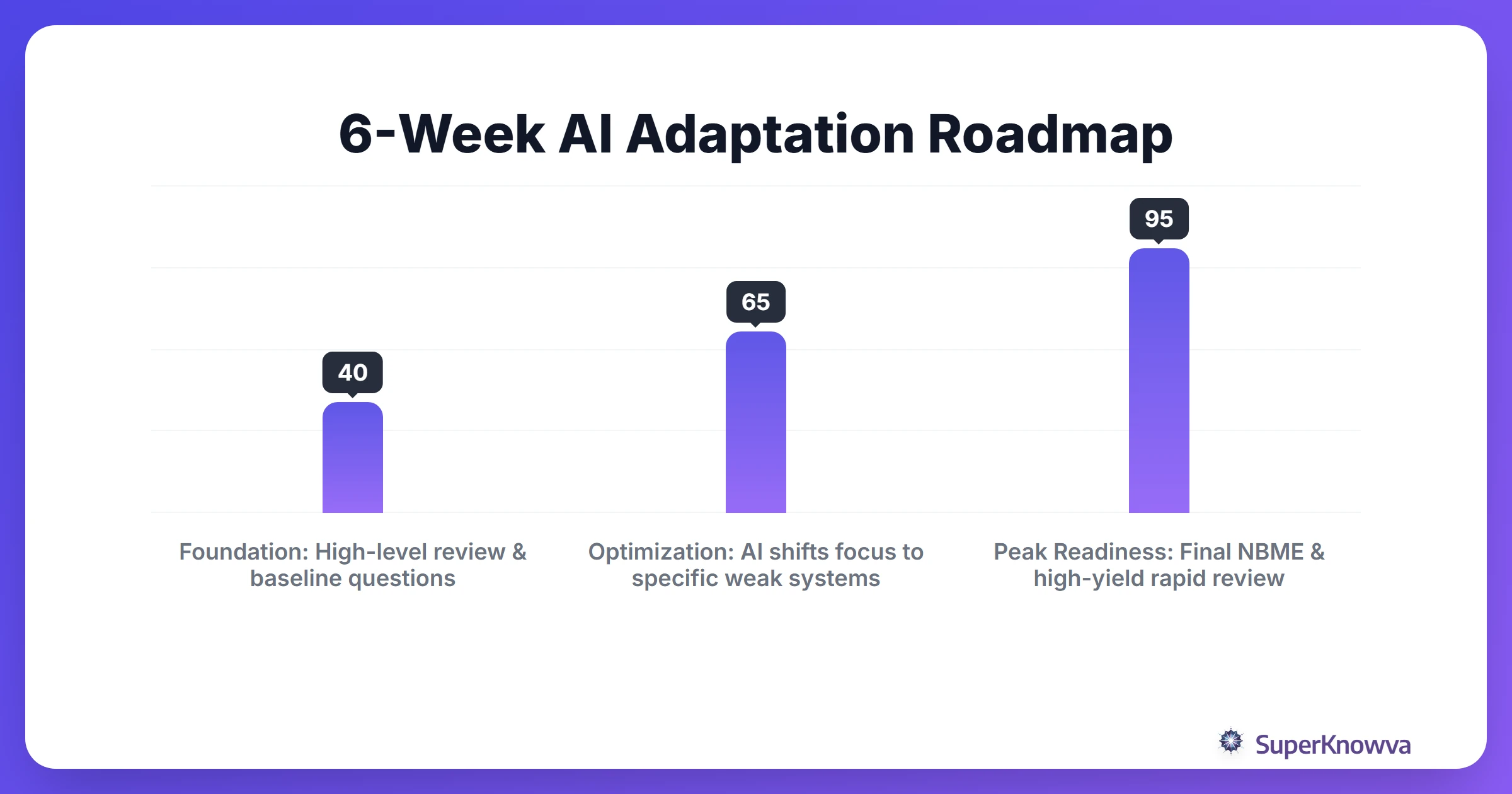
The length of your Dedicated period changes the "intensity" of the algorithm.
- The 6-Week Sprint: The AI prioritizes high-yield "must-knows" and maximizes your UWorld throughput to ensure you see as many questions as possible.
- The 8-Week Marathon: The algorithm allows for deeper dives into foundational physiology and schedules more frequent rest periods to prevent you from hitting a wall in week seven.
The AI also strategically places your practice NBMEs and the Free 120. It schedules them at the intervals that provide the most predictive accuracy. Most importantly, it monitors your "cognitive load." If your scores start dipping across the board, the AI might suggest a mandatory half-day off. Sometimes, the best way to study is to stop studying.
Conclusion
Step 1 moving to Pass/Fail didn't make the exam "easy"; it changed the stakes. You still need to master a significant volume of material, but you shouldn't have to be a project manager to do it. A dynamic, AI-powered usmle step 1 study schedule handles the logistics so you can focus on learning the medicine. Stop letting a static spreadsheet control your preparation and start using a plan that adapts to your progress.