The rules for medical school have changed. Now that Step 1 is Pass/Fail, your Step 2 Clinical Knowledge (CK) score is the primary factor in your residency application. For most students, the summer months are the only window to post a competitive score, but this study period usually overlaps with demanding clinical rotations.
Building a winning usmle step 2 study schedule isn't just about picking the right textbooks anymore. It’s about being surgical with your time and using technology to manage the mental exhaustion that comes with life on the wards.
In this guide, we’ll break down how to build a schedule that balances hospital life with high-yield prep, powered by the next generation of AI study tools.
The Challenge of the Step 2 Summer: Balancing Rotations and Prep
The "Step 2 Summer" is a different kind of grind. Remember the dedicated study period you had for Step 1? This isn't that. You’ll be prepping for Step 2 while scrubbed into surgeries, rounding on patients, or finishing notes in a windowless clinic room. By the time you get home, your brain is often fried. The last thing you want to do is face a block of 40 questions.
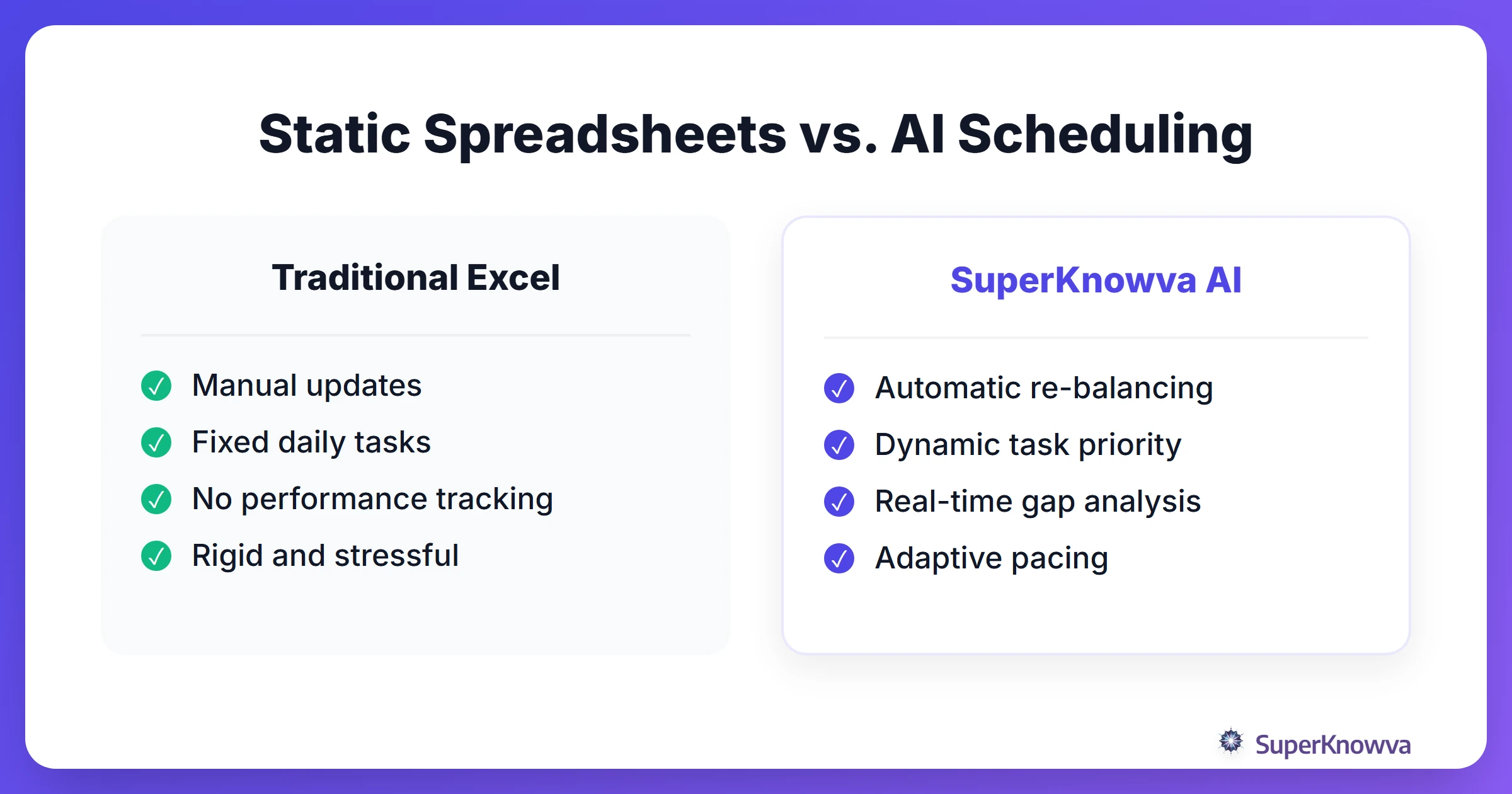
This is where Step 2 CK prep usually falls apart. Without a rigid plan, it is easy to fall into the "passive learning" trap by scrolling through notes without absorbing information. AI-driven scheduling simplifies this process. Instead of wasting an hour of your evening deciding what to study, a platform like SuperKnowva handles the planning. It identifies high-yield gaps based on your past performance, showing you exactly where to focus so you can finish studying before you hit a wall.
Choosing Your Timeline: 4, 8, or 10 Weeks?
Your timeline depends on two things: your clinical schedule and your baseline. Generally, you’ll fall into one of two camps: the Dedicated Period (no hospital responsibilities) or the Concurrent Model (studying while working).
- The 4-Week Sprint: This is for the student who just finished core clerkships and has a rock-solid foundation. It’s intense, full-time, and requires a "dedicated" block.
- The 8-10 Week Marathon: This is the reality for most students balancing heavy rotations. It allows for a steady build-up and lets you actually use your clinical experiences to reinforce your study.
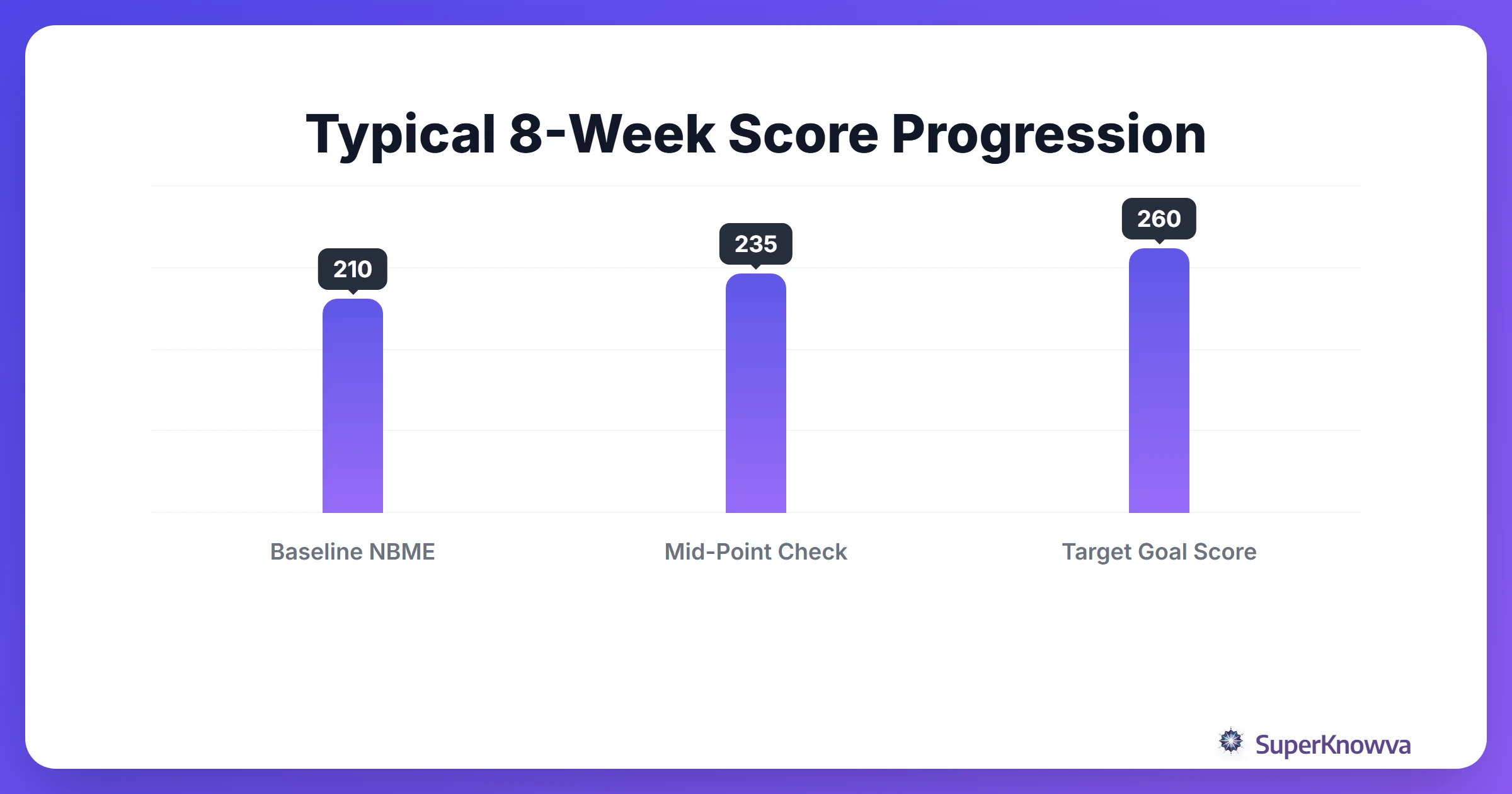
If you are unsure about your study timeline, review these 10-Week USMLE Step 2 CK Sample Schedules to get your bearings. You can also use AI to forecast your performance. By looking at initial NBME scores and daily Q-bank accuracy, AI tools project your score path, helping you pick a test date when you are at your best instead of guessing.
High-Yield Resources: Less is More
One of the fastest ways to burn out is resource overload. You don't need a library; you need a toolkit. "The Big Three" (UWorld Step 2, OnlineMedEd, and Amboss) are usually more than enough to get the job done.
To get the most out of these, keep your focus tight:
- UWorld: This remains the primary resource for depth and question volume.
- Amboss: Use this for its library and the "Condensed" mode. It is perfect for a 5-minute review between patients.
- SuperKnowva: By integrating the best AI-powered question banks for USMLE, you can identify clinical gaps that a standard spreadsheet would miss.
If you prefer video-based learning, check out these Strategic Step 2 Study Plans by OnlineMedEd. Just remember: the goal is to use Anki to keep the concepts you’ve already mastered fresh, not to try and relearn the entire curriculum from scratch.
The AI-Enhanced Daily Routine
When you’re on a rotation, structure is your best friend. You need a "Morning Block" vs. "Post-Rotation" strategy.
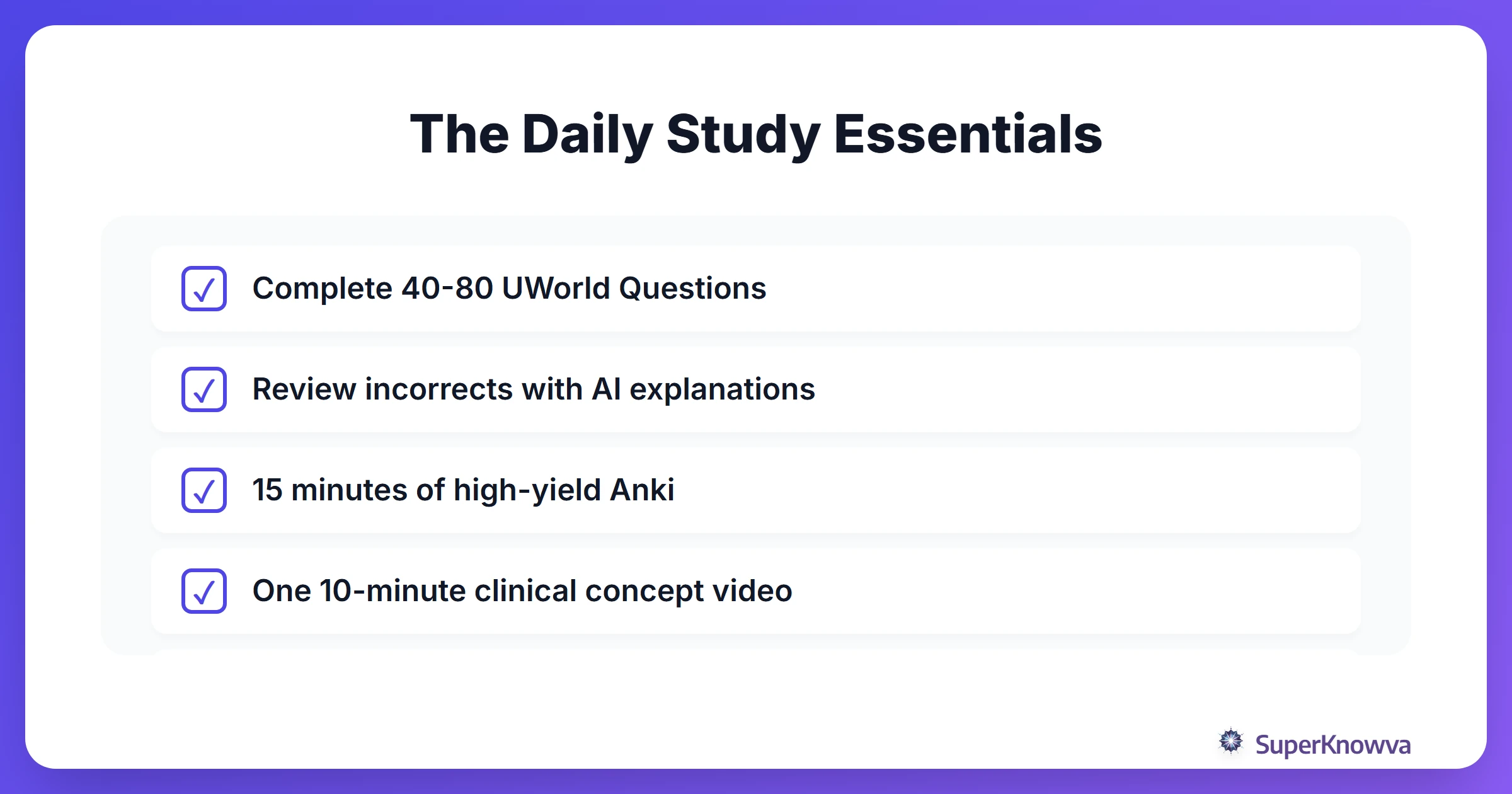
Active learning is non-negotiable. The data is clear: doing practice questions beats reading textbooks every single time. By using SuperKnowva to automate your spaced repetition, you ensure you’re hitting your "weak areas" without having to manually track what you missed three days ago.
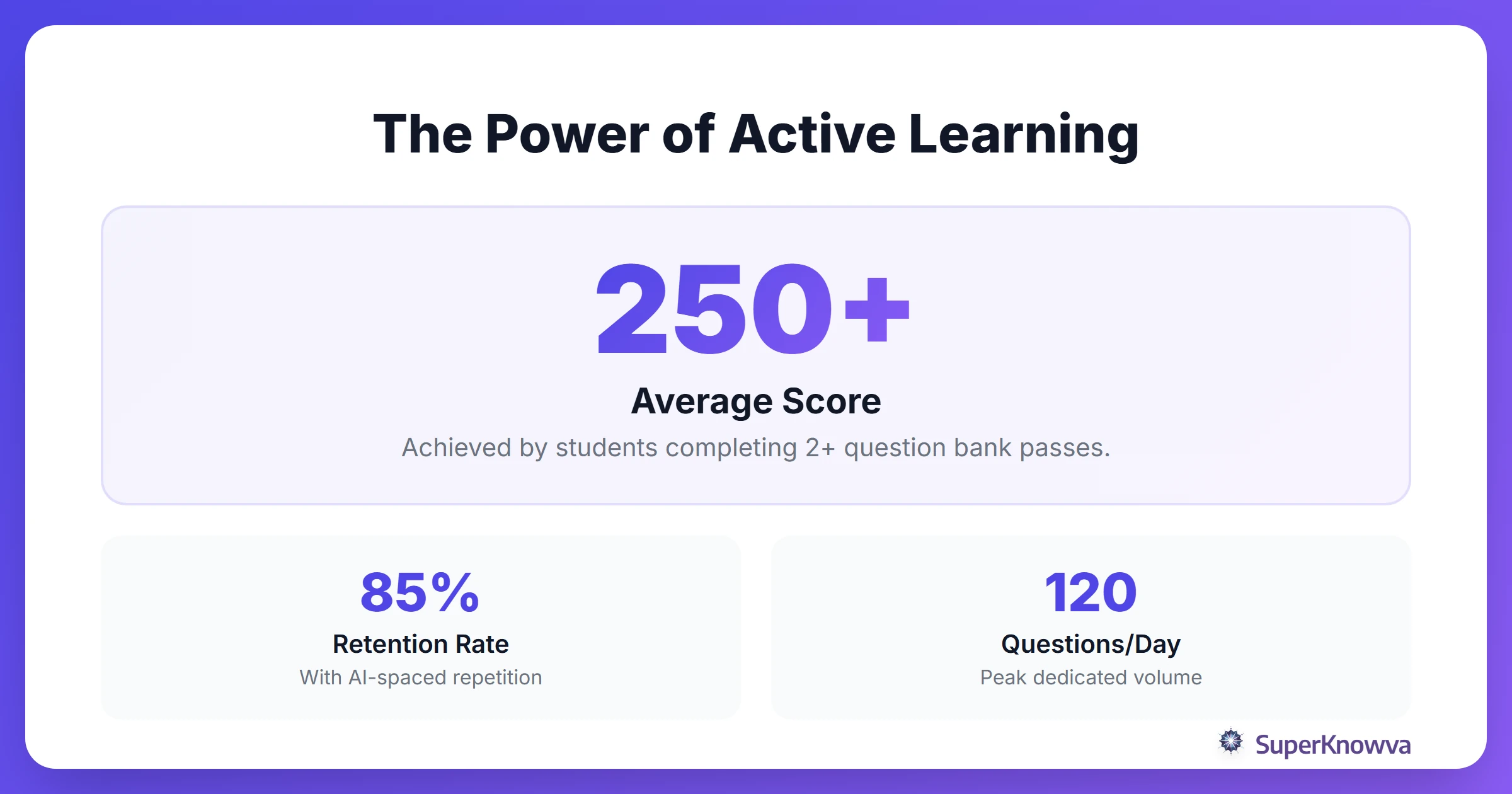
When you get personalized feedback for USMLE success, the guesswork disappears. If the AI notices your "Pediatrics - Cardiology" scores are slipping, it will automatically pivot your daily tasks to fix it before it becomes a problem on exam day.
Self-Care and Avoiding the "Zombie" Study Session
The 12-hour study day is a myth that leads to bad scores. Your brain simply cannot process complex clinical reasoning after eight hours of intense focus. Summer prep requires "Brain Breaks" and actual physical movement to keep your sanity intact.
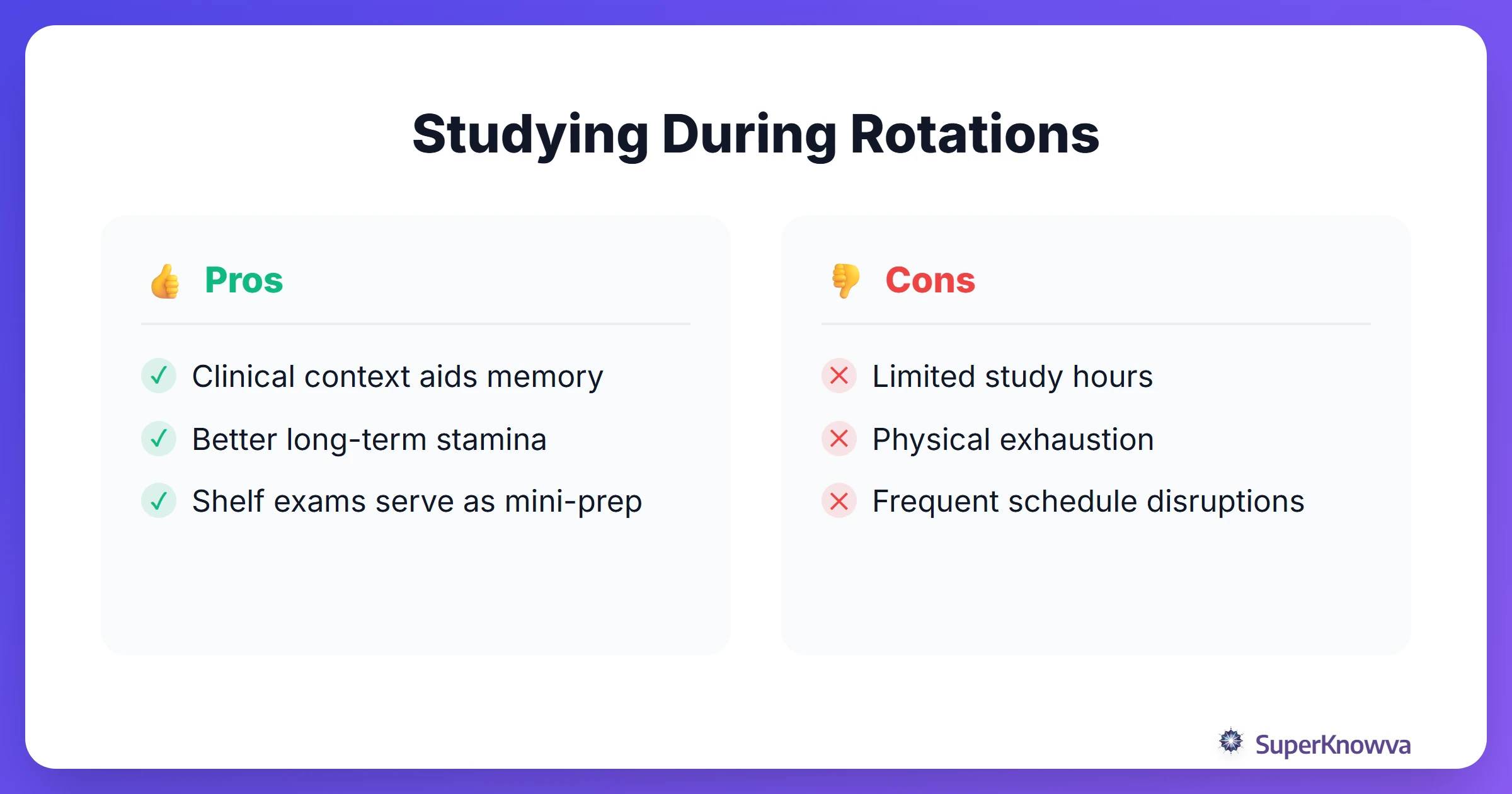
AI study tools for med school help with the "what" and the "how." Seeing your "Mastery Score" climb in real-time provides motivation when you are drained. Watch for signs of burnout: irritability, lack of focus, and physical exhaustion. If progress stalls, take the evening off. A day of rest is more productive than ineffective studying where nothing sticks.
The Final Stretch: Performance Mode
In the final two weeks, you have to stop "learning" and start "performing." This is the window to take your NBME and UWSA practice exams in a setting that mimics the actual Prometric center.
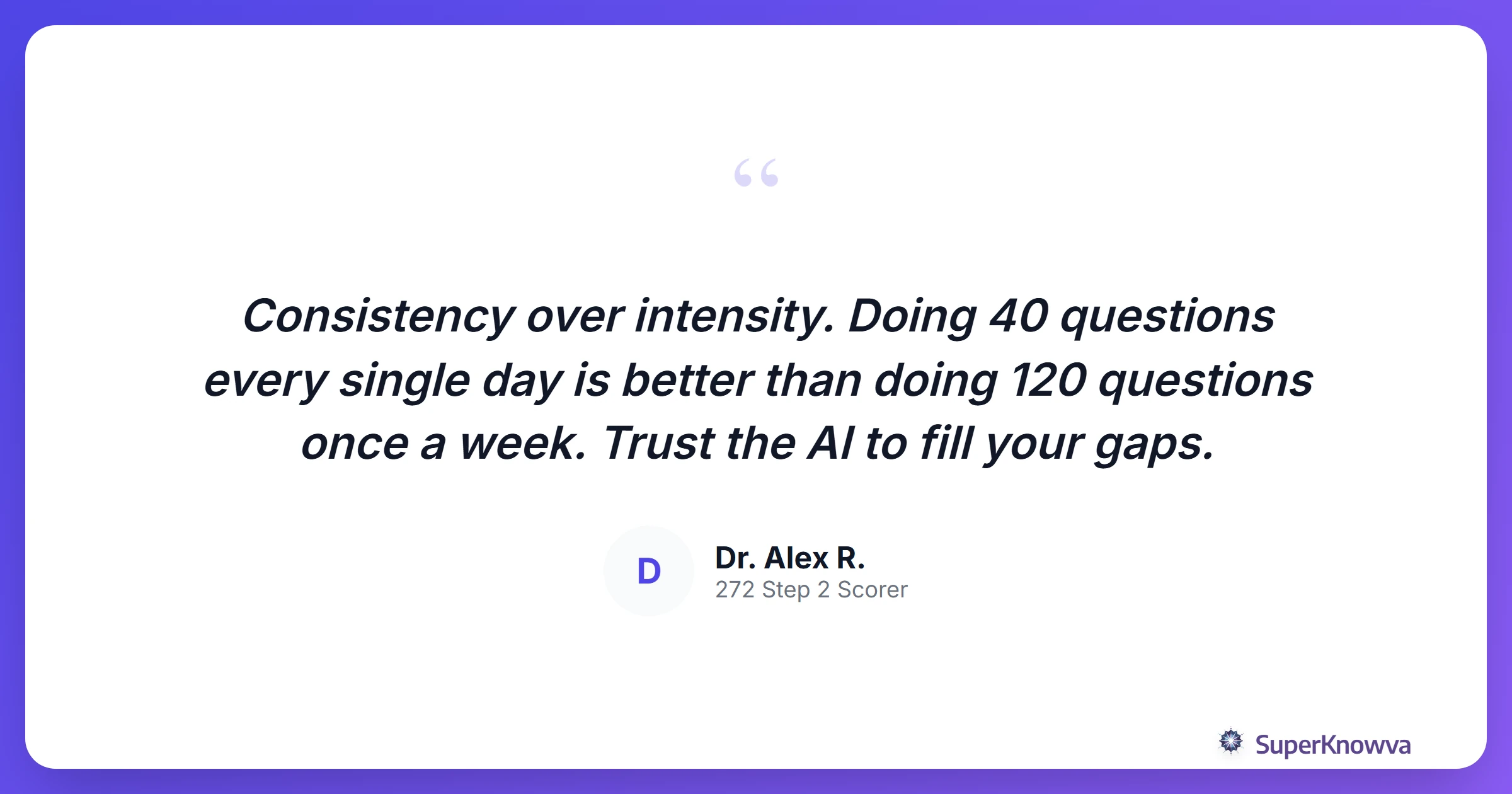
Use AI to audit your practice exams. It can tell you if you’re losing points because of "knowledge gaps" (you didn't know the fact) or "process gaps" (you misread the prompt or rushed). In that final week:
- Attack your "Incorrects": Focus only on the logic behind the questions you missed.
- Sort the Logistics: Plan your meals, drive to the testing center once, and fix your sleep schedule.
- Shift your Mindset: You’ve done the heavy lifting. Now, you just have to execute.
If you’re just starting out or looking for foundational tips, our ultimate guide to AI-powered Step 1 preparation covers strategies that are just as effective for Step 2 CK.
Conclusion
A winning usmle step 2 study schedule isn't about being the person who stays in the library the longest. It’s about being the person who works the smartest. By letting AI handle the logistics and the data, you can conquer Step 2 CK even during your busiest rotations. Trust your prep, trust the data, and the score will follow.